Our Story
In 1964, a group of collectors, art dealers, artists, art critics, and architects united with a shared belief that the city of Chicago deserved a contemporary art museum dedicated to exploring the new. The institution’s founders originally conceived of the museum as a Kunsthalle, or a noncollecting “art hall” that organized and hosted temporary exhibitions of new and experimental artists.
— Mary Richardson, Library Director
1960s
1960s
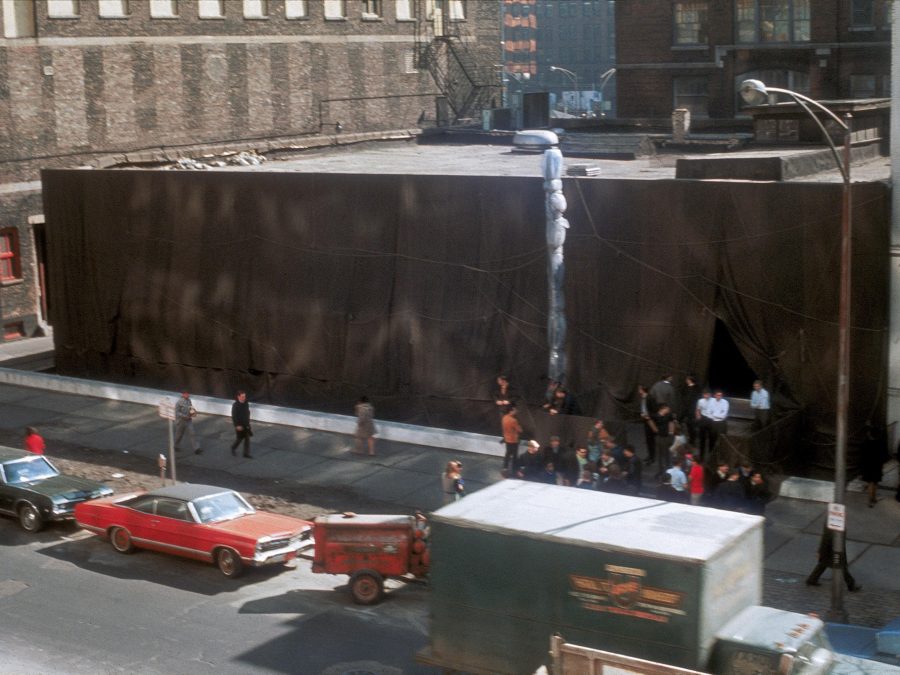
Chicagoans congregate around Christo's first building wrap in the United States. Christo and Jeanne-Claude, Wrap In, Wrap Out, 1969. Installation view, Jan 18–Mar 2, 1969. Photo: Harry Shunk
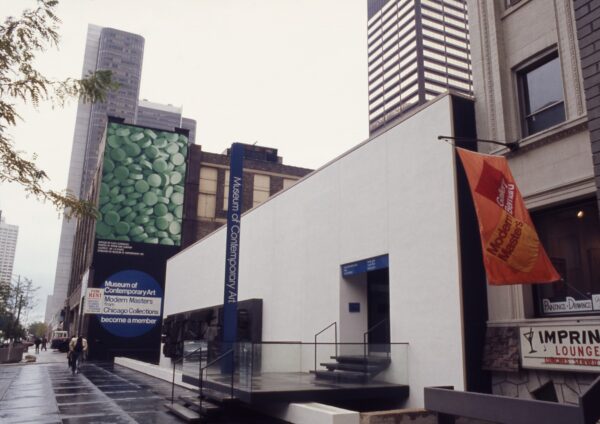
Since the MCA opened its doors in 1967, in a small building at 237 East Ontario Street (the former Playboy headquarters), we have featured the work of emerging artists, many of whom would go on to influential careers. Under the direction of curator and art historian Jan van der Marck, the founders and staff sought to nurture experimentation and “collaboration among practitioners of today’s many-faceted art expressions” and to amplify the innovative exhibitions with “lectures, symposia, roundtable discussions, films and musical performances.”
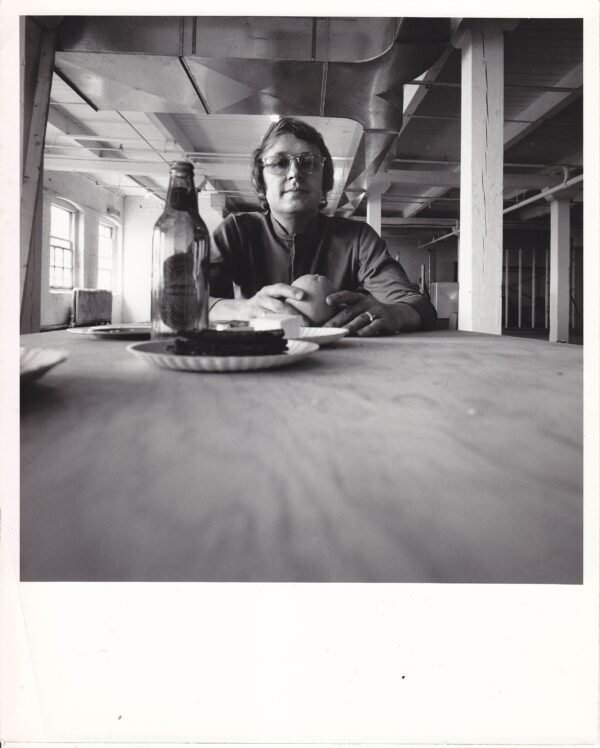
From day one (literally) we took an interdisciplinary approach, featuring composer John Cage and Fluxus artists Alison Knowles and Dick Higgins asking, “What Did You Bring?” in the first of many Happenings and avant-garde performances that the museum would present.
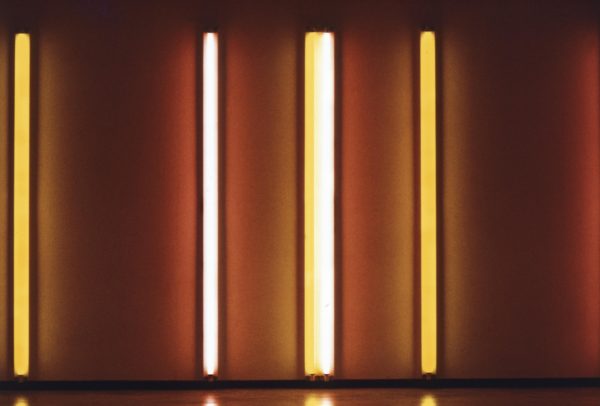
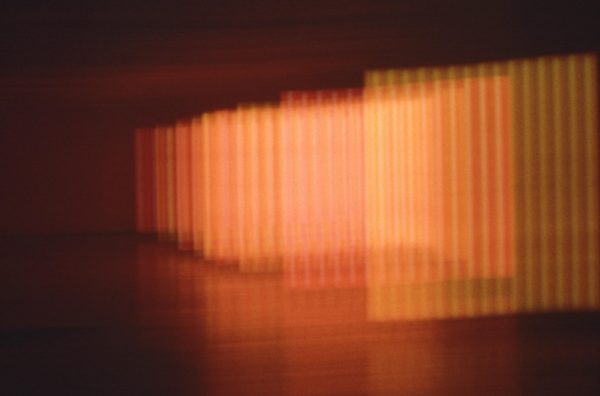
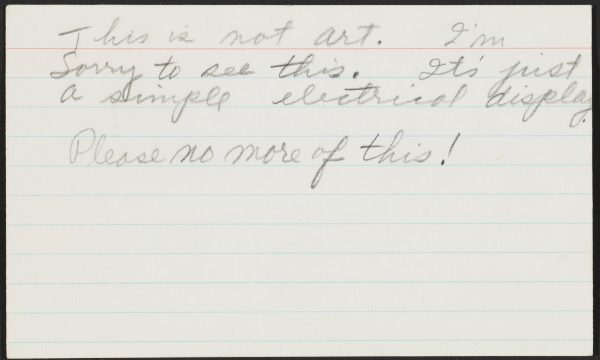
Dan Flavin’s neon tubes lit up the museum’s original gallery in his first solo show.
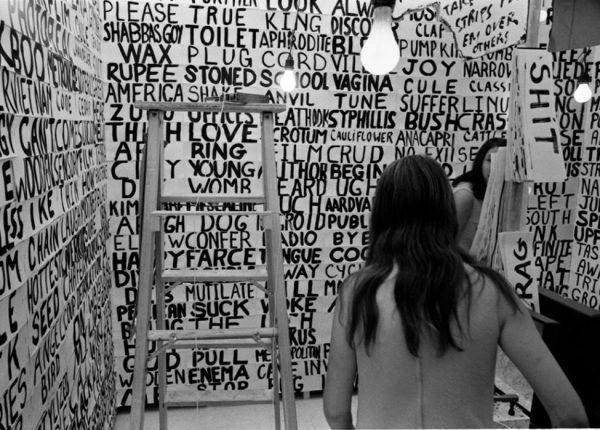
As we became more established, programs also brought a social awareness and engagement to the breadth of experimental activities. The museum’s curators organized Violence! In Recent American Art (1968), which addressed the violence and cultural tumult of the moment. We also partnered with the Conservative Vice Lords, Inc. on Art and Soul, a pilot program to establish a neighborhood art center with an art studio, library, and classes in Lawndale on Chicago’s West Side.
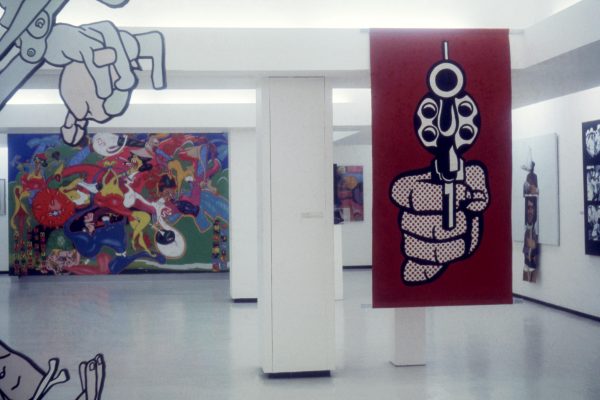
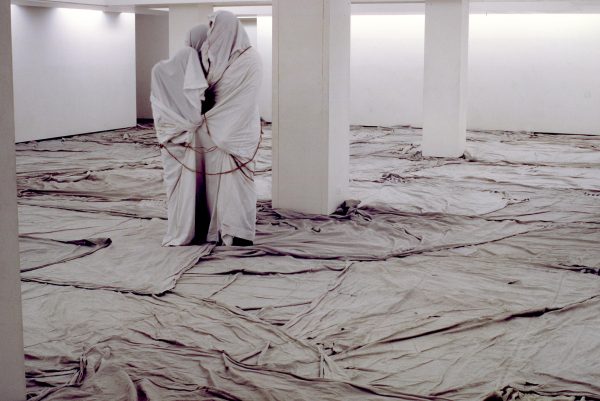
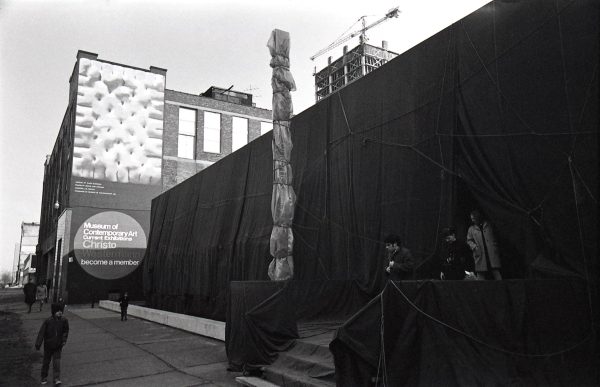
In 1969, we became the first building wrapped by Christo in the United States. That same year, we also organized the influential Art by Telephone.
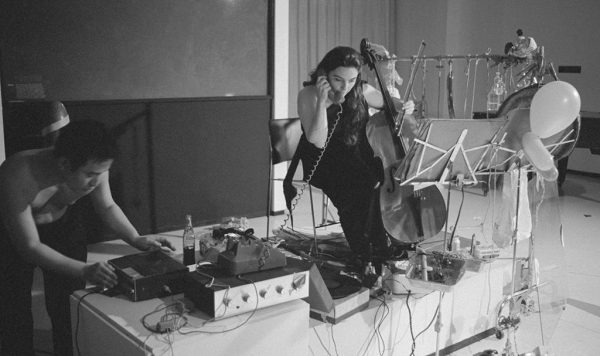
Our staff executed art works onsite following the instructions phoned in by artists like John Baldessari, Sol LeWitt, Bruce Nauman, and Robert Smithson.
Highlights from the 1960s
Carousel: Highlights from the 1960s - Full Size Images
1970s
1970s
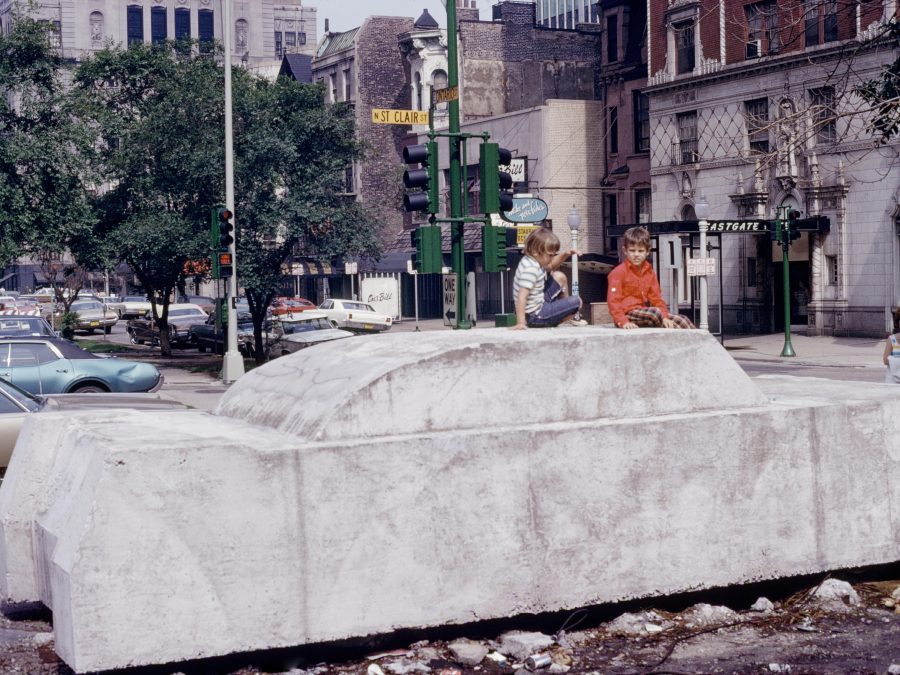
Wolf Vostell, Concrete Traffic, 1970 Photo: © MCA Chicago
The following year, we hosted solo exhibitions of Roy Lichtenstein, Robert Rauschenberg, and Andy Warhol, kicking off a decade during which we solidified our unique blend of exhibitions and programming and transitioned from a Kunsthalle to a collecting museum.
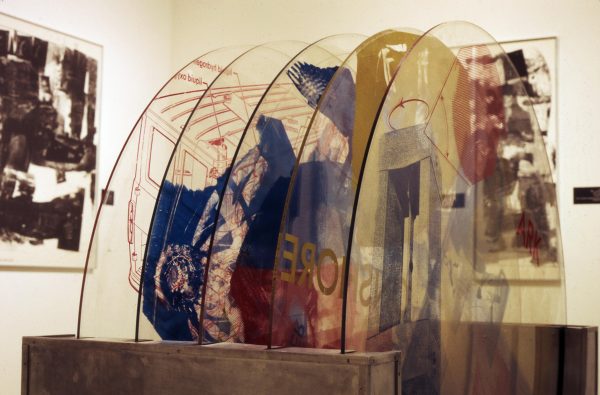
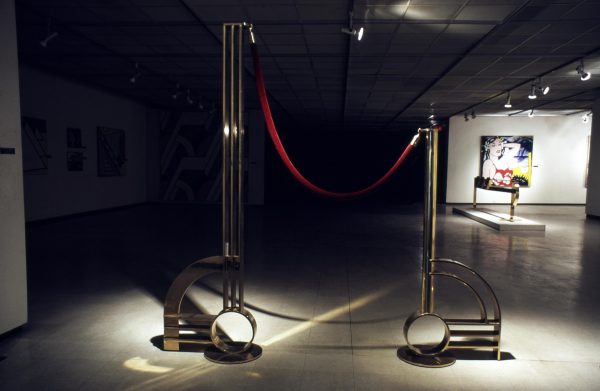
Exhibitions included compelling locally inspired shows like Murals for the People (1971), in which four artists turned the MCA’s galleries into their workspace to create wall-size panels that are exhibited in various Chicago neighborhoods, and major displays of the works of Lee Bontecou (1972) and Frida Kahlo (1978).
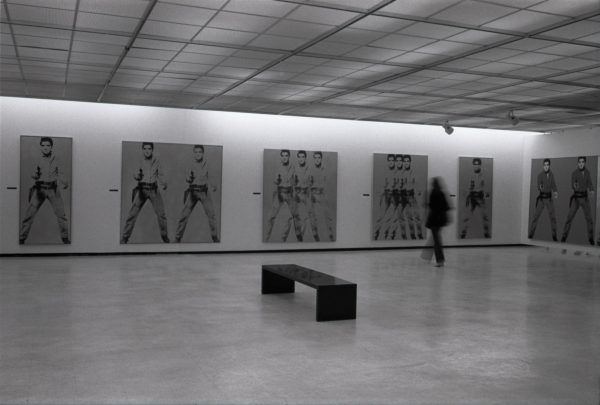
Installation view, Andy Warhol Retrospective, MCA Chicago Photo: Jean-Claude Lejeune © MCA Chicago
Installation view, Andy Warhol Retrospective, MCA Chicago Photo: Jean-Claude Lejeune © MCA Chicago
We further diversified our eclectic programming with a variety of film series, lectures, and performances by Von Freeman, Philip Glass, Steve Reich, Trisha Brown, and many others.
Bodyworks (1975) exemplified our multidisciplinary approach by supplementing the exhibition with a series of films and in-gallery performances by artists, most memorably Chris Burden’s Doomed. In this famous work, Burden lay on the gallery floor behind a large pane of glass for more than 40 hours with no break or sustenance until MCA employee Dennis O’Shea ended the performance by placing a container of water behind the glass within Burden’s reach.
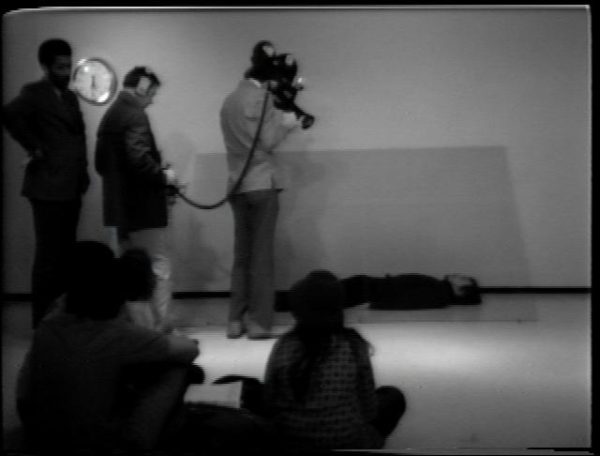
Chris Burden, Doomed, 1975 © MCA Chicago
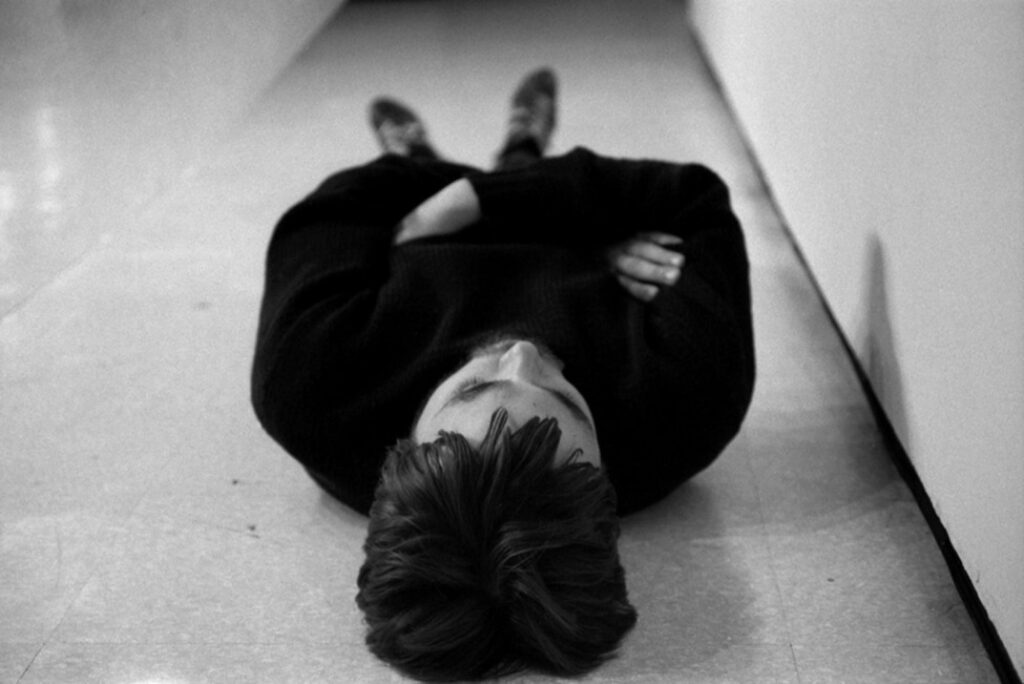
Chris Burden, Doomed, 1975 © MCA Chicago
With a donation from the artist Marisol in 1968, the Board formally established our permanent collection in 1974, which eventually spurred the need for a larger space that could display the newest art as well as the burgeoning collection. We marked our 10th anniversary by purchasing an adjacent three-story townhouse to facilitate an expansion. In 1978, we took advantage of the renovation period by inviting Gordon Matta-Clark to create a temporary intervention for which he sawed through the walls, floors, and roof of the townhouse, exposing the inside of the building to the elements and creating extraordinary and otherwise impossible views of the interior and the world around it.
1980s–1990s
1980s–1990s
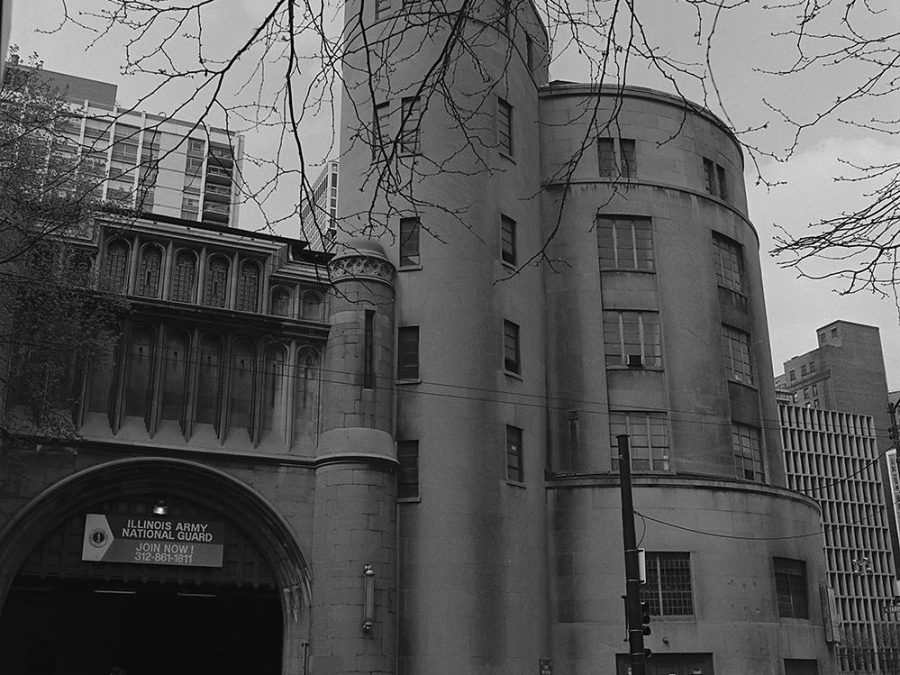
Illinois National Guard's Chicago Avenue Armory Photo © MCA Chicago
By the 1980s and early 1990s, we became further established as an important platform for experimental contemporary art. The museum hosted Jeff Koons’s first solo museum show. We introduced audiences to artists like Martin Puryear (1980) and Jenny Holzer (1987). There were major exhibitions featuring the work of Vito Acconci (1980), Nam June Paik (1982), Nancy Spero (1988), Robert Mapplethorpe (1989), Romare Bearden (1991), Robert Rauschenberg (1992), Lorna Simpson (1993), and Andres Serrano (1995). Educational programs thrived, offering a wide range of classes, readings by notable writers like John Cheever, talks by speakers ranging from Studs Terkel to Lucy Lippard, and performances by Laurie Anderson and others.
Highlights from the 1980s
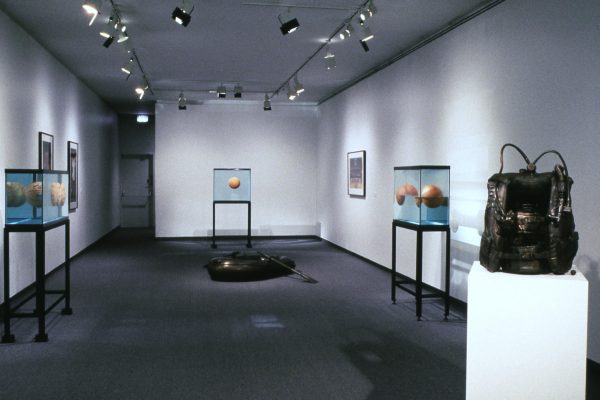
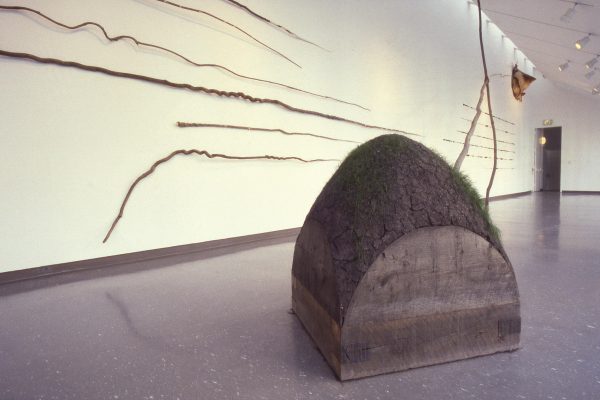
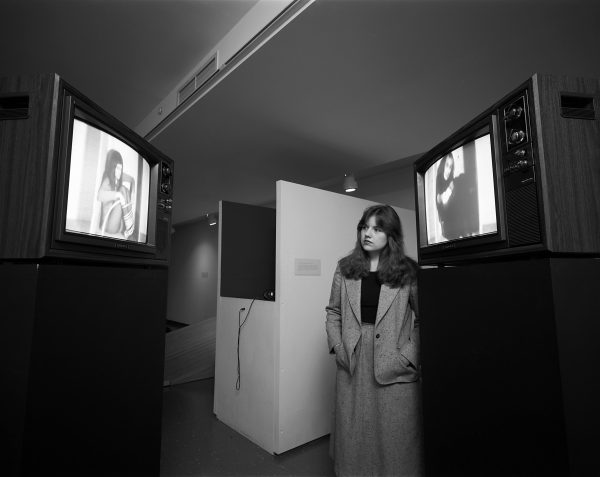
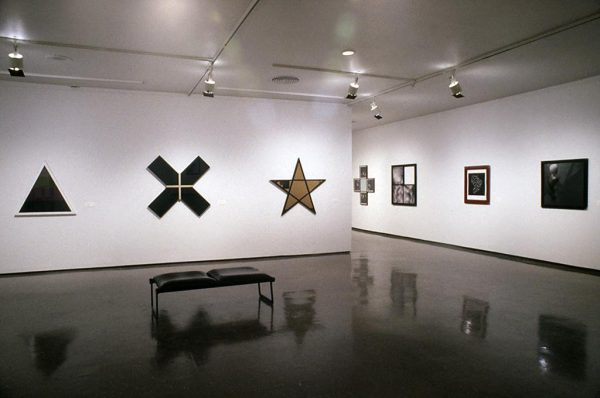
Carousel: Highlights from the 1980s - Full Size Images
Due to our continued growth, we began to feel the need for a new home, and in 1990, we signed a 99-year lease on the site of the Illinois National Guard’s Chicago Avenue Armory. Again, we recognized a construction project as an opportunity for artistic inquiry and in 1992 staged a site-specific exhibition, Art at the Armory: Occupied Territory in the vacant building before its demolition. In 1996, a building designed by Berlin architect Josef Paul Kleihues opened on the summer solstice, welcoming more than 25,000 visitors during a 24-hour public preview. Although we had always blurred the lines between art and performance, we formally established the Performance department, later to be called MCA Stage, that same year. The new site and programming quickly proved successful. After one year of operations in our new home, attendance, revenues, and membership quadrupled. We finished the 1990s with exhibitions such Art in Chicago, 1945–1995, a landmark survey of Chicago artists and artistic traditions, as well as solo shows featuring Cindy Sherman (1998), Chuck Close (1998), Sarah Sze (1999), and Charles Ray (1999).
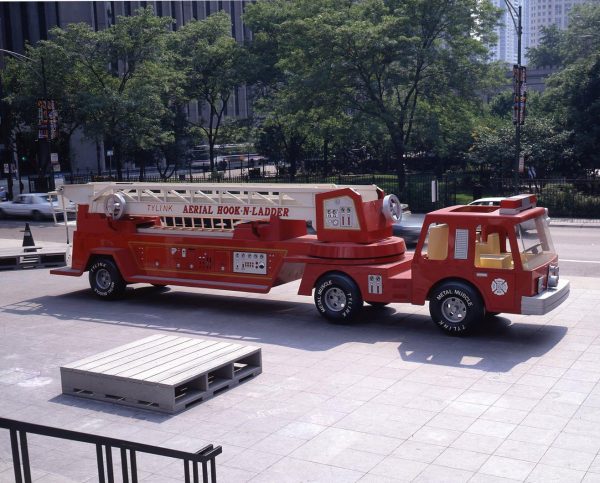
Installation view, Charles Ray, MCA Chicago, 1999 Photo © MCA Chicago
Installation view, Charles Ray, MCA Chicago, 1999 Photo © MCA Chicago
2000s–Today
2000s–Today
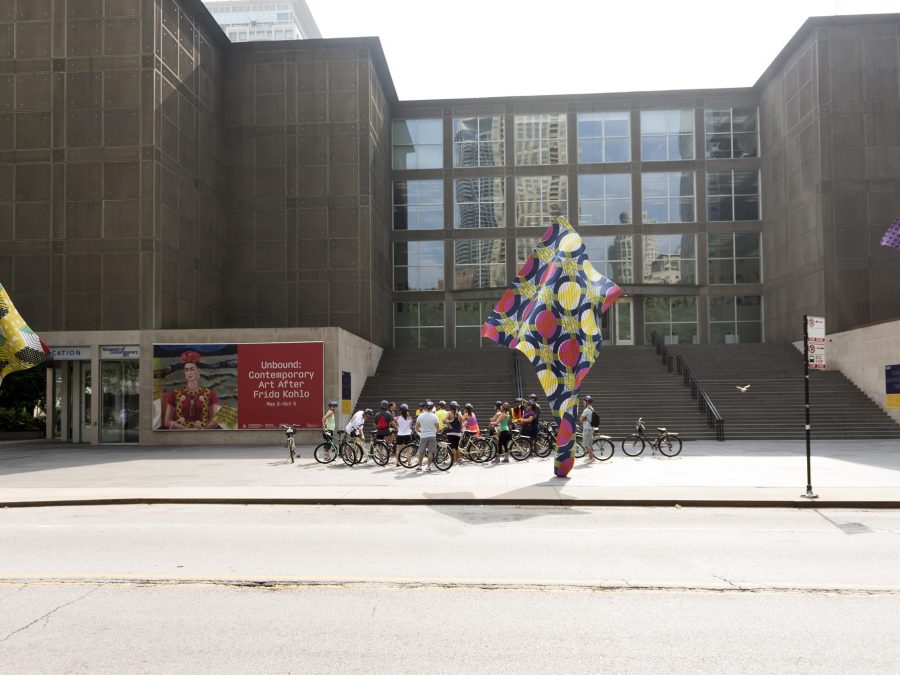
Installation view, MCA Chicago Plaza Project: Yinka Shonibare, MBE, MCA Chicago, Jun 16–Oct 2014. Photo: Nathan Keay, © MCA Chicago
In the new millennium, we have continued to support the local arts scene while also presenting globally renowned contemporary art and performance. The 12 x 12 series featured work by a different promising Chicago artist each month, giving audiences early looks at artists like Rashid Johnson (2002). A number of major exhibitions by artists who had shown at the MCA early in their careers also took place as well as exhibitions of early and mid-career artists such as Catherine Opie (2000) and Olafur Eliasson (2009).
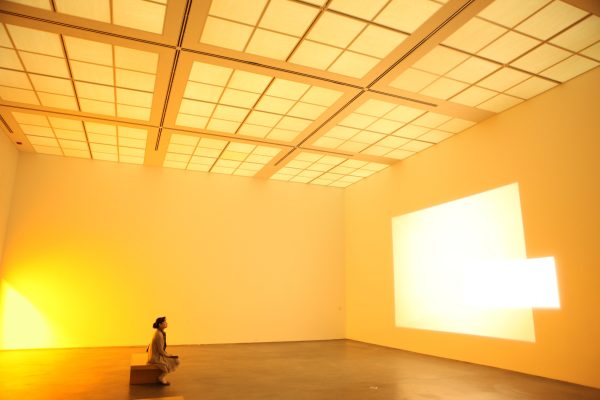
Take your time: Olafur Eliasson Members' Opening, MCA Chicago, May 7, 2009. Photo © MCA Chicago
Take your time: Olafur Eliasson Members' Opening, MCA Chicago, May 7, 2009. Photo © MCA Chicago
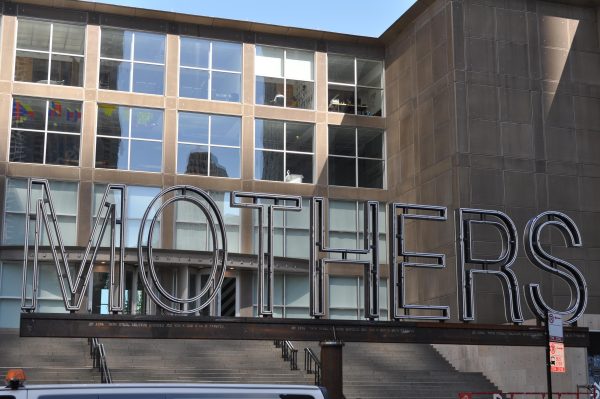
In 2011, under the leadership of Pritzker Director Madeleine Grynsztejn and James W. Alsdorf Chief Curator Michael Darling, we reimagined and restructured the museum’s approach to exhibitions, dedicating specific gallery spaces to thematic permanent collection shows, ascendant artist solo shows, and three new exhibition series: MCA DNA, Chicago Works, and the MCA Chicago Plaza Project. While MCA DNA explores the museum’s history and iconic works from the collection, Chicago Works highlights the work of Chicago area artists who are somewhat more established but may not be widely recognized such as Lilli Carré (2013) and Faheem Majeed (2015). The Chicago Works exhibitions are larger and on view for longer than the previous 12 x 12 series, demonstrating a deepened commitment to new art and local artists. Our plaza project series extends the museum out into the public sphere, transforming our front plaza into an extra gallery space for giant installations. We also established an artist residency, which takes a different form with each individual artist, from Mark Bradford’s socially engaged work with Chicago teens to Martin Creed’s playful neon sculpture MOTHERS.
As we move beyond our first 50 years, we now possess a substantive history of our own. Expanding on that past, we continue to welcome the public to explore and share in today’s most experimental and intriguing contemporary art and performance.