Exhibition
Christo: Wrap In Wrap Out
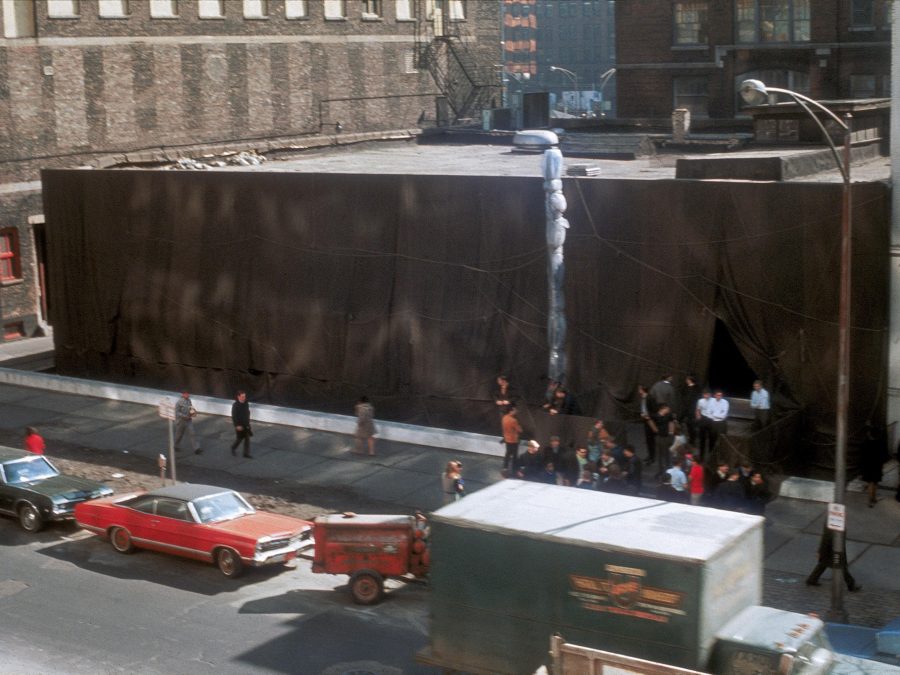
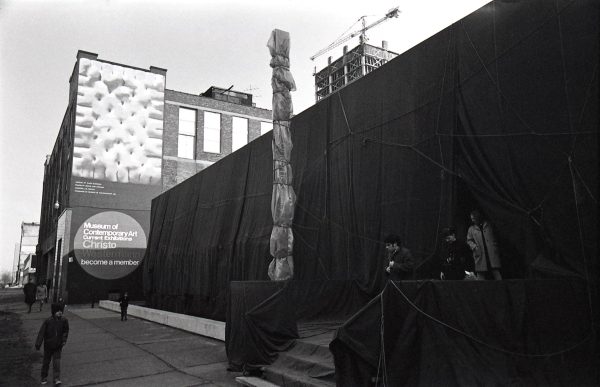
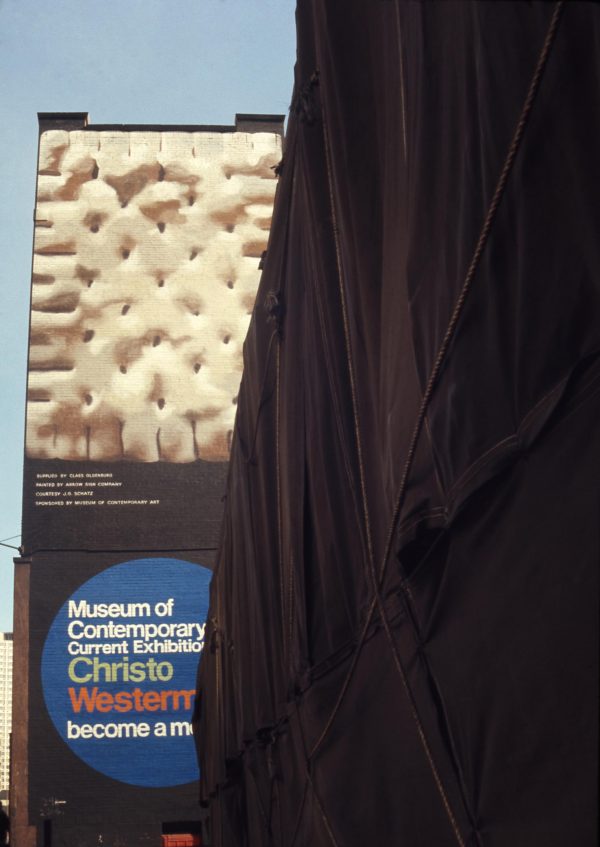
Chicagoans congregate around Christo's first building wrap in the United States. Christo and Jeanne-Claude, Wrap In, Wrap Out, 1969. Installation view, Jan 18–Mar 2, 1969.
Photo: Harry Shunk
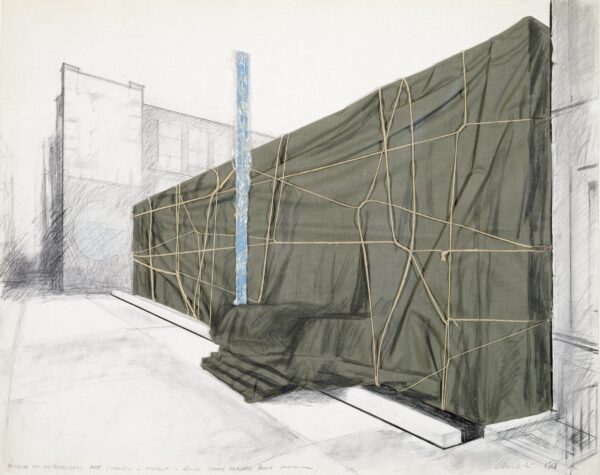
In a 1966 catalogue essay for the Walker Art Center’s exhibition Eight Sculptors: The Ambiguous Image, MCA Director Jan van der Marck stated, “If authorities would let him, Christo would wrap up public buildings and monuments.” Just a few years later, his museum became the first building in the United States to be “wrapped” by Christo (Bulgarian, b. 1935), where it remained concealed under 10,000 square feet of canvas tarpaulins, tied down with two miles of strong rope, for 40 days.
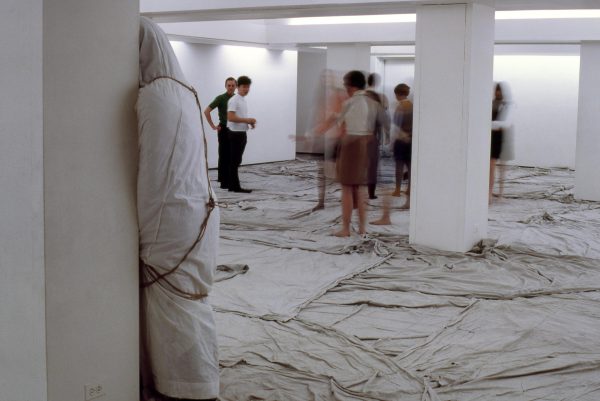
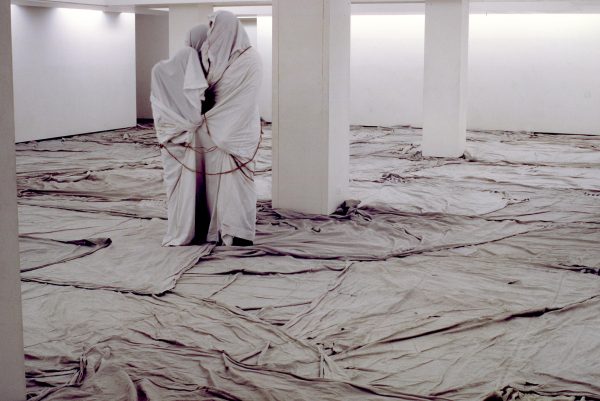
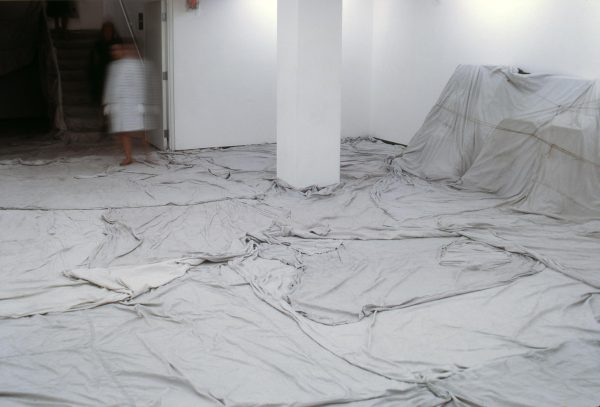
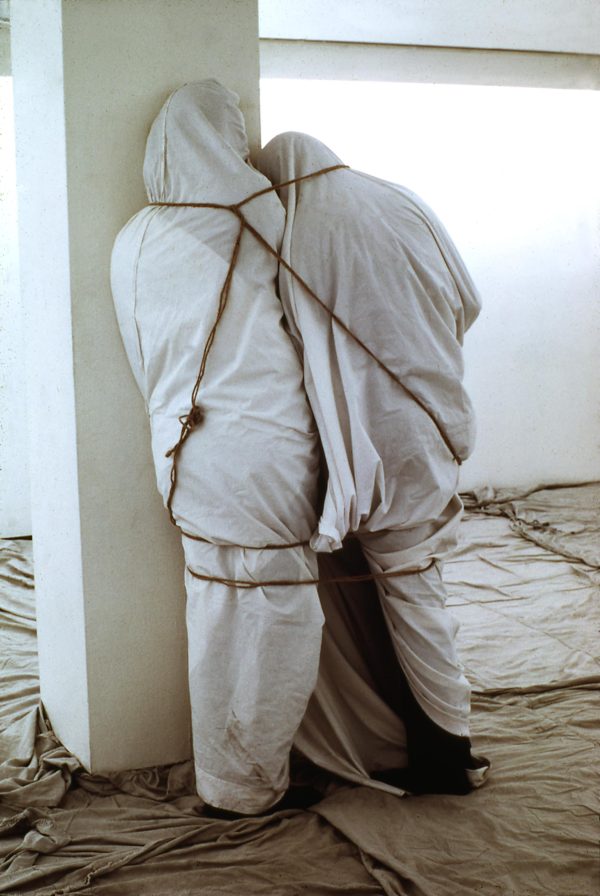
The artist braced cold temperatures to realize the project, with the help of two technicians and eight students from both the School of the Art Institute of Chicago and the Institute of Design. Once completed, the museum allowed visitors in through special entrances, where they could experience another work by the artist constructed for the lower level gallery. This environment, wrapped in 2,500 square feet of painter’s drop cloth, provided a relaxing place for museumgoers to lounge and interact with other wrapped objects. One man was recorded as saying upon exiting the museum, “This is the best thing that ever happened to me!”
Before Christo’s construction at the MCA, he typically wrapped objects and storefronts. These works call the viewer to pay closer attention to volume and overall robust forms, without allowing views of detail. This lack of detail directs attention to the often-inaccessible interior. Viewers must wrestle with the urge to unwrap, to explore, and to discover what lies inside.
Programming throughout the show included a lecture given by Christo and a screening of Christo’s Running Fence, a film by the Maysles Brothers documenting the work’s construction and duration. Produced on the occasion of Christo: Wrap In Wrap Out was a foldout of Christo’s previous projects, as well as a set of postcards documenting the Chicago exhibition.
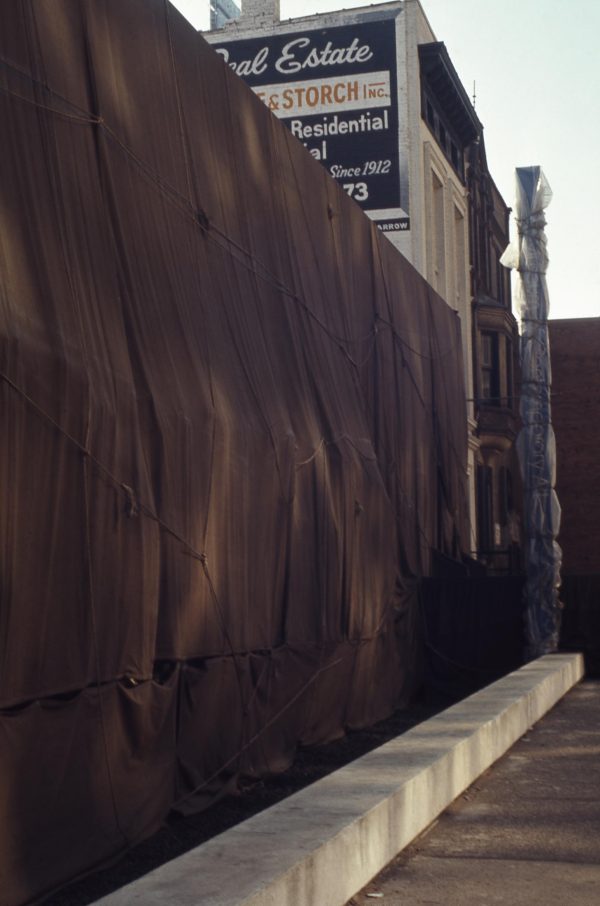
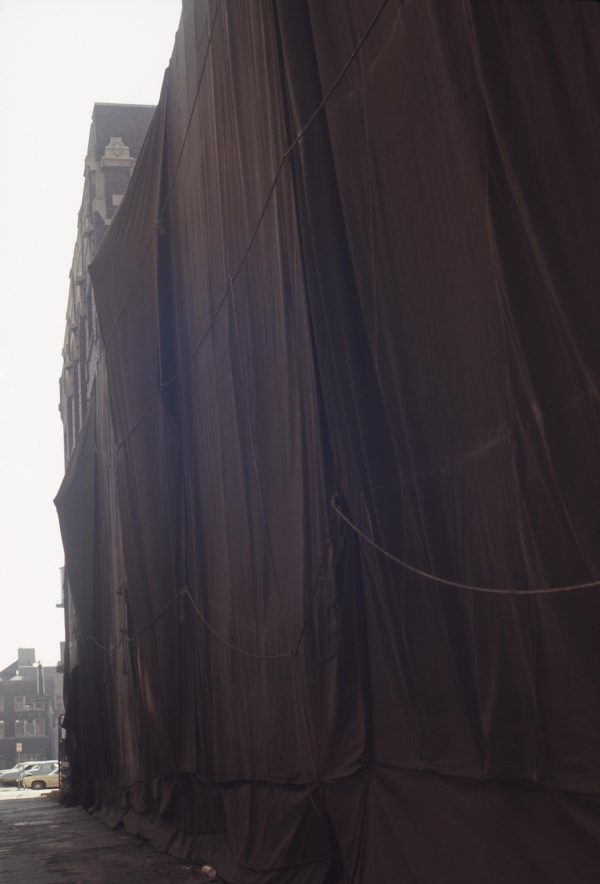
Carousel: Installation Views - Full Size Images