Exhibition
Michael Rakowitz: Backstroke of the West
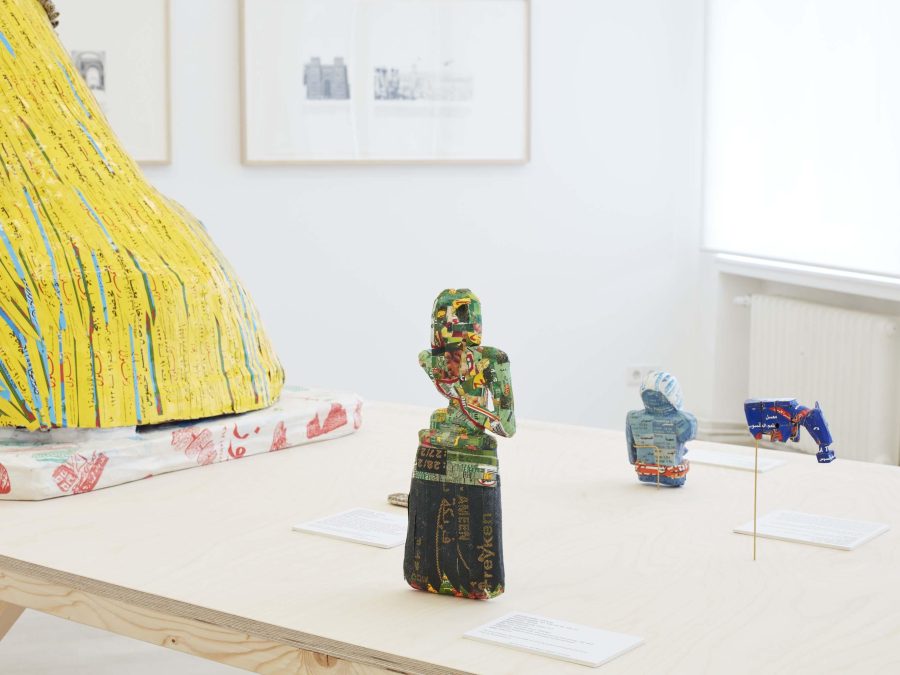
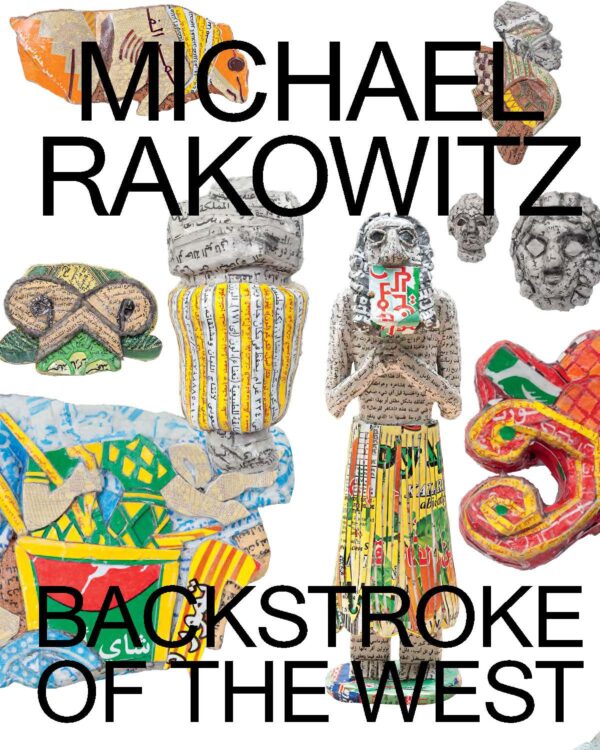
Michael Rakowitz, Bearded Male with Long Hair, Missing Eye (Kh. VIII 269) (Recovered, Missing, Stolen Series), 2009. From the series The Invisible enemy should not exist, 2007–present. Middle Eastern packaging and newspapers and glue; 15 7/10 x 4 7/10 x 1 3/5 in. (40 x 12 x 4 cm). Courtesy of Galerie Barbara Wien, Berlin, and Rhona Hoffman Gallery, Chicago.
Photo: Nick Ash
Based in Chicago, Iraqi-American artist Michael Rakowitz (b. 1973) makes work that explores recent contested social, political, and cultural histories. Drawing on personal experiences and research on these subjects, as well as history and popular culture, Rakowitz creates illustrated objects, installations, and performances that invite viewers to contemplate their complicit relationship to the political world around them, recognizing that hospitality and hostility are interlinked.
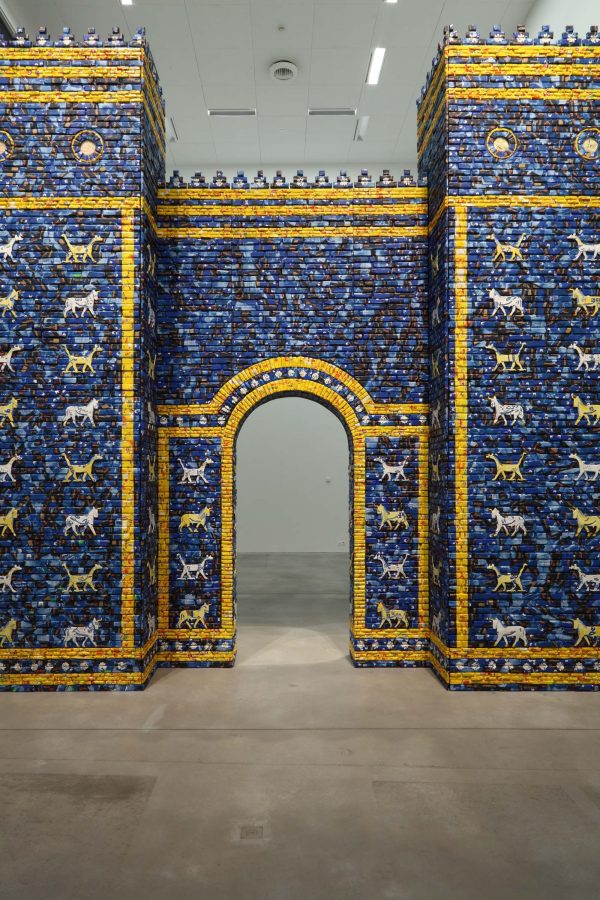
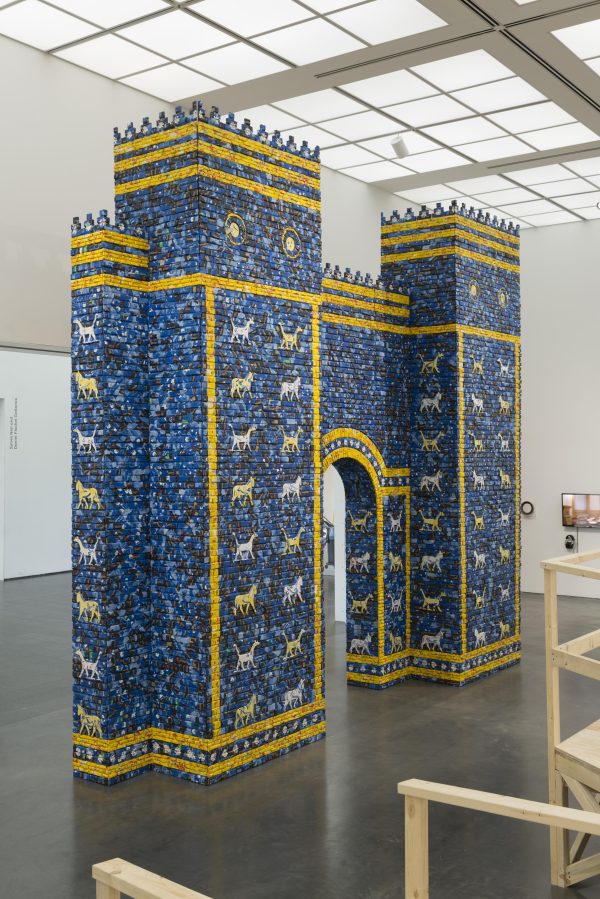
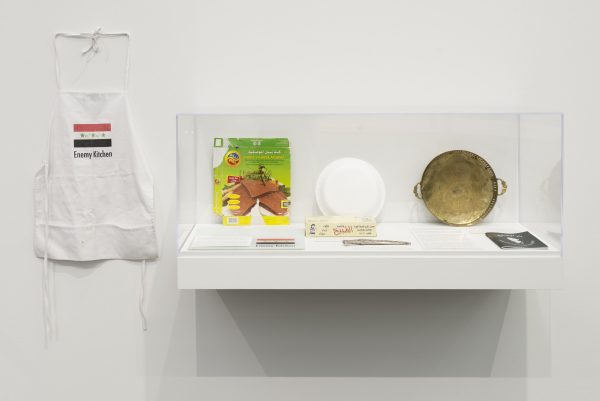
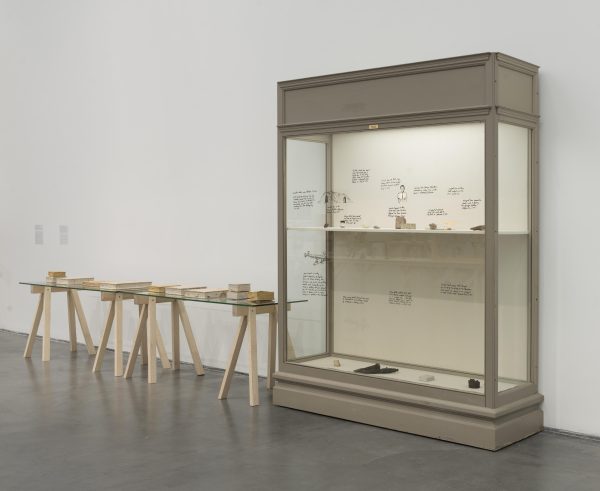
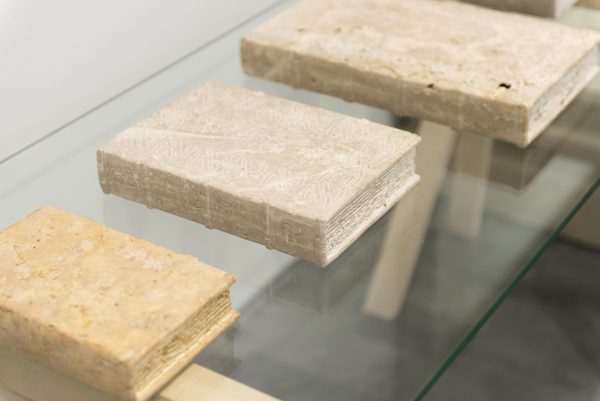
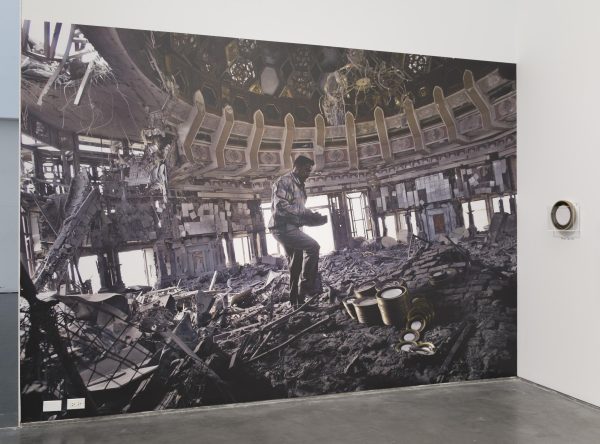
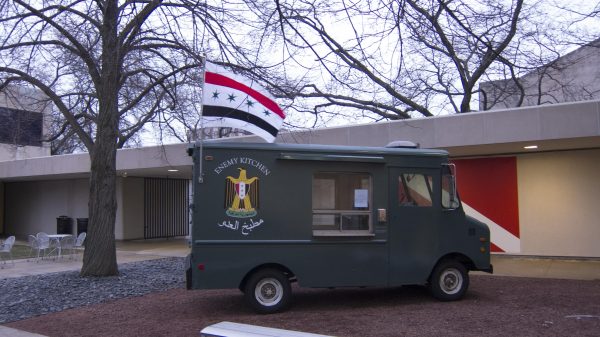
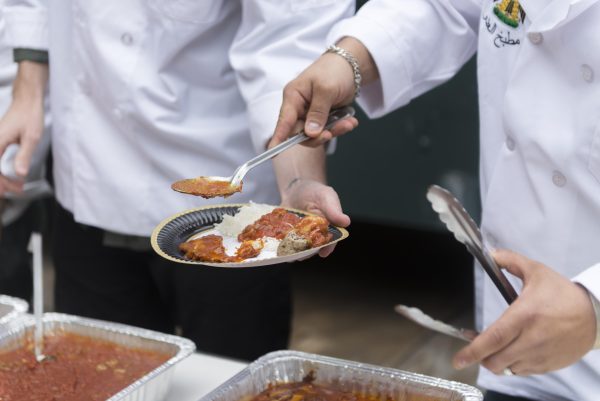
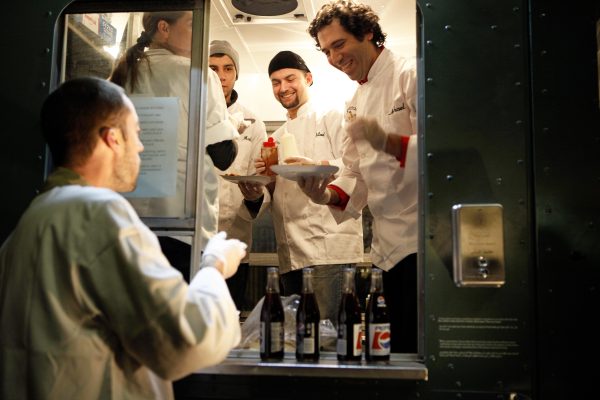
The artist’s first-ever museum survey features early works, a new commission, and major installations, such as Enemy Kitchen (2003–ongoing), a pop-up food truck that serves Iraqi dishes made from recipes that Rakowitz and his mother collected through workshops and extensive community liaisons. Also on view are Spoils (2011), a project that saw the artist serve Iraqi date syrup and venison on Saddam Hussein’s very own china, and The invisible enemy should not exist (2007–ongoing), a lifelong project to fabricate at full scale every single item looted from the Iraqi National Museum. The exhibition also includes a portion of Rakowitz’s commission for Documenta 13, What Dust Will Rise? (2012), for which he worked with stone carvers to re-create items from the State Library of Hesse-Kassel that were lost in the 1941 fire of the Fridericianum, using stone quarried from the ruins of sixth-century sandstone Buddhas destroyed by the Taliban in 2001.
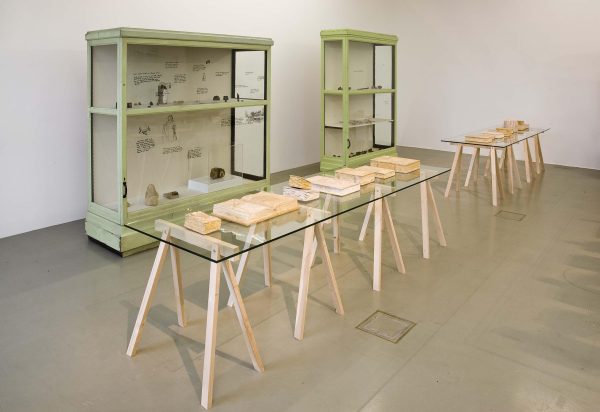
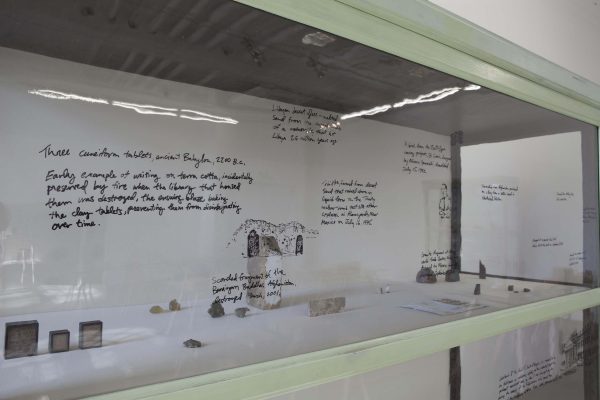
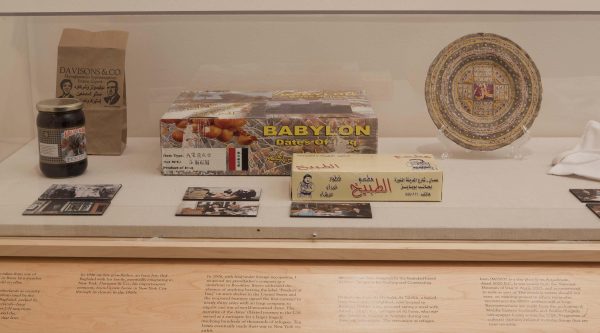
Carousel: images - Full Size Images
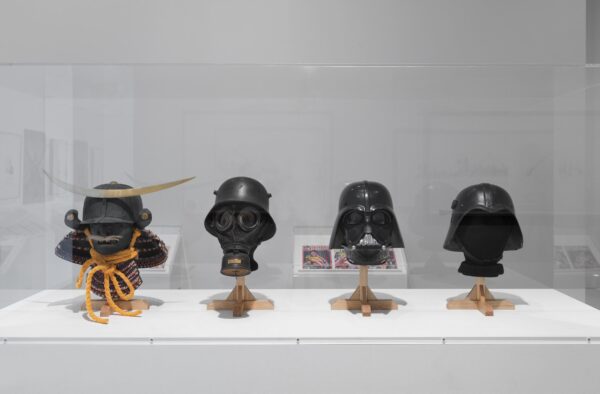
The title of the exhibition, Backstroke of the West, is a mistranslation of Revenge of the Sith, which was used for a Chinese bootleg version of the film and likely gleaned from a program such as Google Translate. The title speaks to Rakowitz’s interest in translation as a means of traversing social and political boundaries as well as how popular culture can be used to access shared cultural narratives.
Collectively, this exhibition tells a story of restitution and reconstitution and positions Rakowitz as one of the most important artists of our time.
The exhibition is organized by Omar Kholeif, Manilow Senior Curator and Director of Global Initiatives at the Museum of Contemporary Art Chicago. It is presented in the Bergman Family Gallery on the museum’s second floor.
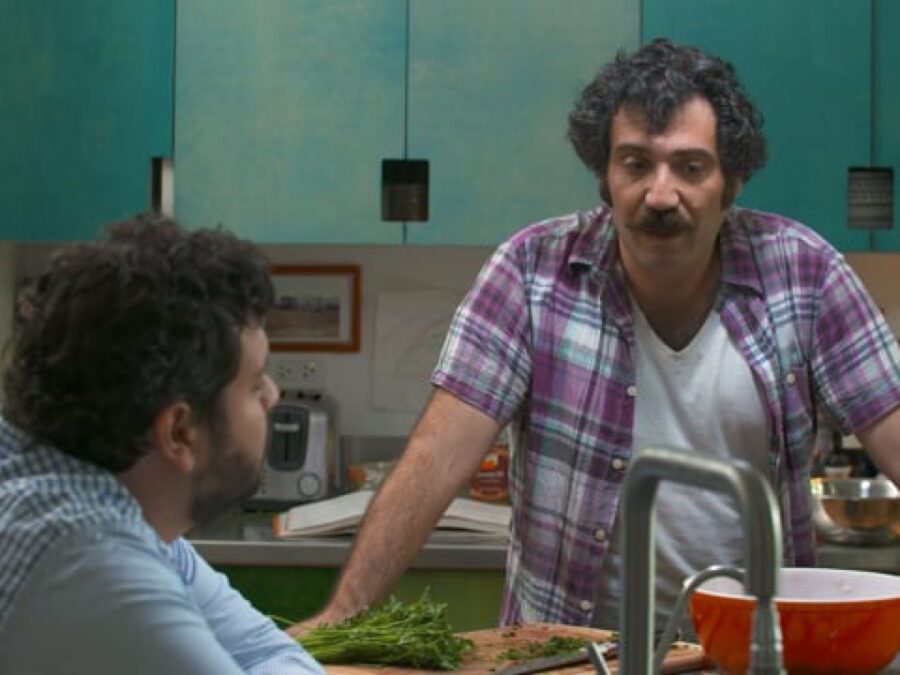
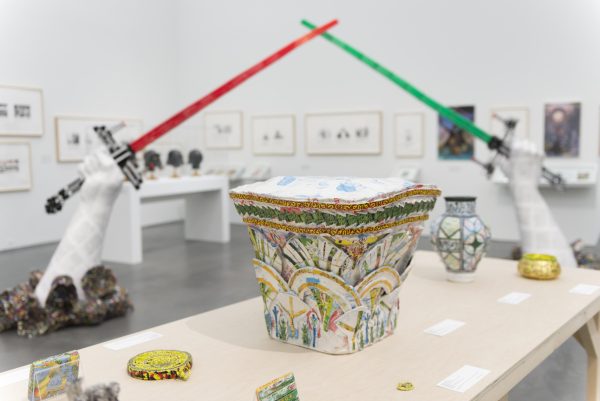
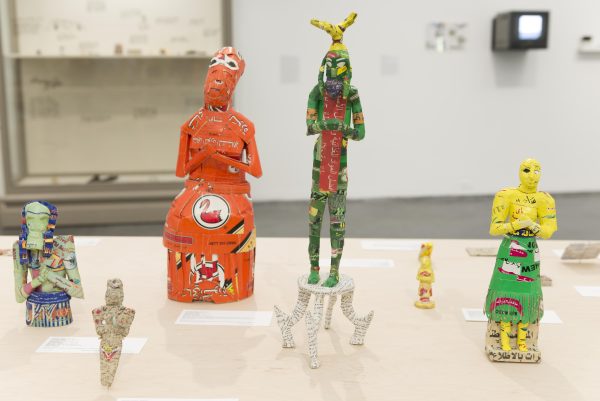
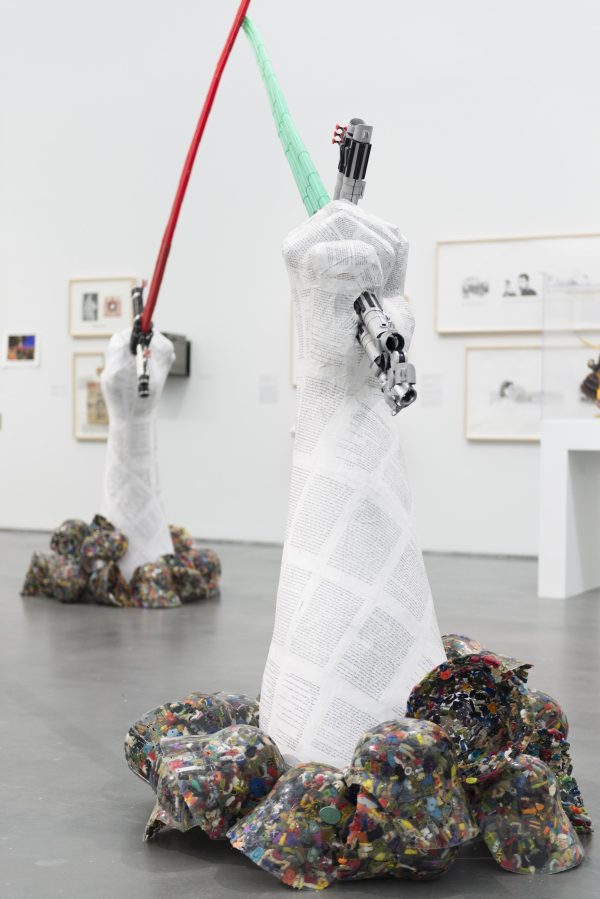
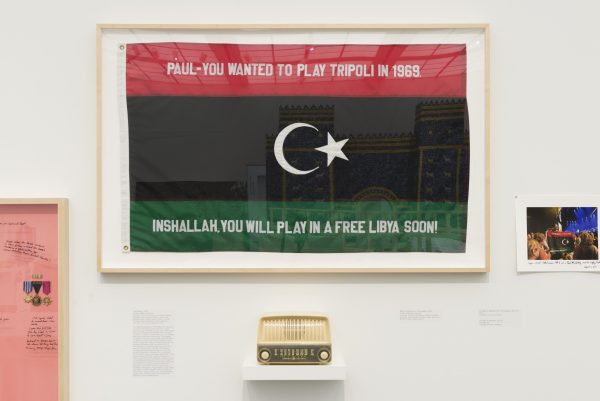
Carousel: Installation Views - Full Size Images
Related Events
-
-
-
Events
Teacher Tour: Michael Rakowitz: Backstroke of the West and Chicago Works: Amanda Williams
Oct 07, 2017
2 pm–4 pm
-
-
Transcripts
Find transcripts for the video works featured in the exhibition.
-
Where am I?
Why am I here?
Who am I?
What are these things doing here? Or why am I here?
I never knew stuff like that really existed. I thought things like this were only in pictures like that. In books. Not for real. But when you see these things up close and for real, something there aren’t words for . . . you know? It’s just something you feel. Something you know.
What’s the last thing I remember? What do I remember? Oh, I don’t want to . . . yeah, I don’t want to think about that. No.
What else do I remember? I remember faces. I remember the faces. I remember it was back in 2005. It was February. This day was nice, and the day before had not been so nice.
My sarge said I did a really good job that day. He even told me very matter of fact, he said, “When those people that were working in there in admin, when they were too squeamish, they were too squeamish to do the retinal scans because the man no longer had eyes where eyes once were, they were too squeamish, they didn’t want to touch the body of a dead detainee, a dead Iraqi,” he said, “you jumped right in there. You jumped right in there. Took charge.” And I did the entire workup alone. But I don’t remember.
You guys ready to come out? You guys ready? On me. Let’s go.
You look like them. Or they look like you. Laying there. With toe tags. The blood had ceased running through their veins. It had formed clots on the cots. The net webbing was full. And so it dripped. It dripped onto the floor. It pooled and it dripped.
I’m sorry. Why do you look at me like that? Like . . . like we’re different?
Look, I said I was sorry. We’re not different. I mean, we are. But we’re also the same. Because both of us, all of us, we were created. We were sold and stolen—or stolen and sold—to a destination unknown that’s not our home. We shouldn’t be here. We have stories to tell, to our families, our friends, in our own native tongue. We have stories to tell. What’s your story? I just keep talking. I just keep talking. I guess to myself, because you’re not answering.
You guys! Why are you here? Don’t y’all wanna go home? Be free? I can get y’all outta here. Now’s your chance.
When I see you, your faces, I see your faces without eyes and I think of that day. They were broken but we destroyed them. You are broken so we keep you locked up. Fragile. Temperature-controlled. Humidity-controlled. Without the chance of human hands touching you, except for a quarterly dusting. But always gloved.
I will always be gloved, too. And never again shall blood course through my veins.
-
Michael Rakowitz: My name is Michael Rakowitz. I’m an artist based in Chicago. And I’m here today at Creative Time’s offices in New York City to surrender the Iraqi plates that belonged to Saddam Hussein to the US State Department that I used for my project titled Spoils.
In June of 2010 I was approached by Creative Time to participate in a collaboration between artists and the chief chef at Park Avenue Restaurant, Kevin Lasko. And the project that I ended up proposing was called Spoils, and the project basically consists of a dish where Kevin Lasko incorporated Iraqi date syrup into a main dish on the menu, and the dish was then served on plates that were looted from Saddam Hussein’s palaces following the US invasion in 2003.
I was expecting reactions to be complicated because the project is indeed provocative and puts the diner into a position of having to take a position, of actually choosing whether or not to be served this delicious food on a surface that’s loaded with very complicated history. So, what I was really exploring was the relationship between the sweetness of the Iraqi date syrup—which itself is supposed to be a harbinger of good things to come; it has a lot of metaphorical power in Iraqi culture—the bitterness of the surface upon which it’s served, in terms of it being a plate that was used by Saddam Hussein, and then the diner’s tongue. So, that kind of dynamic triangle was something that I was very interested in exploring, and it’s not anything that’s loaded with a pleasant experience.
On November 23, the restaurant received a cease and desist letter asking them to refrain from using the plates and asking them to follow procedures where they would essentially turn over these goods that the Iraq Mission to the UN believed represented Iraqi cultural property.
This plate belonged to King Faisal II of Iraq, who was assassinated in 1958 when he was 23 years old. And one of the photos after the coup d’etat that dethroned him showed the plates piled up outside his palace.
And these plates were actually looted from Saddam Hussein’s palaces, so he himself had used the plates that were in the possession of the former Iraqi monarch. And this is actually Wedgewood china made in England. They were a gift from the Queen of England to the King of Iraq.
In this way I think the project follows through with a lot of the traces that I was interested in in terms of where the object went, where it belongs, the history that’s loaded inside of it. I’m somebody who doesn’t believe in the destruction of monuments and in the tearing down of symbols of power that people may have resisted or may have resented. I think that’s part of a place’s history. And I think that when those symbols are erased you’re dealing with an unhealthy amnesia that countries and people tend to fall into.
US Marshal: We’re dropping them right off now at the – to the Iraqi –
MR: Embassy?
USM: – embassy, yeah. To the recognition on 79th Street.
Creative Time employee: Four copies. And two copies of the –
USM: The Iraqi PM was in town with Bush yesterday –
MR: Yeah. With Obama.
USM: Obama. You’ve got me on Bush now. But he was hoping to bring them back on his trip back.
MR: Wow.
USM: So, I don’t know if it’s gonna happen that quick or not, but that’s why they wanted to do it today.
CT: That’s why they wanted it so quickly.
MR: Wow.
USM: Yeah, it came all the way from DC the request to get this done today.
I was a little bit surprised that the Iraq Mission to the UN would want back the symbols that the US and many of the people in Iraq had seemed so eager to dispel and to destroy.
The address of the Iraq Mission to the UN is 14 East 79th Street.
We’re standing in front of the Iraq Mission to the UN, and we’re here because the US Marshals are turning the plates over to the Iraqi government. What they told us in Creative Time’s offices was that they wanted this to coincide with Prime Minister Nouri al-Maliki’s visit to Washington. He was in DC yesterday meeting with President Obama. And they’re looking to bring the plates back home to Iraq on the same flight as the current Iraqi prime minister.
I think the way that embassies and missions work is that you’re technically on Iraqi soil, or you’re on the soil of the country of the embassy, and so we’re on Iraqi soil. So, this is the first time my family’s been back.
MR: So, they’ll be returned to Iraq?
Iraqi Mission employee: Yes.
MR: Tomorrow?
IM: We don’t – I’m not sure, but very soon.
MR: Okay.
IM: Very soon, yeah.
MR: Will it go in a museum or . . . ?
IM: Should be.
MR: Should be? Yeah. What I heard was that the plates were a gift from the Queen of England.
IM: That’s right.
MR: Wedgewood china. So . . . and then, the more recent china, all different places. Limoge, Italy. . . . Thank you so much.
IM: Okay.
MR: And good luck.
IM: Thank you.
MR: And inshallah. Good times ahead.
IM: Thank you very much.
MR: Thank you.
IM: Thank you. My pleasure.
I had no idea. I honestly thought that we would be in some kind of office where people were getting passport visas or something else, and I never expected this level of state presence. I mean, these people walking in and out of the room, opening the door, shutting the door. It was like a striptease. And then they let us into the room and we had this very frank discussion about the plates, and they were very happy to receive them back and said that they were part of their cultural heritage. So, I’m a little in shock. Pretty incredible.
Rachel Maddow: Best new thing in the world today is obviously the end of the Iraq War. Defense Secretary Leon Panetta saying today in Baghdad that Iraq is now fully responsible for directing its own path. The war ending as it should, Iraq now becoming its own sovereign country without our flag flying over it anywhere, without our troops anywhere in it. That’s easily the best new thing in the world, maybe this decade.
But there’s another Iraq story that is ending as it should. It doesn’t beat the end of the war, but it’s pretty good. This fall, a Chicago-based artist got together with a New York City arts group and a restaurant. They put together an ambitious, big-thinking art project. They found on eBay dinner plates believed to have been looted from Saddam Hussein’s palaces after the US invasion. They bought the plates and as an interactive art installation they served on Saddam’s flatware and plates venison with tahini and date syrup and pomegranates. The project was called Spoils. The artist said he wanted diners to think about how the plates got to their table. “This is about the symbols of power in that regime that have now come into the ownership of the populace that were living under Hussein,” he told The New York Times last month.
But you can’t just buy Saddam’s dinner plates on eBay. Not legally, anyway. When the art group was formally notified that the plates really belonged to the Iraqi people and needed to be returned, they agreed to give them up. So, earlier this week, in what The New York Times described as a strange but cordial visit, the artist helped the US Marshals pack up the plates so they could be delivered to the Iraqi Mission at the UN. By Tuesday afternoon the plates had made their way to DC, where Iraqi Prime Minister Nouri al-Malaki was in town to meet with President Obama. The plates were then scheduled to fly back to Iraq with Malaki on his private plane on Wednesday, which is to say this ambitious, big-thinking art project ended as it should have. The Iraq War is over, Iraq is a sovereign nation, and one of the very small things that means is they get their stuff back, too.
Now it’s time for The Last Word with Lawrence O’Donnell. Have a great night.
-
Michael Rakowitz: In 2006, I opened a storefront on Atlantic Avenue in Brooklyn, one of the centers of New York’s Arab Community, as part of a project called Return. The storefront operated from October until the end of December of that year.
The story begins with my mother’s family, who were forced to leave Baghdad in 1946, eventually immigrating to New York.
This photo shows my grandfather, Nissim Isaac Daoud bin Aziz, with his family, so large that they extend beyond the frame provided by the desert oasis backdrop. This next photo shows my grandfather on the right, his younger brother Salim on the left.
Beginning in the 1920s, my grandfather owned and operated an import-export company called Davisons & Co. When the family came to New York in 1946, he reopened the company, and his first parcels were sent between Iraq and the United States. The company closed in 1963 and my grandfather died in 1975.
In the fall of 2004, I participated in an exhibition in New York City where artists were invited to produce site-specific works within local commercial spaces and storefronts. At the time, I’d been reading media accounts about the progress one year after “mission accomplished.”
The reports were of course pessimistic, and served to expose the Iraqi infrastructure that had fallen apart as a result of the war, including that of shipping and trade. In response, I decided to reopen my grandfather’s import-export business, however modestly.
I became the new proprietor and created a drop box, pictured here, that featured the original typeface and layout of my grandfather’s letterhead.
I used the project budget to provide free shipping for Iraqi citizens living in the US, inviting them to send an object of their choice, free of charge, to any address in Iraq.
When I initially proposed Return as a storefront to Creative Time, in addition to the gesture of shipping items to Iraq, I also wanted to try importing something clearly labeled “Product of Iraq.”
I had wanted to investigate this new facet since August of 2004, when I discovered a large red can of date syrup at Sahadi Importing Company, on Atlantic Avenue in Brooklyn. Sahadi’s was one of the stores my grandparents frequented when they first arrived in New York.
When I brought the can of date syrup to the cash register, the owner Charlie Sahadi said, “Your mother’s going to love this. It’s from Baghdad.”
I looked at the label, which was clearly marked “Product of Lebanon.” And that’s when he told me that the date syrup is processed in the Iraqi capital, put into large plastic vats, and driven over the border into Syria, where it gets packed into unmarked aluminum cans. It then crosses the border into Lebanon, gets a label, and is exported to the rest of the world.
From 1990 until May 2003, this was one method that Iraqi companies used to circumvent UN sanctions.
When I asked why it was still being practiced in August of 2004, more than one year after sanctions had been dropped, Charlie replied that prohibitive customs and security charges were to blame. Importing products directly from Iraq was just too much of a risk. It would be bad business.
After this impromptu first lesson on importing, I decided to further investigate the history of Iraqi exports beyond oil.
The date syrup led me to dates, which were legendary in Iraq, renowned as the best in the world, with a yield of over 600 different varieties.
In the 1970s, Iraq was the world’s chief exporter of dates, and dates accounted for their second largest economy after oil. At its peak in the mid-1970s, the Iraqi date industry listed over 30 million date palms in the country. By the end of the Iran-Iraq War in 1988, this number had been halved to about 16 million. At the end of the 2003 invasion, only 3 million remained.
Together with Sahadi Fine Foods—whom I was able to get interested in my “bad business” as “good art”—I signed a deal with an Iraqi company, Al Farez, to import one ton of Khestawi dates from the city of Hilla. It was the first such deal in more than 25 years.
Notice the area where it lists me as their client, under the name “Michael Daoud Rakowitz.” Many companies asked me what my grandfather’s surname was before he fled Iraq in 1946. I told them it was Daoud. More than one replied, “Welcome back, Daoud,” and many of them referred to me by that name instead of Michael.
The dates were to be packed in boxes clearly labeled “Product of Iraq.”
When I told Atheer, the General Manager of Al Farez, that this would be the first product on US store shelves in over three decades to list Iraq as its country of origin, I added that if he and his company had anything to say to the American consumer, they could say it with the design of the box.
And the result was wonderfully crazy: amid all the swaying palm trees and these bunches of dates that seem to be hovering mysteriously in mid-air, there’s an art history lesson.
On the top left is a photograph of the Lion of Babylon. The caption reads simply: “Babylon, Iraq: genuine lion.”
On the lower right, another photo: “Ishtar Gate, reconstructed.” The original gate was taken by a foreign power, the Germans, in the early 20th century, and reconstructed brick by brick in the Pergamon Museum in Berlin. The lion still remains.
On the right flap, they clearly list “Product of Iraq,” and even go so far as to print the flag.
And they were very excited when the boxes came back from the printer. I received multiple photos by email showing the box with its cover on a table, the box with the cover off on another table, the box on a chair, etc. With the business transaction came communication, and with that communication came friendship.
When I first corresponded by email with Atheer, he explained to me that my fascination with dates must come from my mother’s side of the family, as it’s said that every Iraqi has a date in their genes. Atheer wrote that in the first moments of life, it is traditional for parents to place a date in the mouth of their newborn baby so its first taste of life is sweet.
Partway through our transactions, I learned that Atheer and his family had had to leave Iraq because it was becoming too dangerous. His wife and kids had witnessed a man being shot right in front of them while they were at a restaurant.
Suddenly, the conversations Atheer and I were having became that of two exiles. He would tell stories of Iraq, of what it looked like, what mann-el-sema tasted like, how thick the trunks of the palms get.
At one point he realized how he was speaking, and he sighed: “Do I sound like your grandfather yet?”
As the dates ripened over a one-month period, the farmer climbed the trees each day and snapped a photo, and I would get an email with a JPG and a message like: “Here is how your dates are doing today, okay?”
This particular photo is interesting because it shows all the different ripening processes at once.
Finally, the farmer sent me photos of the dates being cut down; being sorted by women on the farm; being placed in their boxes; and the farmer’s son.
This photo shows one ton of Khestawi dates in a warehouse in Baghdad, ready to be shipped by truck to Amman, Jordan, where they were scheduled to arrive by the beginning of October. From Jordan, they were to receive a direct flight to JFK airport.
This type of freight was prohibitively expensive, but since Return was also an art project, I had cultural money to work with—the only way to really make this “business” transaction possible.
The truck traveled along the highway between Baghdad and Amman, which is the most dangerous road in the country. It waited in a line of cars at the border that was reported to be four days long, as hundreds of thousands of Iraqis tried to flee the worsening sectarian violence.
Having finally reached the checkpoint, the Jordanian border guards informed the driver that he needed a Radiation Scan Certificate, declaring the dates free from contamination. This seemed to corroborate the belief that depleted uranium was used during the war.
The truck returned to Baghdad, got its certificate from the Ministry of Environment Radiation Protection Center, returned to the border, waited another few days, and then this time the Jordanians flatly refused the cargo, claiming it was a security concern.
The poor truck driver then headed north to Syria, drove right through the border, and dropped off the dates at the airport in Damascus, where the new plan was to get it on a plane to Egypt, then onward to the US.
The shipment was held for a week, and was then discovered to be so blistered from three hot weeks in the truck that Al Farez deemed it unacceptable for export. So the shipment died in Syria.
Meanwhile, the storefront opened in October 2006, while the dates were wending their way along their impossible journey.
Without any Iraqi dates to sell, I temporarily offered four varieties derived from Iraqi seed and grown in California, an interesting subplot.
In 1911, Bernard G. Johnson, the “father of the California date industry,” established a USDA experimental station near Mecca, California, and planted date seeds acquired from Iraq.
That successful endeavor marked the birth of the industry. Today over a quarter million trees in the Coachella Valley primarily produce four varieties native to Iraq: the Barhi, Halawi, Khedrawi, and Zahidi.
Also available in the store were cookies and syrups made from Iraqi dates but labeled as products of other countries, including the Second House cans. Customers could buy these products and also learn about their shipping and packing narratives through wall texts. A timeline explaining the history of dates from ancient times through the present was displayed as a mural in both English and Arabic.
But most importantly, the store and its daily updates were communicated to customers, many of whom stopped in repeatedly to ask when the Iraqi dates would arrive.
The dates suddenly became a surrogate, traveling the same path as Iraqi refugees, who are themselves mostly turned away by Jordan, and who then try their luck in Syria in an attempt to get to Egypt.
Tragically, many never reach their destination. Initially, my belief was that the critical moment of the project would be the ability of the imported dates to interrogate the restrictive laws that inhibit Iraqi items from entering the US market—seemingly absurd laws when you consider the US government’s high-profile programs for rebuilding Iraq and rehabilitating its economy.
In this case, the perceived danger of entry was invested in these sweet innocuous fruits, otherwise symbols of good things to come.
Here was a fruit that would ask questions of all the US customs officials who examined it, forcing them to consider their relationship to the word printed as its country of origin: Iraq.
The dates would serve as a litmus test, amplifying and illuminating the reasons for these hindrances and delays.
But suddenly, my business was instead illustrating a story that most people in the States were not hearing, and the store became a place where that crisis and its affiliated narrative was being disseminated—hardly the exchange a customer would expect.
Customer reactions were as layered as my gesture of opening the store, with many speaking from the position of nostalgia and memory, which always seemed to be a window into the pain or trauma of having to leave Iraq, or being unable to return.
A man named Shamoon Salih, an Iraqi Jew who left in 1960, came in many times. “Seeing all this makes me nostalgic, sad, confused, and sick to my stomach,” he told me. “When we left things were already bad, but look at what this country did there. It’s unbelievable, a disaster.”
On another of Shamoon’s visits, I discussed the whereabouts of the dates, at that point unknown. Shamoon said, “I’d appreciate if you could just hold on to a handful for me, just a little something for thikra.” Thikra, he explained, means memory, nostalgia. “It’s for when you are homesick, when you miss your home.”
The project also functioned as a social platform between customers. Joseph Elkallassy came into the store because he was interested in working with an Iraq-based company to import different types of wood or other materials through his family’s furniture company in Lebanon.
While there, he met Ibrahim from Irbil, Iraq, and Omar, who had come in to speak with me about the security requirements for preparing an export to Iraq of white American paint, a much sought-after commodity.
They began speaking among themselves in Arabic and exchanged contact information, having determined that there might be some business possibilities between them. The relationship is ongoing.
Another kind of customer interaction occurred when Hana Ali and her family came to the store to ship boxes of household items and toys to their relatives in Diwanya.
A cousin there had been taken by a group of men in track suits who said they were bringing him in for questioning because he had been seen speaking to American soldiers.
His dead body was found the next morning. People in Diwanya were now fearful of going out because to go out meant crossing a US checkpoint, which meant having to talk to an American, which was an unacceptable risk.
While she and her family were packing up their goods, an American couple walked in. Hana immediately asked them what they thought of the news, then current, that Saddam Hussein had been sentenced to death. A discussion ensued that lasted over an hour.
There were many other such interactions. So, in this way, the project began to function as a community space and a social network where my presence could recede and customers were not reacting to me but rather to each other; the possibility of their meeting facilitated and choreographed through the appearance of this strange store.
After the initial shipment of dates met their untimely end in Damascus, Al-Farez remained determined to stock my store. Atheer arranged for 10 boxes of dates to be airlifted out of Baghdad direct to New York via DHL Courier, for a steep price.
The dates ended up being released after three weeks, during which time the small parcel underwent inspections by Homeland Security, US Customs and Border Patrol, the USFDA, and the USDA.
Much to the horror of Sahadi’s customs broker, some US Customs agents determined that the shipment needed to be returned—they believed it was illegal because we were “at war with Iraq.”
The broker explained to them that we were no longer at war with Iraq but were in fact supposed to be rebuilding the country. With the dates finally in the store, I changed the sign to read, “Iraqi Dates Have Arrived.”
Customers flocked, eager to try the much-awaited fruit that had now interrogated and scandalized every government agency from Baghdad to Damascus to New York.
A fruit that asked questions. And was astonishingly delicious.
We received four different types: Azraq, Ashrase, Ibraheme, and Kheyara. Close to 100 customers had pre-ordered individual boxes of dates, orders of course no longer possible to fulfill.
We limited each purchase to ¼ pound per person. Shamoon returned, for his taste of thikra. It was very emotional for him.
He slowly put his first date in his mouth, closed his eyes, smiled, and softly said, “this is 46 years in the making.” He bought much more than the ¼ pound limit.
When I told Atheer how happy the customers were to finally receive the dates, he asked me to take pictures of them.
Here they are.
Related Content
-
Gallery Takeaway
Comic Book (PDF) -
Books
Michael Rakowitz: Backstroke of the West
Softcover, laminated, with a black foil stamp; 144 pages. Published by the Museum of Contemporary Art Chicago. -
-
Articles
A Recipe for the Next 50 Years
-
Articles
Michael Rakowitz: Artistic Chameleon
-
-
Gallery Text
The Ballad of Special Ops Cody Transcript (PDF) -
Gallery Text
RETURN Transcript (PDF) -
Gallery Text
Spoils Transcript (PDF)
Funding
Lead support for Michael Rakowitz: Backstroke of the West is provided by the Harris Family Foundation in memory of Bette and Neison Harris: Caryn and King Harris, Katherine Harris, Toni and Ron Paul, Pam and Joe Szokol, Linda and Bill Friend, and Stephanie and John Harris; the Margot and W. George Greig Ascendant Artist Fund; R. H. Defares; Helen and Sam Zell; Anne L. Kaplan; and Cari and Michael Sacks.
Major support provided by Nancy and Steve Crown, Kovler Family Foundation, and Elissa Efroymson and Adnaan Hamid.
Generous support is provided by the Joyce Foundation, the Shulamit Nazarian Foundation, Jack and Sandra Guthman, The Fine Foundation, Helyn D. Goldenberg and Michael Alper, The Malkin Family, Paul Gray and Dedrea Armour Gray and Richard Gray Gallery, Vicki and Bill Hood, Melissa Weber and Jay Dandy, Lisa Yun Lee, Rhona Hoffman Gallery, Barjeel Art Foundation, Jane Lombard Gallery, Sotheby’s, and Lynn Hauser and Neil Ross.