Editorial
Thanksgiving, Dinnerware, and Saddam Hussein
Nov 24, 2016
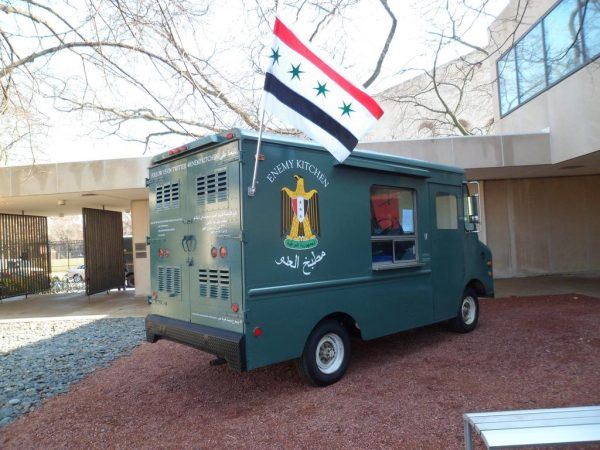
This week, many of us probably pulled down china from shelves so high up that the air was thin, dusted them off, then polished the crystal in preparation for Thanksgiving celebrations with family and friends. Whether we recognize it or not, we’re making a (sub)conscious effort to select dinnerware that speaks to a special occasion; we use the “good china” as opposed to the items we use every day.
Artist Michael Rakowitz, who has a solo exhibition at the MCA next year, confronts and conflates this almost subconscious way of deploying dinnerware in two artworks, Spoils, which took place in New York in 2011, and his ongoing Enemy Kitchen.
For Spoils, the artist served Iraqi cuisine on eBay-purchased plates that were actually looted from Saddam Hussein’s palace—plates that later had to be repatriated to Iraq. (You can read about the incident on the artist’s website.) These plates reappeared in a few iterations of Enemy Kitchen as limited-edition paper plates, making them a kind of disposable luxury. The late dictator’s plates become not only a cultural triumph over a brutal regime in Rakowitz’s works, they also challenge the eater’s perceptions about the culture behind what is being served and how.
What are your dinnerware choices saying this Thanksgiving?
The Enemy Kitchen Food Truck was commissioned by the Smart Museum of Art for the 2012 exhibition Feast: Radical Hospitality in Contemporary Art.