about the films
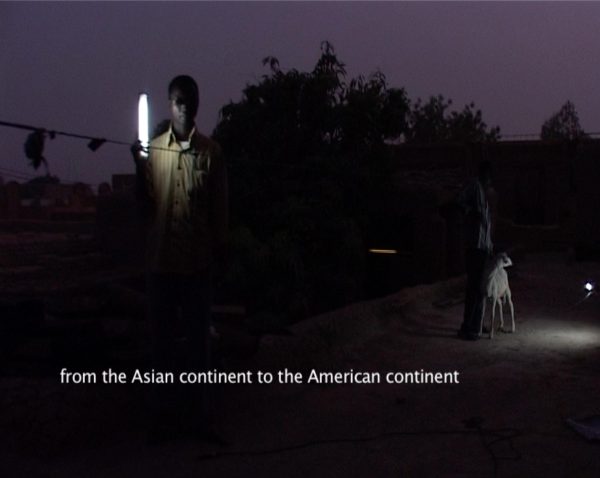
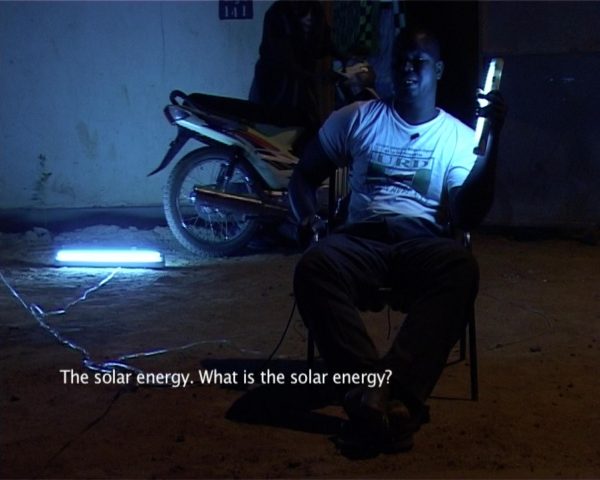
Neil Beloufa’s Kempinski(2007), which he calls a “sci-fi ethnographic documentary”, unfolds as a set of interviews with young Malians. Using the present tense, they tell us how they imagine their life in the future. Their answers humorously hint at cultural stereotypes that Westerners often project on inhabitants of the African continent, namely in ethnographic documentaries. The characters’ previsions span a wide range of possibilities, from mating with cattle to worshipping them, but also include virtual lovemaking and telepathy.
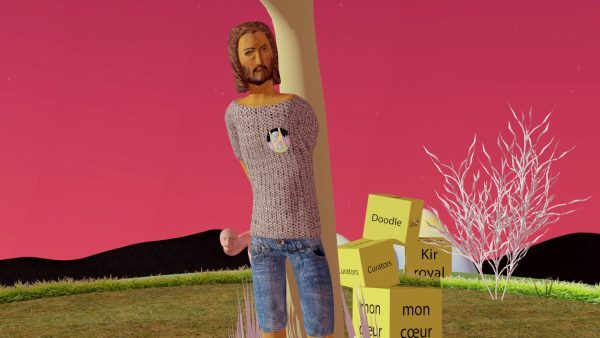
Bertrand Dezoteux’s Harmonie(2018) tells the tale of Jésus Perez, a Frenchman exploring a planet inhabited by otherworldly “intelligent” creatures. These aliens can only speak two words: “oui” and “non”, French for “yes” and “no.” Amazed by their knowledge of the French language—one the most effective tools used to assert French hegemony in colonial times, he asks them various questions to understand their world. Using humor and references to B movies, Harmonie turns the human into the invader, and the alien into the invaded—an inversion of roles that may be read as a critique of colonial histories.
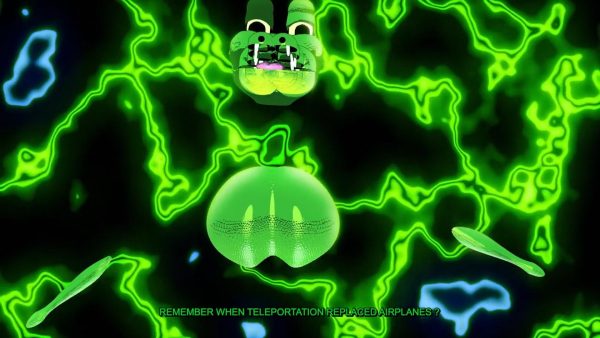
In Meriem Bennani’s Party on the CAPS(2018), teleportation has “replaced airplanes” as announced by the work’s narrator Fiona, a 3D animated crocodile who is the mascot of the CAPS, short for capsule and the name of the fictional island in the Atlantic Ocean where the film is set. But instead of facilitating freedom of movement, teleportation enables the policing of immigrants wishing to enter the US. In this dystopia, Moroccans are intercepted mid-teleportation and trapped on the CAPS, a process which alters the bodies and habits of this diasporic community.