Editorial
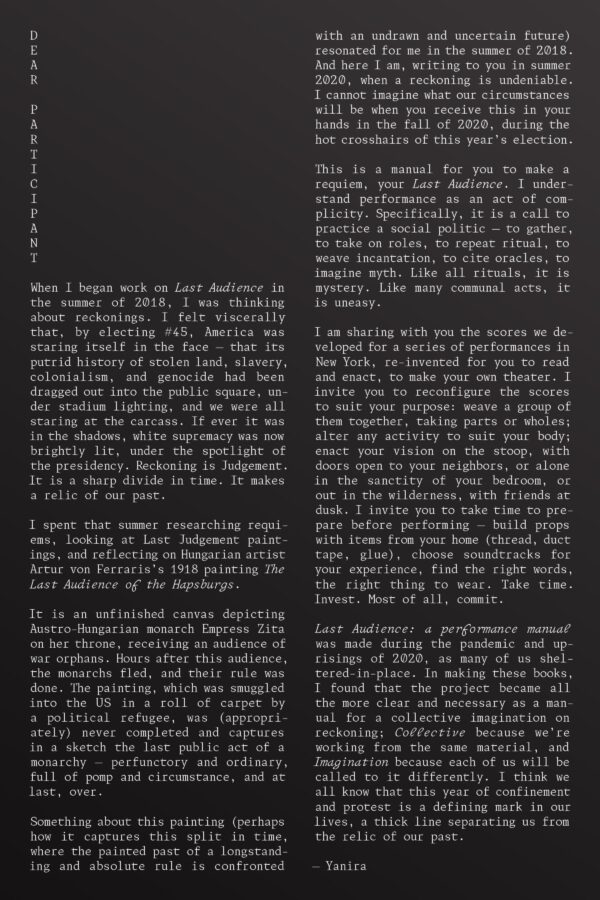
Last Audience: A Performance Manual #1
Join the artists of a canary torsi and your fellow audience members for a sneak peek of Last Audience: a performance manual! Get to know the artistic minds and big ideas behind the project, and find out how to use these visually arresting manuals to create a unique performance on your own, or with family and friends.
[Swelling tonal music]
MODERATOR: Thank you for gathering and being here with us today. We would like to take a moment to acknowledge the deep-rooted and thick entanglements that bind us to one another. You may all be in your separate spaces, but we share a common history. This history is what our conversation today centers. It centers difficult themes of judgment, reckoning, redemption. We are all on unceded, stolen ground.
We are all inheritors of slavery and patriarchy. It is our communal heritage. Performance, likewise, is a communal act, a complicit gathering to site, excavate, dismantle, and rebuild what binds. We invite you to take a moment to remember the past. To be here for the present and to call for a future that binds us with care.
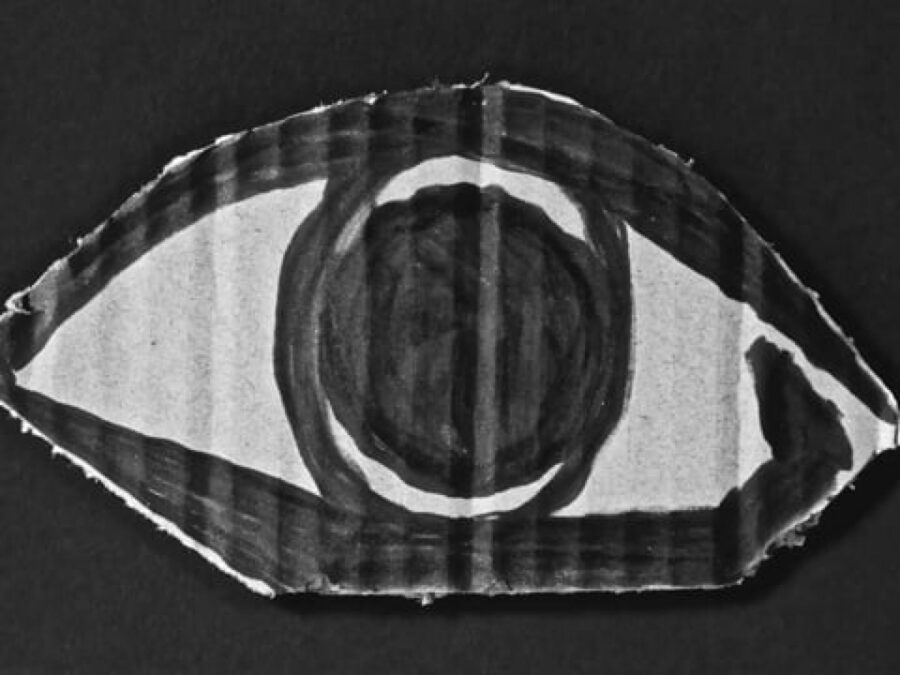
We are going to start our evening together with an invitation and perform a score from Last Audience: a performance manual. We invite you to do this score with your video off and your mic muted. It is a score for you to follow together in your own individual spaces. The score is called “Dust.” Please take a moment to sit a bit away, but with a direct view of your screen. You will want to have space around you.
We are going to do a series of gestures together. Modify, add, reimagine any movement or gesture for your own body, energy, state. This is for you—and all of us.
[Music fades, rainfall]
In a minute or two, you will hear a voice offering you text in your ear. Please repeat each line out loud. I’m going to be offering you gestures directly across from you. I ask that you repeat these with me. You are welcome to add any additional movement. I’ll be right here with you.
It is a day of wrath. Of mourning. It rends my shirt. Scratches my chest. Rips my hair. Pounds the cement with my fists. Raises my face up. Splits my lip.
Say this next part between clenched teeth: There is an unforgiven, an energy to accuse. The stories pile up. It is easy work. Bodies over there. Poof. Bodies over there. Ah. The bodies are lodged in your spleen. In my gallbladder. Squiggly wiggly. Squiggly wiggly. Squiggly wiggly. Say these next words as if you are making a proclamation: Cross. Part. Divide. Cross. Part. Divide. Cross. Part. Divide. Sky and magma.
Speak these words in a seductive tone: Look at the contortions. On this side, leg, wrapped around neck. Knees at ears. Head at crotch. Pointer. Ass. Say these words in a questioning manner: On this side, all grace. Palms. Upturned. Deserving. Pointer fingers. This side hot, this side cold. Light in the middle. Jump! Jump!
Start crying. As you cry, repeat these words: Fall to knees. Clasp hands. Appear. Fall to knees. Clasp hands. Appear. Fall to knees. Clasp hands. Appear. Fall to knees. Clasp hands. Appear. Fall to knees. Clasp hands. Appear. We all pile on avenging. Cape. Mask. And arrow. Cape. Mask. Shield. Spear. Arrow. Orb. And the pleasures of confession. And the sense discarded to reparation. Crying is an ecstasy none can afford.
Sing, choir! Ahhhh![Reverberating music echoes]
Sing, choir! Ahhhh! [Music continues to echo]
We are as contrite as dust. We are as contrite as dust. We are as contrite as dust. [Shrill tone begins, then fades]
[Ambient music continues, then fades]
TARA AISHA WILLIS: Hi, everyone. Thank you so much for being here. My name is Tara Aisha Willis, I am Associate Curator in Performance and Public Practice at the Museum of Contemporary Art Chicago. I am a Black, interracial woman with light skin, tortoise-shell glasses, and my hair is in a curly puff on top of my head, and I have a wall of artwork behind me and dangly earrings on. I’m going to ask, as a few different folks to come onto the screen shortly, each of them to self-describe themselves briefly as I just did for the live captioning.
So just wanted to ask you all, after that really special experience of that score from Last Audience, to share in the chat anything that you felt or anything that you experienced. And it could be a word, it could be a phrase, a sentence—anything emotionally that came up, anything sensory-wise that came up. I just wanted to hear from you all after doing that score along with the artists.
[reading comments] “Breath.” Yes. Anyone else?
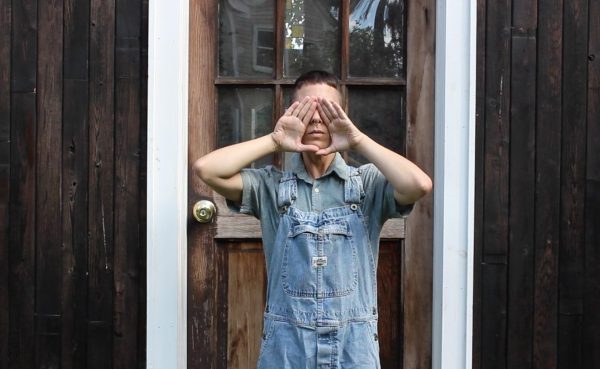
“I loved listening to the words and trying to follow along with them while gesturing and following the visuals at the same time.” Yeah, “contrition,” “vibration,” I love this. “Incantation,” “peaceful,” “out-of-body,” which is so interesting when it’s also a very physical thing to follow gestures. Yeah—”mesmerized,” “slowness,” “connected,” yeah, beautiful. So one of the things, “Why overalls and a door?” Yes—and “the line that ‘crying is an ecstasy that none can afford’ from it.”
So yes, one of the things that is beautiful about this project Last Audience is that it is something that can be interpreted by each person who takes it on, the artists of a canary torsi have created a set of 28 scores, and they can be used by you when you receive them, we’ll give you, you know, we just gave you access to one and of course we’ll give you another one by the end of this event, but if you should decide—if haven’t already—to get the full manual, you know, you get something at home that is yours. Whether it’s the PDF or the hard copy of this beautiful thing, but the idea is really about how we can all do these creations of these artists on our own, in our own way and on our own time. And that was such an important thing to work with them on over the course of this last several months of being in COVID and in the uprisings and in the pressures around the election, to really turn performance on its head in a way
and to take it back to the homes, you know, not asking you all to come to the theater, but what does it mean to give the audience the instructions. And this was a project that originally led the audience, as the performers on stage, through an experience. But in this book version of it, the artists have really taken away the mystery of that experience and put it in your hands. So I hope that just hearing some of the words that other people were popping up in the chat, gives you that sense of how distinct it can be for each of us.
And I just want to be clear that this event is not the performance. The performance is what you do with the manual when you get it. The performance is how you interact with that scores, how you adapt them with your friends or family, or by yourself when you do them. And this event, as well as the one in December, if you end up getting the whole score booklet, you will get access to that.
This event is really a chance to connect around all of those possibilities that live in these performances you can do at home. So you will get a taste today and, you know, what we really wanted to give you a sense of was the questions that a canary torsi, as a collective, has been asking is, “What is at the heart of a performance?” “What is at the heart of an audience?” And “What is at the heart of action and choice?” What we when we are given instructions, and those are really big questions right now, because we have been given instructions over the last several months and we all have really different relationships to what that means and what the ramifications of those instructions are for the people around us. And another thing a canary torsi has really thought through the history and the root of theater and ritual and this idea of sharing something transformative around the hearth at home, not necessarily in a theater itself.
So, you know, in this moment, and knowing that this event, this sort of opening kickoff moment would happen in the weeks right before the election, we really—my colleague, Assistant Curator at MCA, Gibran Villalobos, who is here as well—we had some great conversations about the meaning of doing a project like this that grapples with reckoning, as the artist mentioned in the beginning, that grapples with judgment, blessing, and gathering, and what those choices mean that we take in performance.
What does it mean to do that around this time? During this pressurized moment that we are in. Gibran, why don’t you go ahead and introduce yourself.
GIBRAN VILLALOBOS: Thanks, Tara, my name is Gibran. As Tara said, I am Assistant Curator here at the Museum of Contemporary Art Chicago. I am a Latino man, a brown man, dark hair, wearing glasses with a blue shirt. And behind me you see a bookcase with a sculpture and a painting of a face. Thanks for the introduction, Tara, I’m so excited to join the conversation that we’ll have today, because I think a lot of what you mentioned and a lot of what I’m thinking around Yanira’s project is, indeed, how we make these rules for ourselves. How we interpret them and one of the leading questions that we’ll deal with today is how we will reckon with this history in the next coming months, and potentially years. So thanks for that.
TARA: Yeah, and so in doing that, we really wanted to—we’ll bring up our two speakers for this conversation in a second, but we really wanted to sort of expand, not just to create this event as a way to give you a sense of the project and for those that haven’t decide to get the manuals, you will decide to do it and find out more, but also for those of you that have decided to get them to get a sense of what the artist’s intentions are and the ideas behind it.
Instead of just having a conversation about the project itself, we wanted to expand that and really take up some of the themes and think about it in terms of, you know, some of the actions that people are taking outside of the arts and in relationship with the arts. And in Chicago, specifically. So, we have invited a guest speaker along with the wonderful Yanira Castro, who is the lead artist in a canary torsi.
To give you a sense, we will talk with the two of them and introduce both of them in a second, for about 30 minutes, and then the artists of a canary torsi will guide us through the introduction to that second score I mentioned, which will be shared as a PDF in the chat as well so you can go ahead and do it on your own time—or right after this if are you super excited. And then, just so you know, the artist will stick around after that final score experience together to answer some questions about the manuals if anyone has more practical questions or wants to ask the artist something specific about the project.
So as we have this first conversation, please put your questions and thoughts in the chat while we talk, and we’ll try to incorporate them as Gibran and I moderate, but without further ado, we will read quick bios of the two of them, of our two speakers today. And thank you so much for having this conversation and listening on this conversation with these amazing folks. It’s going to be very special.
Yanira Castro, who is the lead artist of a canary torsi, is a Puerto Rican artist based in Brooklyn, in 2009 she formed the interdisciplinary collaborative group a canary torsi, an anagram of her name. Its work borrows from dance, performance, theater, and visual art, often utilizing interactive technology to form hybrid projects. The work focuses on the significance of gathering and watching. The historical, political, and social resonances of the act of being present together in performance and investigating the encounter of public bodies, the event and the audience. In the work, Castro negotiates complexities of sources, authorship, and practice with a team of collaborators—including the audience—to build as a communal act.
YANIRA CASTRO: Thank you so much, everyone for being present and thank you, Tara for that introduction, I’m so happy to be here.
GIBRAN: I would love to introduce Marshall Hatch, Jr., he is the executive director of the MAAFA Redemption Project. The MAAFA Redemption Project is a faith-based initiative in West Garfield Park here in Chicago that recruits adult men and invests in them with housing, employment, and educational opportunities. The Redemption Project lasts nine months and it aims to create an oasis of opportunity for young men who need a second chance. The young men live on campus with the New Mount Pilgrim Church and the Pilgrim Development Corporation in West Garfield Park along with many community stakeholders. They also participate in rigorous courses that deal with economics and financial literacy, identity, and purpose development. So please, I would love to welcome Marshall Hatch, Jr.
MARSHALL HATCH, JR.: Thanks, it is a pleasure to share this space with you, I’m a 32-year-old African American male, dark rich skin, brown glasses, gray turtleneck, and I sit here in the space of the Old Saint Mel-Holy Ghost Parish in the West side of Chicago, which is the new home of the New Mount Pilgrim Church, and behind me is one of three 25-foot stained glass windows.
YANIRA CASTRO: Should I introduce myself, too? Sorry to forgot to do that. So hi, everybody, she/her, I’m in Lenapehoking, also known as Brooklyn, New York, and I am a light-skinned Puerto Rican woman with long white hair, which today I’ve got up in a bun. I’m wearing a denim top, long sleeved, and I have a necklace that says “vote, vote, vote” because today is the first day of voting here in New York, so go do it if you’re in in New York City and again, so happy to be here.
TARA AISHA: So you know, this seems on the surface in some ways like an odd pairing for a conversation, but when Gibran and I talked about this project, he sort of immediately thought of you, Marshall, and thought it would be a really amazing place to start. To sort of put this project in the context of the bigger conversations that are happening right now, and some of the reasons for that are because the piece, the manuals are grounded in, you know, some theological references and some symbolic references, but also because of this idea of reckoning and judgment and, you know, the Redemption Project has a really specific relationship to some of those concepts and what they actually mean for people on the ground. So I want to start with the word “reckoning” and ask you both, how does that word, how do you interpret that word or connect with it in your work at this particular moment that we are living through in the United States?
MARSHALL: Sure, thanks for the question, again I sit in a space that is traditionally Catholic with traditionally Eurocentric art and over the years, New Mount Pilgrim Church, which is a predominantly Black Baptist church in West Garfield Park, has tried to make this space our own. And so at the turn of the century in 2000, we installed the MAAFA remembrance window. Maafa is Kiswahili for “the great disaster” or “the great calamity,” and traditionally it has been used to talk about the history of the trans-Atlantic slave trade, also known as the middle passage.
And in fact the window depicts a Black man whose body, whose torso, is the Brooks, the famous broadside produced by British abolitionists in the late–18th century to expose the horrors of the slave trade and it’s the schematic of the bottom of a slave ship tightly packed with Black bodies, chained Black bodies. And around it, the rambles spell out “remembrance.” And so the idea for installing that window in this space was really to serve as a memorial to bring into the 21st century the memory of our ancestors, those who endured that horrific experience. But to also remind ourselves of the work that needs to be done in this country, so ultimately, the window serves as a call to action. And it’s a call to America, really, to remember, you know, that remember it’s not really exceptional because as was mentioned earlier, this is stolen land and the country that we inherited was actually built on the back of enslaved people. And that country, the country that we live in now, we’ve deluded ourselves, we live in a constant state of delusion because we fail to remember this history properly. And I think that’s what reckoning means, I mean, I think the ascendency of Trump—and I always say that Trump is not an aberration, he is actually a result of who we are at our worst. And more importantly, he represents what happens when we forget.
So ultimately, the window serves as a reminder to all of us, we need to remember this history, we need to understand that we need to center this history, you know, à la the 1619 Project, which, you know, 45 decried, right. And that is just a result of the symptoms that King talked about, the triple evils in the country is racism, militarism, and materialism or poverty, and those triple evils are kind of driving us over the cliff. And if we don’t do something about it, we as King said, we will be entering into a burning house.
YANIRA CASTRO: Thank you, Marshall, I was really moved by your connection of remembrance and reckoning, those two words. Because you have to reckon when you don’t remember, right? You have to reckon with the history, but you are also reckoning with the fact that are you deluding yourself, that that memory is not calling you to action. Or that the action is not adequate, right? Which also comes in with this word “judgment,” like what is adequate action, which is something I’ve been thinking about a lot. Tara, thank you for the question. And, taking a live performance and transforming it into an object that can you read, that you can see, that you can go and perform yourself, really made me come to terms with the reasonings for why I created
Last Audience to begin with, so normally, as a director, I keep things hidden in the chest.
You know? I keep this to myself, there’s reasons that I—personal reasons that I have, but I want the audience to have a really open interpretive experience with having to put something down and then give it to somebody. Something changed. I began the work of
Last Audience because I felt that the election of number 45 was a deep reckoning for the country, and I felt that there was no longer anyway to not remember. To not think about our history and that we were going to have to deal with it and that it was potentially going to be really, really tough. Certainly in 2018, when I started the project, it already felt tough. By 2020, invited me, Tara, to make this into an object, it was and I think maybe all of us can sort of attest to this, there were times when the burden and the brunt of it was just so much and so many of us were talking and the time of uprising of also having to give ourselves rest, right?
Because of the exhaustion of this history that has been undealt with so these are—this is what I’m thinking about when I think about reckoning and
Last Audience was definitely written as a requiem to what happens when we remember, to what happens when we lay things down, can we lay it down? Can we look at ourselves truthfully? And can we ask ourselves some of the really difficult questions that the requiem as an overarching frame can kind of bring forth, which is to ask for mercy, to figure out what is judgement, how to do judgment. I don’t know the answer to that, it’s a really tough question, I think. And then how to bless. I think these are really difficult words right now, but I think they’re really needed deeply at this time.
GIBRAN: Yanira, when I hear you say about the need of these actions at this moment, I’m also reminded that when I first spoke with Marshall about joining us for this program, one of the things he brought up is that we are creating this action for the moment, but we are also being judged by the past. That which we don’t remember and refuse to remember is still bearing judgement upon us, and the intersection of both of your projects for me is that the choices and the actions that we take in this moment, whether they be scripted or whether they be personal, whether they be going out to vote, right, will have an impact on the future for us. And I wonder if both of you can talk about what that history means right now. So many people are saying this is the most important election of our lifetime. And it certainly feels like it at this moment, but how do we deal and contest with the reckoning this in the future?
MARSHALL: Yeah, I think it’s a matter of who we tell ourselves we are. So I often think about the history of the Civil War and the reconstruction, such a pivotal moment in the country’s history, the existential threat came from within, right? And was at the foundation of the country. And juxtapose that history with what we witnessed during the last presidential debate, in which number 45 says flat out, you know, “I’ve done more for the Africa American community than any other president with the exception of Abraham Lincoln.” In its face, of course, it’s ludicrous, right? But most people would agree that Abraham Lincoln was this great liberator, which is a mythology. The reality is that when Lincoln signed the Emancipation Proclamation in 1863, his hand was actually forced by Black folk who were flooding into Union territory, first considered contraband.
And then Frederick Douglass and many others advocated that, you know, we should arm them, they can turn the tide of the war. So by the end of the war, over a 180,000 Black men helped to save the country, and so the fact that we tell ourselves that we were saved by Abraham Lincoln, you know, what does that do? What does that mythology do as opposed to the truth being no, black folk actually saved the country from itself. And we witnessed that again in the democratic primaries, I mean, Joe Biden was in trouble until South Carolina, until Black folk resurrected his candidacy. So I think the larger point is this narrative that we tell ourselves that is not anchored in truth, which goes back to my point about delusion. That really, we make ourselves monsters. And I think during that conversation that we had before, Gibran, I mentioned scripture. You know, Jesus says that the truth makes us free, not sets us free, it’s a matter of making, how we make ourselves and that is of course tied to the story of us and how we tell it.
YANIRA CASTRO: Yeah, I—the image of 180,000 black men joining the Union forces to me, like, immediately, I just have this image of the congregation or the audience or the way in which a mass body rises to do action and you know, we have a tendency to want saviors and we have a tendency to look at heroes or heroines and I think it’s oversimplified in some ways, right? This one person is gonna do everything to take us there, but in actuality, in history, in history, in real act, it’s like the mass body, the collective of people acting that actually amounts to change.
Lincoln would never have signed the Emancipation Proclamation if there hadn’t been this ground swell of people, abolitionist and Black Americans, pushing for this this happen. I mean that’s not why he started the war, right? So it’s so—and it just comes back to this sense of embodiment and sense of action for me that is really, really important. And, you know, Last Audience, I sometimes had to sort of, every once in a while, had to check myself, like why are you asking the audience to get on their hands and knees. And if I was really honest with myself, it was a deep desire for myself to like—because we somehow need to experience this, we need to get on our hands and knees and understand what, you know, what it means to like, request. Especially being so many of us being privileged don’t know what it’s like to really request, to really get on your hands and knees to ask for mercy and so there is this way in which collective action and embodiment is what forces us to see something, is what forces change. And this goes back to the uprisings that happened this summer and that continue in the sense of like, all this action towards, propelling us towards wanting to change this country. And I certainly hope we do in the next 10 days.
MARSHALL: As you were talking, Yanira, I had the visual image of kneeling, and of course I equated that with submission in the Judeo-Christian tradition, that is a symbol of—of prayer and sincere humility. So that quest that you mentioned? It’s really about repentance and I believe it was Rabbi Abraham Joshua Heschel that defined “repentance” as remorse for the past a responsibility for the future. In the African American tradition, we consider that “sankofa,” which comes from the Twi language, which means—it is not wrong to go back to the past, learn from it, glean from it. Even reclaim or redeem the things that have been lost or stolen in order to move forward and create a better future. And I think that is what we witnessed with Colin Kaepernick, I think that is what we witnessed over the summer after the aftermath of George Floyd and Breonna Taylor. There is this ground swell, this collective submission that is taking place and I think it’s calling on the country to do, really, a national day of repentance. You know, what Heschel said, let us be remorseful for what we have inherited, this past that we’ve inherited. But that also requires us to be responsible for each other, to love each other as we love ourselves and be responsible for the coming generations to create a better system that they inherit—all tied together.
TARA AISHA: I’m wondering, you know, I was thinking of the images in the manual, Yanira, as you were both talking about being on your knees, this beautiful definition of repentance that you just gave, and like, the linking of reckoning and remembrance of image and action also in the relationship between the window in the church and the sort of reminder both to remember and memorialize and take action, you know. And so I’m wondering about like what, I don’t know how to phrase this exactly, but I almost want to get practical with both of you. Like, what is the manifestation of those ideas in Last Audience, for you, Yanira, and how your work, Marshall maybe changed in the last several months. What does it mean to actually, what is the group gathering, you know, rising to action actually look like right now. I mean, this project, Yanira, hpeople can do these scores at home alone or whoever they live with or maybe in a park, it’s kind of cold right now, so maybe not, with people who aren’t in their pod, but there are also ways to connect across the country with other people doing the scores and we know other people are doing the same actions somewhere else but there is also this online portal where you can upload your image or whatever, right? It’s creating a network of action around the country. And then, Marshall, I’m really curious about just, like, caring for a congregation, caring for the young men who are involved in the Redemption Project like what is that practically looking like right now? Yeah.
YANIRA CASTRO: I’m thinking about the word “incantation.” And, so when we were looking at that video that started us off today, the voice that are you hearing is of artist and performer David Thomson. And we often use the word incantation to sort of think about what rises from the voice. What rises from hearing the voice from inside you. And this idea that I hoped that like—to repeat the incantation also by repeating the words that David is giving to you and suggesting to you. And the words, many of them, are inspired by or considering the requiem mass, it’s talking about Last Judgement and talking about the divide. This moment of time, this split. When, you know, I forget exactly the passage, maybe, Marshall, you have it, but the whole thing about the shaft and who will be separated from whatever—but essentially, this very stark moment in time where the good will go here and the “bad” will go there and so you know, the Last Judgment will occur, right? And so the language is pretty—well, I was thinking and in trying to grapple with it, kind of intense, especially for someone who is not a religious practitioner, as I said to you, Marshall, I very much talked about and learned and was and went through Catholic training. But, you know, I knew this stuff, but it wasn’t something that I was personally practicing. And so, it was really a moment in time to sort of try to figure out what these words are trying to do and so “incantation” just kind of kept coming back up, this sense of what do these kinds of words like, “contrite as dust, we are as contrite as dust,” what does this mean? So because you put up this image, I will share a little bit about it. It’s a Puerto Rican painting called La Plena and it is a history of Puerto Rico played through twelve plena songs. And plenas, for those who don’t know them, is a genre of music how you would spread the news and it’s very vocal, because you are obviously singing, but it’s telling you stories.
And so, this painting was particularly important to me when I was thinking about different artworks that I could think of that, in some way, dealt with history in this moment of judgment. And this one really came up for me as sort of a decisive moment in history, right? And so you have these images, one of my favorites was of this old woman in a brown dress and she’s holding her hands like this and she’s like shielding herself, you know, from history in essence.
So, yeah. I mean, there is a lot there that I tried to like—but—
TARA AISHA: Can you close that up Yanira by saying how it impacted the work. This kind of image that you researched?
YANIRA: Yes, so in thinking about the movement behind Last Audience, the gestures that I would invite the audience to do and some of the gestures that you saw, Devynn Emory, in the video, performed and I looked into paintings and into also requiem literature to drag out what are the gestures that resonate with this decisive moment in the Last Judgment and thinking about the election of 45, it’s a last judgment, thinking about that as a last judgment. So many of the gestures that you see in this painting are described or you are invited to embody. And, oftentimes, in the text, I invite you or we invite you, the artists and I invite you to embody them for a period of time. To see like, you know, again, what is it to be on your knees, this woman in the red dress and she’s holding up tolike what does it mean to really be on your knees and hold your arms up there? It could be just an instruction. Which comes back to what you said, Marshall, it could be just an instruction, but if you take time with it and embody it, something else happens and to allow yourself for that to happen. Yeah.
MARSHALL: Thank you for that, I think you alluding to Matthew 25, when Jesus tells of judgment, the separation of sheeps and goats, and the sheep ask Jesus, “What did we do to deserve eternal glory with you?” and he says, “When you visited me when I was in prison, and when you clothed me when I was naked, and when you fed me when I was hungry,” so texts like that certainly influence the work that we do. We consider ourselves a ministry rooted in Black liberation theology and the founder of black liberation theology, Reverend James Hal Cone, rest his soul, out of Union Theological Seminary in New York, was tour de force. But to answer your question, directly, Tara, I think with the MAAFA remembrance window—really, the claim is that maafa never ended, it didn’t end in 1865, it didn’t end with the 13th Amendment, as Douglas Blackmon says, there were “slavery by other names.”
So, of course, convict leasing, sharecropping, debt peonage, Jim Crow, the new Jim Crow, mass incarceration, and that is the message we try to share with our young men who come through the project. Is that you need to see yourself as a part of this history because you are, you were born into a context that tries to circumscribe your destiny. As it did the destinies of those who produced you into existence, those who loved you into existence, your ancestors. And so really we ask the young men to see themselves in that image, not just in the ship but as the man. Who is draped with chains and so, Yanira as you were talking, I thought about enactment and reenactment and so what does it mean to ask a young man, what does it mean to be chained but rising? And then what does it mean to break those chains? What does liberation actually look like? Day-to-day. How do I liberate my mind from as, Tony Morrison said, the gaze, the gaze of white supremacy, and how to liberate my body from these ghettos that created to confine me? How do I escape the traps of mass incarceration, how do I do that? And more importantly, how do I liberate my soul? My psyche, how do I define myself on my own terms and on the terms of love and redemption? Those are the questions that we pose to them every day.
So again, what does it look like, the church, of course, since COVID-19? Mostly virtual. And so, the services are virtual, we do communion virtually, the sharing of the sacraments. The bread and the cup. And of course that is based on the communal meal that Jesus had with his disciples the night that he was betrayed. And he took the bread, passed it—took the cup, passed it. And he instructed them to do this in remembrance of me and that informs the work we do every day, we ask ourselves what is doing this in remembrance of the savior that we believe in but also the ancestors. What does it mean to do this in remembrance of them? What does it mean to pass out PPE, to do wellness checks for seniors, what does it mean to do that in remembrance so that ultimately, it’s not about individual salvation but collective salvation and redemption. Redemption is indeed a communal act, and so how do we reenact that is what we seek to answer every day.
GIBRAN: Thank you for that, because I think what I find at the center of both of these projects that you are both working on is a core idea of civic responsibility, collective action, you know. These are the sorts of things that I’m interested in my own research as I think about what is the power of the collective when we put it in that civic lens? And maybe just to close out and wind our conversation and focus it towards the steps that people will be taking—the actions that our audience here will be doing in their own homes. Can we touch on civic responsibility and what that might mean right now? Marshall, you said it so well, we’re thinking about collective care through the distribution of PPE, right? Or emergency resources and, Yanira, in your work you are definitely thinking about how we are all connected in this web. Can we touch on that?
YANIRA CASTRO: Well, I think one of the things that I love is the equating of PPE with prayer—and the idea that there is absolutely no difference and so, you know there are these words that we have that we put up here, right? It’s like, you know, prayer might be one of them or doing a certain gesture like this or something, it feels elevated, right? PPE doesn’t normally maybe feel elevated, but in fact it absolutely and truly is. And so this idea of collective action is to say I feel that the real practical act is just as important, equally important as the symbolic act. Help me out here a little bit—but like there is something about—they are interweaved, they subsist and support and feed one another, so that moment that you take for yourself, perhaps, to take a breath, to feel your body, to do a gesture, is a collective act. It connects you to the ether, it connects you to others and connects you the ability to reenter a public space and do an action that maybe has practical consequences, you vote, maybe you are a poll worker, but it’s just as important as that moment when you were at home and you gave yourself that breath. Yeah, I—for me, that is the power of performance. That is the power of theater. I don’t see there being a difference between what happens on a stage, maybe your living room, and what happens outside. It’s absolutely porous, it’s absolutely connected and so, if you take a moment to enact something, privately or with a group of people, it affects and ripples out through your life and through those that you touch outside of life. Outside of your particular, you know, maybe home circle. So that is what I’m thinking about, Gibran, when you asked that question, thank you.
MARSHALL: Indeed. I don’t know what to say to that, that pretty much encapsulates where my views are, and I also think that it’s attending to divine moments like this. This is a divine moment, it’s cultivating moments where we educate each other, where we love each other. These are acts of love, I think. And I think if we miss moments like this, if we miss describing it in that way, then we overlook the miracle of moments like this. And I think it’s also about education and self-examination: the unexamined life is not worth living, right? So how do I consistently look in the mirror that, can be a reenactment, and ask myself why am I doing what I’m doing, you know? What is my why? How am I living with this sense of urgency, understanding that I’m on my way to the grave and I have to bear witness to the truth in space time, right now. So that I am co-curating divine moments, you know, seeds of transformation. And it’s also, I think, what Terence said, the poet, said “anything human is not alien to me,” in other words, I’m capable of the greatest of atrocities like the maafa, but I’m also capable of the greatest acts of mercy killing, and grace, and I can choose every day which direction I want to go. That’s really the spiritual act and I believe that is contagious, that is the connectiveness that I think you were alluding to, Yanira, that actually will determine the future of this country and the future of humanity. and so we are alive for such a time as this, right? And it’s a great responsibility, it’s also beautiful that we are here. And that the divine has given us this responsibility for this season. So I’m hopeful, I’m grateful—thanks again, Gibran, Tara, Yanira, and I look forward to developing, cultivating richer relationships in the future.
GIBRAN: Absolutely. Thank you both. This has been such a great conversation, certainly a balm to ourselves for this moment in our history and in our everyday lives. And I want to remind our audience that of course please stick around if you would like to have more discussion in conversation later. This concludes our conversation, but it shouldn’t conclude the actions and the questions that we ask with each other. So I will pass it on back to Yanira who will lead us into the next part of this.
YANIRA: Yes, thank you so much Gibran, and thank you again, Marshall. It is a pleasure to speak and be with you here. And now I will introduce to you to the team of artists that made up the Last Audience: A performance manual and we are going to do one, sort of, last action with you and I hope you will do that with us. And I will start off with Kathy Couch, if you will join us? Kathy? And Devynn Emory, and Stephan Moore, and David Thomson, thank you all so much for joining us today.
DAVID THOMSON: Hi, and welcome. So, we are going to engage you with one last activity. And this comes from the manual and so we actually invite you to turn your videos on right now. [pause] Great. Beautiful to see your faces. So, with these scores in the manual, there is a preparation section and that means that there is something for you to do before you perform and it may be a specific—to define a specific location, choose a soundtrack for the score you are using, arrange your lighting, or even build a prop.
KATHY COUCH: So in a moment, we are going to ask to you choose a cooking pot and a spoon from your kitchen. You should select these for the sound that they produce when you bang them together. You will need this pot and spoon for a score we will be sending you in the chat. For you to do on your own after this event. This score is called “Thunderous Clash.”
YANIRA: So, “Thunderous Clash” is special to me, as one of the 28 scores in the manual, because it’s inspired by cacerolazo. And for those of you who may not know what a cacerolazo is, it’s a form of popular protest where you bang a pot and a spoon to gather and give attention to an injustice. Cacerolazo has been a thunderous display for liberation in many parts of the world.
But most recently in Brazil in protest over the government’s inaction on COVID-19 and in Puerto Rico to get rid of the island’s corrupt governor, Ricky Rosselló. And in Iceland during the financial crisis in 2008, when it was dubbed the “kitchenware revolution”—and especially when I thought about this, the kinds of actions that we saw in support of nurses here in New York City where people would bang pots and spoons and actually anything that they could to elevate the essential workers who were saving New Yorker’s lives.
DEVYNN EMORY: Thank you, Yanira, as a nurse, it has been quite a beautiful practice. So go ahead, I invite everyone to now unmute yourselves. And in a moment, I am going to invite you to find that pot and spoon. But before you go, I’d like for you to bang on different items and make sure you have the sound right for you. And then, once you find it, come back and join us again.
[Pots and spoons banging]
YANIRA: Shall we gather?
STEPHAN MOORE: Looks like we almost have everyone back in place. That was already beautiful. Oh my god, this is going to be so much fun. Okay. Okay. Looks like we are all getting back, great. So now, as we prepare to begin, I want to invite you all to get quiet for a moment—to just be still, to find stillness. And in just one moment, we’re going to create a communal beat together. Because of how audio and Zoom works, you are not going to be able to hear everyone at the same time, Zoom likes to single out certain things. But you will be hearing some sound back. To keep us altogether, you can watch me and attempt to bang your pot in time with me and to imagine that communal sound and as we continue, we’ll do several beats together and eventually, inevitably, we will probably degrade into chaos, which is also wonderful, and we’ll do this together for a few minutes. And just share this noise and this pealing out of sounds together. So go ahead and get ready, and start with me.
[Pots and spoons banging].
[Laughter]
KATHY: Thank you so much for doing that together. That was amazing. So go ahead and take a moment to mute yourself again. Once you’ve done that, you will notice in the chat that we have added a PDF link for the score “Thunderous Clash.” So now that you have your pot and pan, you should be able to perform that at home.
DAVID: So, in thinking about ways that we can gather, we can imagine creating this extended community by collecting photographs of the aftermath of people’s performances. And some of the things that we have made or places that they have done performances in. So, we created an online archive called lastaudience.com. So you can index your experience there. And share with others. And in this way you can see the experiences and how they’re linked with other witnesses, performers, and individuals that have enacted this score or these scores in general.
DEVYNN: So I invite you to take out your phone and take a photograph, please, of the pot and the pan that you have utilized this evening with us and email us that photograph. The email is in the chat, info@lastaudience.com, and we will upload those photos for you on the website as a record of our time together. Thank you for doing that and thank you so much for assembling with us.
TARA: Thanks everyone, thank you so much for coming, we will play you the recording of the sounds we just made together as we outro from this Zoom and take a break if you’d like to stick around and ask questions of the artist. You can grab a glass of water and we hope you will stay for that and it will be a casual Q&A situation if you have questions about the project, but otherwise have a wonderful weekend and wonderful day, thank you so much for assembling.
[Pots and pans banging]
TARA: Hi, everyone. Thank you so much for sticking around and please don’t feel uncomfortable leaving if you are just accidentally still on the Zoom call. We will—just FYI—be repasting the link to purchase the manuals online if you would like to sign up to receive those and they should become available sometime soon in November and getting mailed or emailed to you very shortly so thank you so much for that. I am going to do my best to just moderate some casual chatting.
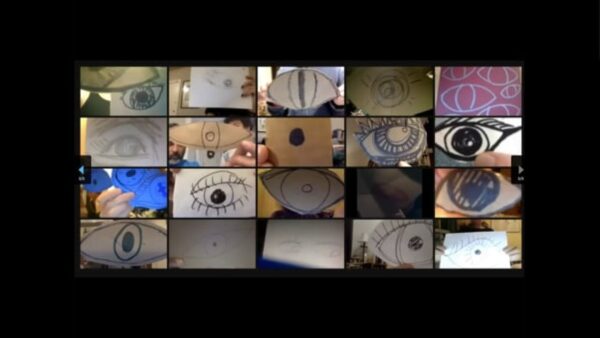
We’ll take questions in the chat function just for ease of everything, but please feel free to make yourself visible and go to “grid view” or “gallery view,” sorry, if you would like to see and gather together, sorry, that’s my pan, hold on, let me move that out of the way so I don’t knock it again. So yeah, please feel free to become visible. And if you have any questions for the artists, please pop them into the chat. It might be something logistical about how to do the scores or the events coming up or the ideas behind the project, thoughts, it may not be a question, also, I know they would also love to hear that as well. [pause] Martha has asked, was there a rhythm?
STEPHAN: You mean right now? Hi, I’m Stephan Moore, I had the honor of holding down the sound portion of this crazy big project for a canary torsi and working with these wonderful folks, I’m a middle-aged white man with crazy hair and a gray beard. I’m sitting in my workshop right now and wearing a denim shirt and yeah, there was a beat. There was a pulse I was trying to convey, but then as I was talking about this earlier with Yanira, how oftentimes a collectively, will, an audience will fall into applauding altogether and then that will inevitably begin to speed up. And eventually it’s almost like a wave breaking as it approaches the shore, it falls into a cascade of everyone kind of breaking off into their own rhythm. And I think that is what I was trying to model. With Zoom, it’s difficult because there is this lag and this delay which as a musician and performer who has been doing a lot of work in Zoom, I find it really interesting how that affects our sense of rhythm and how we can—the kinds of relationships in time and in rhythm and in music that you can normally form with people get disrupted in this interesting way. So trying to find a way to create that collective experience of a pulse, sort of letting the tension around that in this medium happen and letting that explode was kind of the idea, I wasn’t going for any more complicated rhythm than that.
TARA: We also have a logistical question which I think is an opportunity to talk about some further things. Someone, Laura managed to miss the first 15 minutes, wonder if there is a PDF for the first section of that session? And this is a good moment to talk about the media for this project and how the online elements work?
YANIRA: Yeah, so we created this manual for you that sees 5 books of a set of 28 scores. And they come as a set of instructions written down for you. But also, the manual contains within it audio and video scores that also take you through an experience. So the one that we experienced this—earlier, I was to say this morning—that we experienced earlier today is both a video and audio score.
So, when you get the manuals, in the manual, it invites you to put on headphones so that you can hear David’s voice really close to your ear, so that it’s intimate. And then to sit at a certain distance away so that you can almost feel as if Devynn is, you know, at a certain distance from you, and then you do the score that way. But that same score is also in the manual written out. So that you could have, of course, reinterpreted it yourself in a completely different way. So the text is given to you that David repeats and the manual invites you to create your own set of gestures to invite someone else to do so essentially for you to take on these different roles in different ways.
TARA: Is the manual copyrighted—this is Linda asking—how do you think about this kind of communal offering in relationship to copyright law? I can say that I do not think the manual is copywritten. It’s complicated also when it’s artists creating something through a museum, you know, which also has a printer that is a separate institution. You know, there is a lot going on there but that is a really interesting question.
YANIRA: I will say that they were given in the spirit for you to do without that kind of worry. You know, they’re for you and for you to reimagine. So I don’t know if that maybe also answers the question.
TARA: Yeah, I think there is a line somewhere about reproduction in the, you know, fine print of the manual, but it’s not, you know, it’s not a copyright. Yeah. Laura asks, what surprised you most about shifting Last Audience from its in-person construct to its performance manual version with the printed manual and virtual participation?
YANIRA: Kathy, you want to take that one?
KATHY : Sure, hi, I’m Kathy Couch, I haven’t spoken yet, so I want to say I’m a white woman with blondish brown hair pulled back away and sitting against a blue wall on an orange couch. So I guess one of the things that most delighted me in adapting and reimagining this live performance to this new form was, one, both having to find even more precision in the language that we were offering people.
So, as to create both clarity and freedom so that was like a beautiful challenge and this piece often was grappling with issues around agency. And how we take up our personal agency, what do we understand to have of agency, when do we choose to act and how, what pushes us to act or act against something that is directing us in a different way. And so, I feel very delighted with the manuals in that I feel like it’s taking another step towards offering or making a space for agency and exploration and imagination in the audience. In a way that we never could quite get to, I feel like in a certain way with the live performance or just like it opens up another channel for that to happen. So I’m very excited even though I may never get to know what it is. I am very excited to know that out there in the world, people are hopefully reimagining these works for themselves and taking them to places that we maybe never imagined—and finding ways to resist them and reinterpret them and make a new world of them on their own. So that has been a really exciting aspect of making this transition.
YANIRA: I also want to ask David and Devynn about this question because in performance, our concentration as a team was in guiding the audience to perform, right? So, David would whisper into somebody’s ear and they were, you know, as if he is the oracle, they would then produce the sound that the audience—the rest of the audience would hear. But this particular project kind of flipped the tables on us a bit in that it required us to be performers again in the videos that we created for the piece. So I was just wondering if either one of you has something to say about how it acquired you to reengage in your performance in a different kind of way?
DAVID: Hi, this is David, I’m a 60-year old Black man with sort of darker skin wearing a caramel-colored cap, square glasses, headphones and a jean jacket. And a mosaic wall of sorts behind me. It’s an interesting—you know, part of this question for me is about idea of performance and what is performance, and that performance is actually an everyday thing and that it’s always around us and this sort of concept of witnessing, which is much more important and I think that is embedded in the work. That when we do this practice of doing a score, and it is a practice. It’s for me, it’s— there is managing things but it’s also there are moments where I’m not active, I’m not activating the score, but I am simply witnessing with everyone else, and we’re all witnessing each other. And I think I’m trying to see, understand how that gets framed in this new technological format but also, I think this becomes even more—because of the nature of being on Zoom, you are watching everyone and maybe somebody turns their camera off or something but how—is there an egalitarian quality to doing this score if you are on Zoom? Or if you are at home, then does that take away the quality of performance and does this become like a parlor game to doing that has other ramifications to it at the same time?
So, and in doing that, I’m not sure how people are going to perceive it but, and the idea of my presence in whispering to someone’s ear creates a—for me, it was very delicious. But I’m also wondering then in this new age of distancing and isolation, how the intimacy of this—and even though I’m disembodied, how am I still present for you? And so that is a roundabout response, I don’t know if it’s an answer.
GIBRAN: You know thinking along these lines, and I do want to remind everyone that Marshall is here as well and he can join us in this conversation. I wonder, Marshall, if you can talk to us about how congregation has changed via Zoom. I’m very curious about generally the congregation of church or a mass is the physical proximity and now that you have been meeting congregation virtually, how has that changed or happened at all?
MARSHALL.: Yes, it’s taken a lot of getting used to with the Black church tradition and style of worship, you know a lot of it relies on music and, of course, call and response. Which is to say, you know, the sermonizer or the preacher who is delivering the word, often his cadence kind of rise with the commentary of the congregation. So amen. Said preacher, c’ mon, like he—it’s conversational, usually. And so through Zoom, that’s much less the case and so, my father and I, who is a senior pastor of the church, he and I often joke that it has completely transformed the way we prepare the sermon but, of course, there is a new way of call and response, right? The commentary, so the fact that people can type in a Facebook Live and say “amen” and you can kind of respond in that way.
And so, there are elements that are consistent. But I think on the whole, at least from a worship standpoint, it has kind of changed dramatically. But again, as I mentioned before, you know, whereas the church was used to being open only on Sundays, you know, with the pandemic, we’ve been open every day. Feeding the homeless, again, taking care of the elders in the neighborhood. Calling the bedridden, those that are hospitalized, and so in many ways the doors of the church remain open.
GIBRAN: It sounds to me like the doors of the church got bigger. Especially as—
MARSHALL: Yes, indeed.
TARA: We had another question earlier. Just to make sure that we don’t miss it. “Can you talk about collaboration, connection, and physicality, it feels so challenging to understand and connect with each other without physical proximity and I loved the distant physical connection I felt in the first score.” This is from January.
KATHY: I can say something that it makes me consider. I think I’ve been very interested throughout this pandemic by the ways that we can sense our connection to each other without being in physical proximity. And I feel like this project has given me like a very rich ground in which to investigate that question. And I think about it sometimes in terms of like if you were all of the sudden to walk out into the dark night, and in that beginning moment your eyes are not adjusted to the particular context but then as you spend more time in certain facilities that you always possess kind of come to the fore and help support you and begin to navigate and make your way. So I have been interested in this notion of creating these sets of actions that people can do together or on their own, but somehow in doing them, even if you are doing them on your own, building that sense of connection across distance, even across time, space, and how can we lean into those facilities that we might possess all the time but are often sort of drowned out by the dominance of other ways of connecting or being in proximity. So I think when we were creating the videos and the sound recordings in particular—but even with the language and with the creation of the website, all of these ways that we might be able to invoke the sense of intimacy, interconnectedness, shared experience, collective action, and intention, I think there are a lot of ways that we were trying to create that. And I know performing some of the video and audience scores, there was that—how can I be with you in voice or be with you in a video presence, even though we aren’t occupying that same space. So those are some thoughts that January’s question bring up to me.
YANIRA: Yeah, it also makes me think about the sort of tactileness of receiving something in the mail which Tara, you and I talked about a lot in terms of like—”how do you receive this thing?” And it’s this package, this thing that you receive, it has a certain kind of feel, the paper has a certain kind of feel without giving too much away, it unfolds in certain kinds of ways and so it reveals itself to you as you are digging deeper and deeper into this object. And so there is something about that that I feel connects you also, this—I mean in the same way when I feel I read a book and the one that I’m thinking about right now is Parable of the Sower by Octavia Butler, how many conversations I had, all during COVID and the uprisings, with people that have read that book and not that this is Octavia Butler or anything, but the sense is sort of like that this connection can happen with complete strangers because you had a mutual experience through a page. That is one of those things that is potentially powerful to me, so the reason for the creation of the website was a way to give you a little bit of that access to that and this person also did this score that asked me to kneel for 5 minutes—to sort of have that connection. I think can be really deeply meaningful and it comes back also to this discussion that Marshall and I were having earlier about the sort of porousness of one action rippling out and being collective—yeah.
GIBRAN: I think we had such good dialogue of the similarities between Marshall’s work that is built through Last Audience and I want to turn to Riley’s question, “As someone that has followed this project for a while, I felt so deepened and challenged and graced by Marshall’s connection and threads. A question for the a canary torsi performers: I was curious about what of Marshall’s thoughts offered you a new experience of this work that you have been developing for a while, and likewise for Marshall, how does learning about Last Audience offer a new experience for your work?”
DEVYNN: Thanks for all of this questioning and dialogue, it’s so rich. This is Devynn, I’m a light-skined, mixed-race, Indigenous transgender person and I’m wearing a denim jumpsuit, brown beads, and a ballcap and the background is a white wall with fresh eucalyptus, thank god. I think I’m kind of reacting to a few of these questions in one because so much is stirred up for me and also being a performer and both a nurse and someone who is a healer, therapist, and ceremonial guide.
And so I really resonated with what you are saying, Marshall about, you know, in just shifting in how we gather right now both in spiritual practice and in performance. You know, most of the people I see are my patients who are—have been passing quite frequently from COVID and I have been really privileged to see a lot of people and touch a lot of bodies and honored to bring my ceremonial practices to the hospital setting, to bring the ceremony around these bodies. And then because that work, of course, has been so intense, also I have felt quite lucky to continue this project with you, Yanira, because I think in this way that this work was limited in a way to Lenapehoking in New York City, and of course this would be a tour that we are joining you in Chicago and now this has been webbed out, we have woven an invitation to you all to join us and I love the idea that one can be in practice in privacy in a way that I think the live performance didn’t allow, because I think that there is a lot of what Kathy, you are saying, the question of agency. And when you see pressure placed on a collective, you’re tasked with joining in or removing yourself or maybe assisting another who is on their knees kneeling. And I think what I hope is that when someone is taking a score in their own home that they have privacy to really, like Marshall and Yanira were saying, really embody the pose of prayer and maybe it’s just a gesture, and then maybe over time with duration, it becomes an embodied sense of elevation or emotion, whatever that invokes for you. Because I like this idea of privacy, and I like the idea of people doing it simultaneously when we don’t even know that they are doing it, that is kind of creating a simultaneous energy nationally or internationally, that feels very powerful and needed right now.
DAVID: Hi, this is David again. I am so deeply moved by Marshall’s presence and language and thought, connecting to this work. And that is one of the things that has been on the mind, the idea of presence and what is the ontology of presence at this moment. And actually the ontology of presence can relate to the idea of care, and care means being with someone or how are you with someone. And you know, when you were speaking about the stained glass windows that were transformed to actually give presence to history in so many ways, I thought wow, that is a beautiful thing, you still have the same edifice that you are using the score of this church and so the building, the architecture is a score, but you are viewing it with your own translations of how the light is filtered into that space.
And then how those presences then get illuminated, and whose presences are illuminated. And it makes me aware of, you know, the value of being with someone and how are we with someone—and even if we can’t touch them, what are the other senses and places that we can go spiritually and otherwise to reach out and connect. So for me, it’s not just this tactile sense of performance and touch and feeling, but it’s really asking how do we extend beyond the “if I can’t see you, are you still there?” [silence]
TARA: Does anyone else have anything to add? I know there was a little question for Marshall at the end of that but if we are all good, I think we do have to bring it to a close. So yeah, thank you so much for coming, apologies if there is a couple of questions we missed in the chat, but it is, you know, growing late and so, we really thank you for sticking around, for sticking through this beautiful event. And also to all the artists, to Marshall, and to my colleagues. Thank you for creating such a wonderful hour and a half or 45 minutes. Have a great weekend, everyone.
YANIRA: Thank you so much, everyone.
DAVID: Thank you. Thank you.
STEPHAN: Many thanks.
DEVYNN: Thank you.
[Ambient closing sounds]
In this virtual event the artists are joined by Marshall Hatch, Jr., Executive Director of The MAAFA Redemption Project, an organization that works with young men in Chicago’s West Garfield Park neighborhood, and MCA Associate Curator Tara Aisha Willis to answer questions about the project and hold thought-provoking conversation about how rituals of judgement and reckoning shape our society and our collective future. Attendees receive early access to one of the scores in PDF form to use at home.
This program was presented virtually on October 24, 2020.
Related Event
Related Content
-
Video
Last Audience: A Performance Manual #2
Bessie-award winning collaborative, a canary torsi, reimagines performance for an era of social distance.