Editorial
CONSIDER: The Frame, Your Body, Residue
by Joelle Mercedes, with supplementary text by Jeremy Kreusch
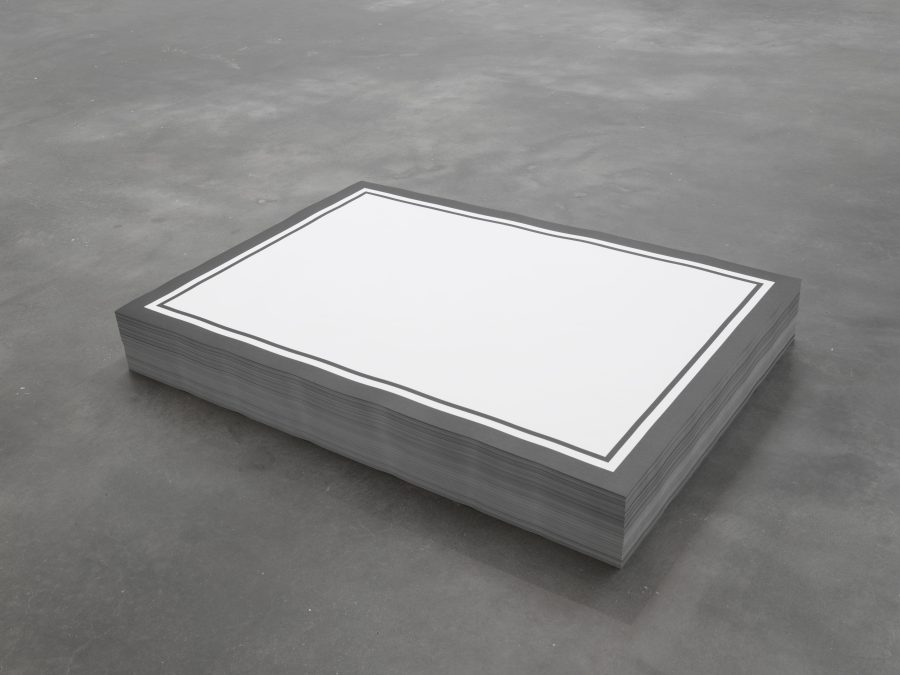
Felix Gonzalez-Torres, "Untitled" (Republican Years), 1992. Print on paper, endless copies; 20 cm at ideal height × 138 × 98 cm (original paper size). Installation view, Felix Gonzalez-Torres, Fraenkel Gallery, San Francisco, CA. Apr 1—May 29.
© Felix Gonzalez-Torres. Courtesy of The Felix Gonzalez-Torres Foundation
This set of activities, thoughts, and inquiries is best for teens and older.
Joelle Mercedes, a teaching artist at the MCA, designed three activities for works in the exhibition Duro Olowu: Seeing Chicago. These prompts are meant to coexist with the works, while opening them up for creative thinking and personal connection. Joelle recommends you “‘take the prompts and break them into pieces of vulnerability and presence.”
Before moving through the activities, take a look at the Duro Olowu: Seeing Chicago virtual gallery. Read through the text, watch the videos, and listen to the audio experiences. “Introduction,” “Look At Me,” and “Power to the People” will be especially relevant.
1. Consider the Frame
In his introduction to the exhibition, Duro Olowu talks about collectors and collections, saying that we’re all surrounded by collected objects and experiences brought into our worlds, sometimes by other people. It’s the same with art exhibitions. Diversity, according to Olowu, comes from the willingness and ability to tell different stories about the same objects. How is the meaning of objects both accessible and inaccessible? To us and to others?
Activity
Look through your rooms and spaces.
Please select one object (abstract or tangible) that has either:
- Brought you solace
- Transformed through the mere result of using your senses
Consider the following questions to help you decide on your object:
- How would you photograph this object?
- Where does the object live within the current place you’re residing in?
- What is the object’s relationship to your body?
- Could you name the boundaries of the object?
Photograph this object and share it with at least one of the contacts on your phone.
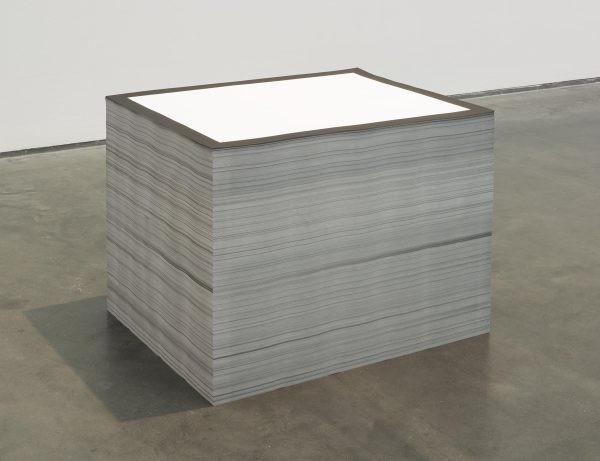
Take a look at Felix Gonzalez-Torres’s “Untitled” (The End), 1990. This piece is a stack of white posters with a black rectangular frame printed along the edges. Museum-goers are encouraged to take a print home with them. When that happens, this frame is always itself reframed and recontextualized by new surroundings. Gonzalez-Torres has shared an art object with everyone. People take it home, hang it on their wall, throw it away, make it into folded airplanes, draw inside it, whatever. The museum replenishes the stack.
How would you feel about others sharing the photograph you took of your object? Would it feel strange to let that image have a life of its own, out of your control? What responsibilities do the keepers of objects have to respect their original context? Or to continue to care for them?
2. Consider Your Body
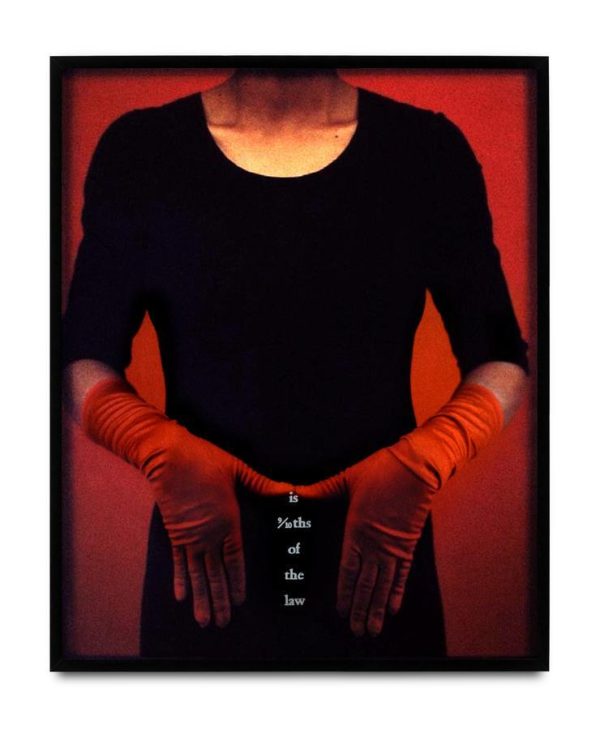
Take a look at Lorna Simpson’s Self Possession, 1992. Emotionally, self-possession is a state in which you’re calmly aware of your physical presence and how you should care for yourself. How often do you feel in possession of yourself? What’s contained within the space of yourself? Have you ever felt like a part of you or your sense of self is not in your possession and somehow belongs to another?
Possessions are also owned things. The text in this photograph seems to complete a sentence that begins with the title: Self Possession “is 9/10ths of the law.” What laws, ideologies, or belief systems are rooted in the value of self-possession? Do any contradict it?
Listen to this visualization inspired by Self Possession and the idea of self-possession and embodiment. Find a pen, pencil, or crayon and paper. Then, pick a comfortable place to sit and consider the visualization you just experienced. Draw your embodiment. Draw the space you occupy currently within (inside) your body. Draw for as long as you like.
3. Consider Residue
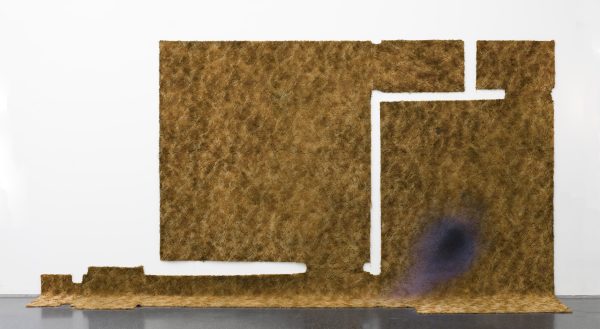
Take a look at Rodney McMillian’s Carpet Painting (Bedroom and TV), 2012. For Carpet Painting, Rodney McMillian pulled up the carpet from two rooms in his house in Los Angeles and hung it on the wall. On one hand, it’s a formal gesture; we can now try to see it’s aesthetic value. On the other hand, it is an incredibly intimate act. By examining what’s left on this carpet, a careful observer can learn many details about Rodney’s home life: his pet, his patterns, his spills, and more. Detritus becomes decoration and information.
Look around. Can you find any hidden beauty in the residue of your daily life? What could we learn about you by examining what you unwittingly leave behind?
Activity
Imagine what would happen if you physically removed the floors from two rooms of your current home. Which floors will you pick and why? What will begin to appear beneath the surface that was otherwise hidden? Is there a scent emitting out of the floor? What about the sound? Has the volume shifted? Has the atmosphere?
From this place, without floors, write for 10 minutes. Try not to pass judgment on what you’re writing: Just let whatever comes to mind flow to the paper through your pen.