Exhibition
Wolf Vostell: Concrete Traffic
Artwork Images - Full Size Images
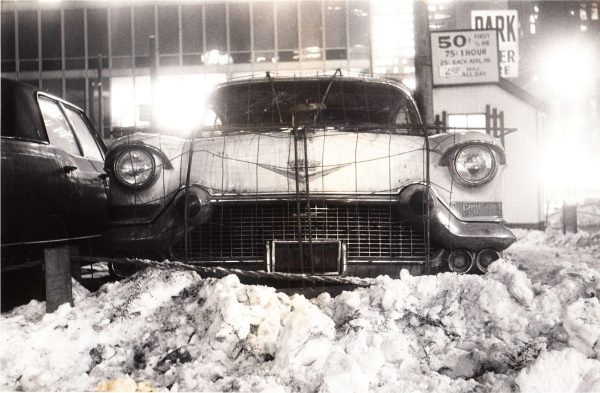
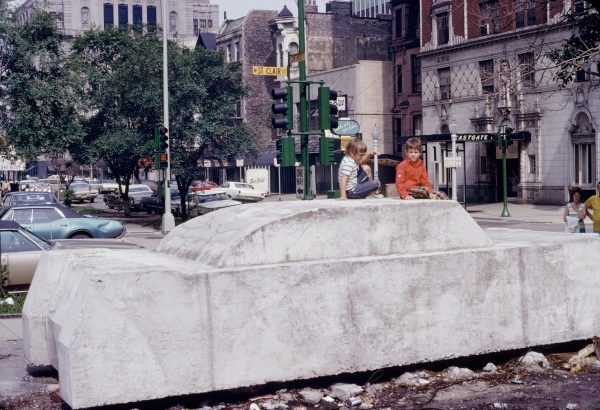
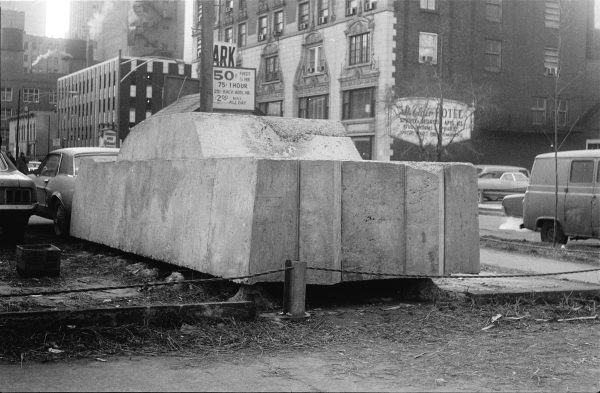
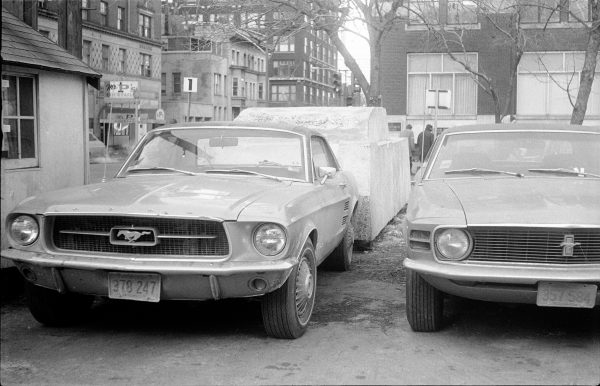
For his 1970 public work Concrete Traffic, Wolf Vostell (German, 1932–1998) acquired a functional 1957 Cadillac De Ville sedan through classified ads in a local newspaper and encased it within concrete. Preceding Vostell’s well-known, Berlin-specific public piece 2 Concrete Cadillacs in the Form of Naked Maja (1987) by 17 years, Concrete Traffic foreshadowed the themes and materials that would later emerge frequently in Vostell’s oeuvre. By combining a luxury car with an immobilizing industrial product, Vostell critiqued the planned obsolescence of consumer products prompted by late capitalism’s market logic, the automobile dependency endemic to post-industrial urban spaces, and conspicuous leisure and consumption.
Following the MCA’s purchase of the automobile, the Cadillac was driven down the Dan Ryan Expressway to the Museum’s loading dock, where Vostell and a large group of assistants and experts on carpentry and cement (including Chicago-based sculptor James O’Hara) created a steel and wood enclosure for structuring concrete over the sedan. Though Vostell wished to complete the concrete casting of the vehicle in front of the museum on Ontario Street to accentuate the parodic removal of functionality from the automobile, Chicago parking and street cleaning regulations prevented it. The staff transported the car and its corresponding apparatus to a parking lot at the corner of Ontario and St. Clair Street, where the construction company Vulcan Materials heaved 16 metric tons of wet concrete onto the Cadillac. After five days, the concrete set over the car and the wooden encasement was removed, revealing the hulking 37,500-pound piece for finishing and touch up. This act left only the Cadillac’s inert rubber wheels exposed under its new concrete body, obfuscating its otherwise iconic appearance and converting it into dead weight. Concrete Traffic remained in the parking lot for 6 months among countless other functioning Cadillacs, with the MCA paying $30 a month for parking fees. The piece stayed in this location until Vostell and the MCA donated the sculpture to the University of Chicago.
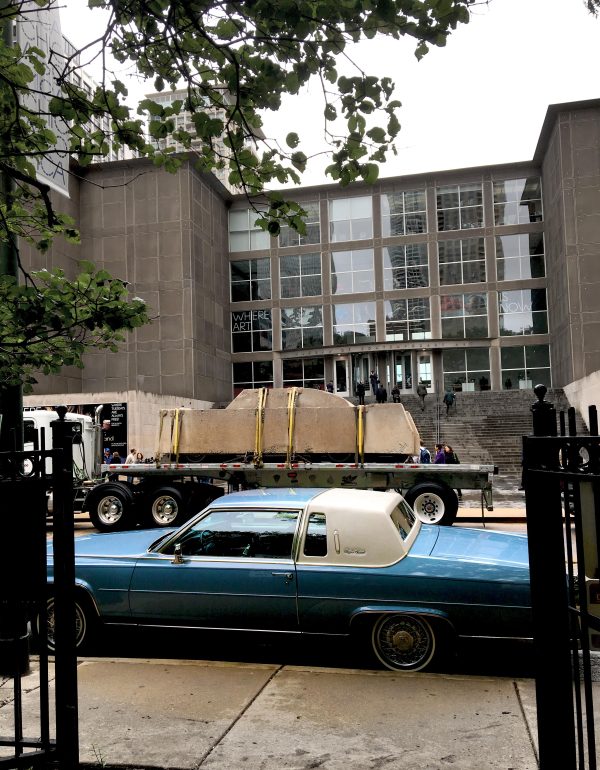
Two construction crews donated their service to move the piece, utilizing heavy equipment including tractors, trailers, and a 50-ton crane to lift the sculpture onto a flatbed truck. Lead by a squad of police cars, Concrete Traffic traveled to the University of Chicago via the Dan Ryan—finally realizing both the title of the piece and the destroyed use-value of the vehicle. The piece stood outside of the Visual Art Department at the historic Lorado Taft Midway Studios, where it contrasted with many of Taft’s (American, 1860–1936) figurative sculptures.
Related Content
-
Articles
Unpacking Concrete Traffic
After nearly eight years of storage and restoration, Wolf Vostell's Concrete Traffic will be unveiled at the University of Chicago. MCA Library Director Mary Richardson reflects on the history and importance of this monumental work. -
Articles
Concrete Traffic: The Unveiling