Exhibition
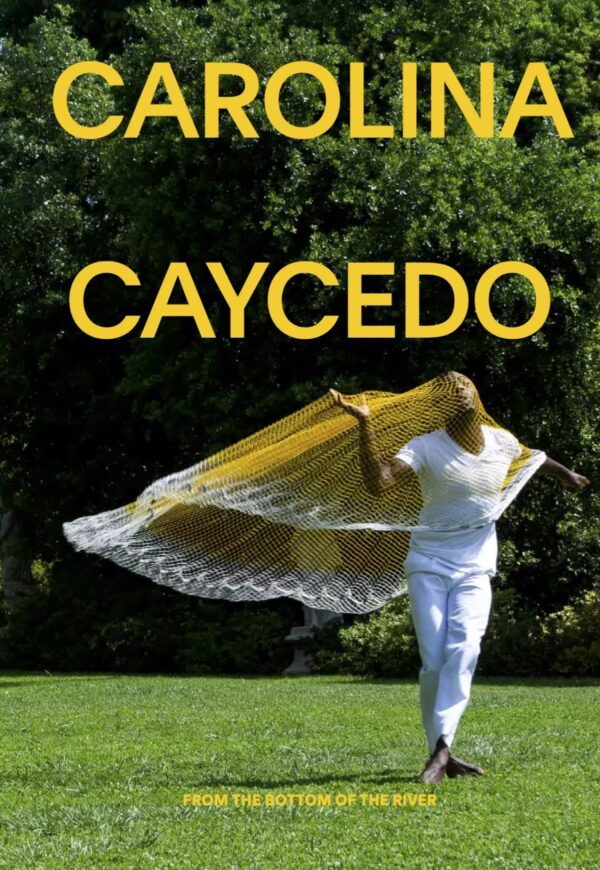
Carolina Caycedo: From the Bottom of the River
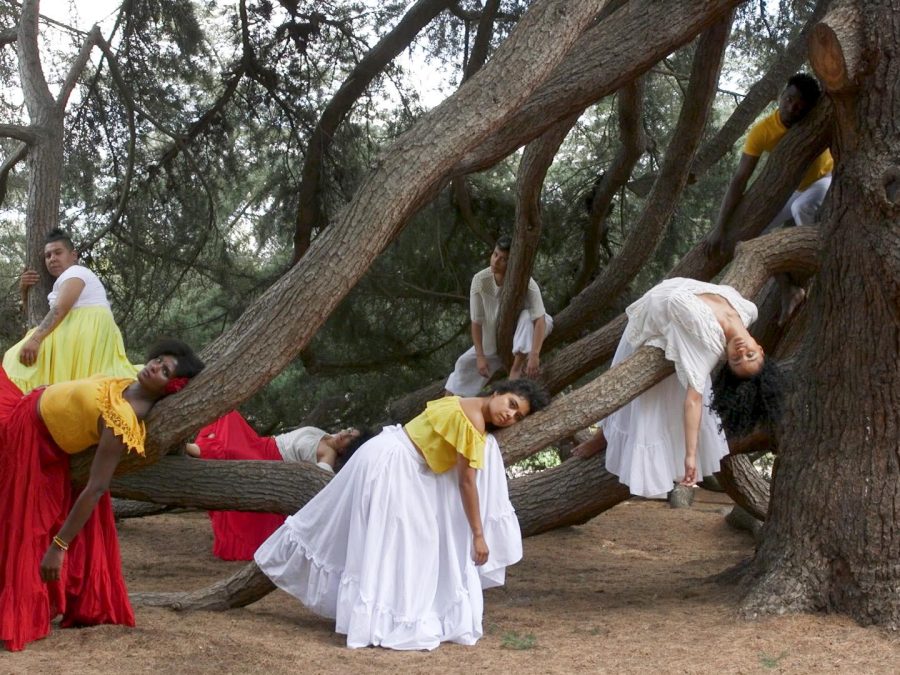
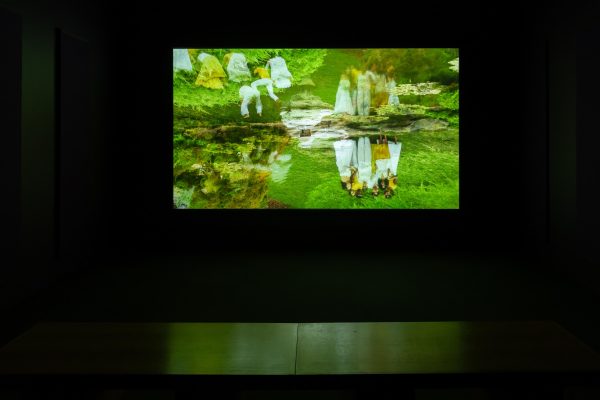
Carolina Caycedo, Still from Apariciones / Apparitions, 2018. Single-channel HD video, color and sound. 9:11 min. With: Marina Magalhaes (Choreography), Isis Avalos, Samad Guerra, Celeste Tavares, Bianca Medina, Jose Aviles, and Natali Miciche. Commissioned by The Huntington Library, Art Museum, and Botanical Gardens, and the Vincent Price Art Museum.
Courtesy of the artist
Desde el Fondo del Río
Por medio de su práctica de estudio y de su trabajo de campo con comunidades ribereñas afectadas por los proyectos de infraestructura a gran escala, Carolina Caycedo (colombiana, n. 1978; vive y trabaja en Los Ángeles) crea obras que abordan la relación del ser humano con la naturaleza. Trabajando en primera línea de la lucha por la justicia social y medioambiental, la artista recolecta materiales, experiencias, objetos y sentimientos para crear su obra multidisciplinaria.
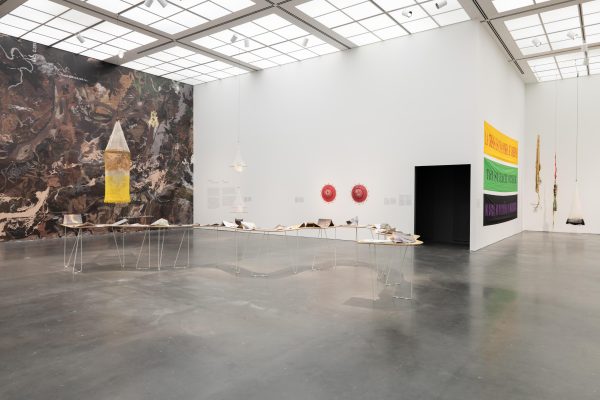
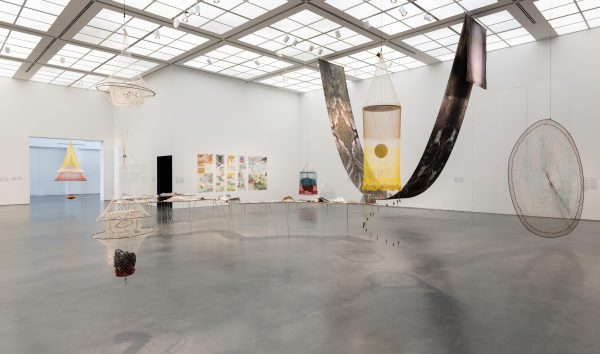
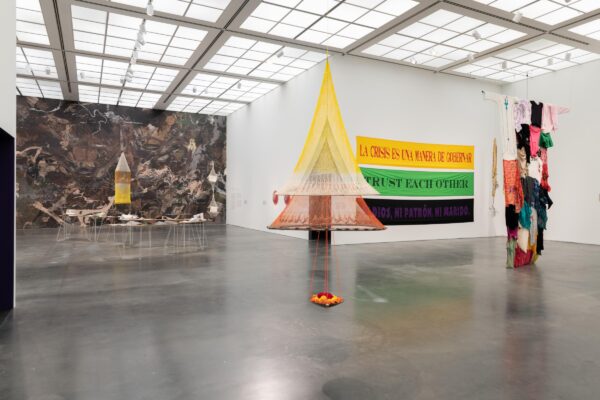
Carolina Caycedo: Desde el fondo del río analiza los últimos 10 años de la práctica artística de Caycedo y se encuentra protagonizada por Represa/Represión (2012– ), un proyecto multimedia en curso que examina el impacto que las represas hidroeléctricas y otros grandes proyectos de infraestructura tienen sobre las comunidades y el medioambiente. Además, la exposición presenta a las poderosas Cosmotarrayas, una serie de esculturas hechas con redes de pesca producidas como resultado de su trabajo de campo en zonas de Colombia, Brasil y otros países, donde la privatización de las vías fluviales ha alterado irrevocablemente la capacidad de vivir y trabajar de las comunidades locales. La exposición incluye video, dibujo, escultura y fotografía, y reflexiona sobre la importancia del proceso y la participación en la obra de Caycedo.
Inspirándose en filosofías indígenas, la obra de Caycedo nos desafía a comprender la naturaleza no como un recurso a ser explotado, sino como una entidad viviente y espiritual que une a las personas más allá de las fronteras. Su enfoque innovador integra su práctica de creación artística en el estudio con acciones en las comunidades afectadas por la minería, la construcción de represas y otros proyectos de extracción de recursos llevados a cabo por corporaciones y gobiernos. La obra de Caycedo invita a los espectadores a considerar el ritmo de crecimiento insostenible que impone el capitalismo y la manera en que podemos reafirmar nuestra resistencia, solidaridad y biodiversidad cultural y medioambiental.
Esta exposición ha sido organizada por Carla Acevedo-Yates, curadora Marilyn y Larry Fields, con Iris Colburn, asistente de curaduría.
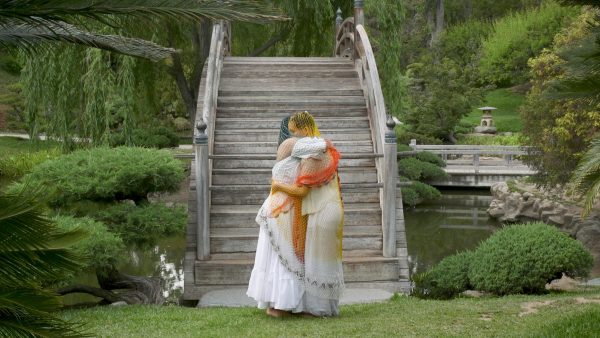
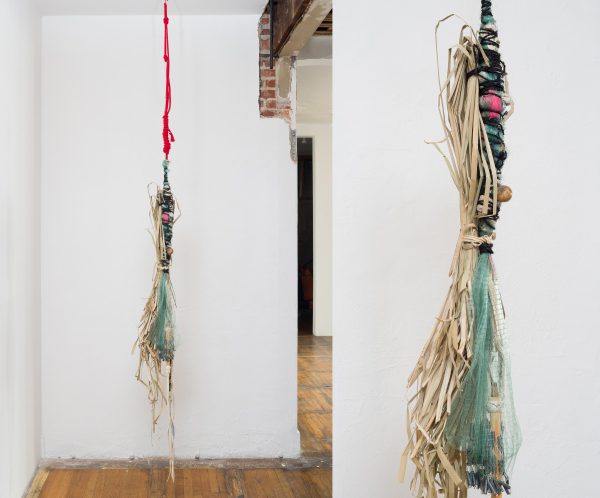
Carousel: Gallery - Full Size Images
From the Bottom of the River
Through her studio practice and fieldwork with riverside communities impacted by large-scale infrastructure projects, Carolina Caycedo (Colombian, b. 1978; lives and works in Los Angeles) makes work that addresses humanity’s relationship with nature. Working on the front lines of social and environmental justice, she gathers materials, experiences, objects, and feelings to make her multidisciplinary work.
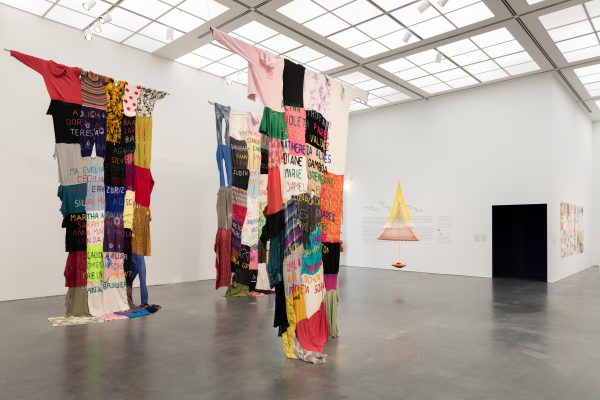
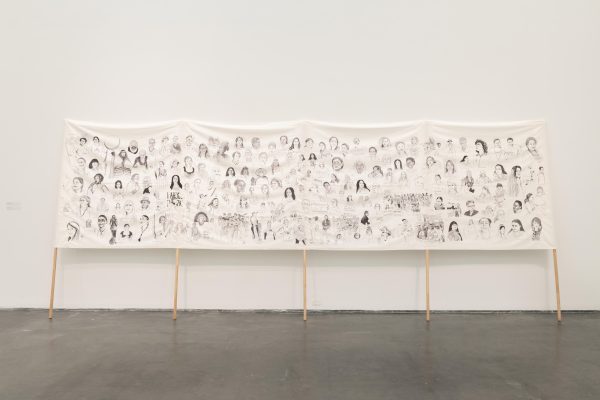
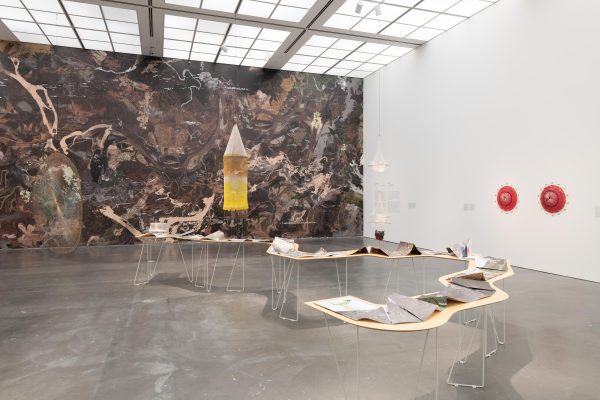
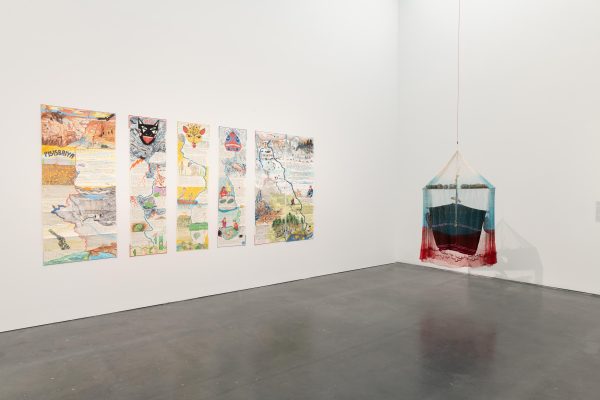
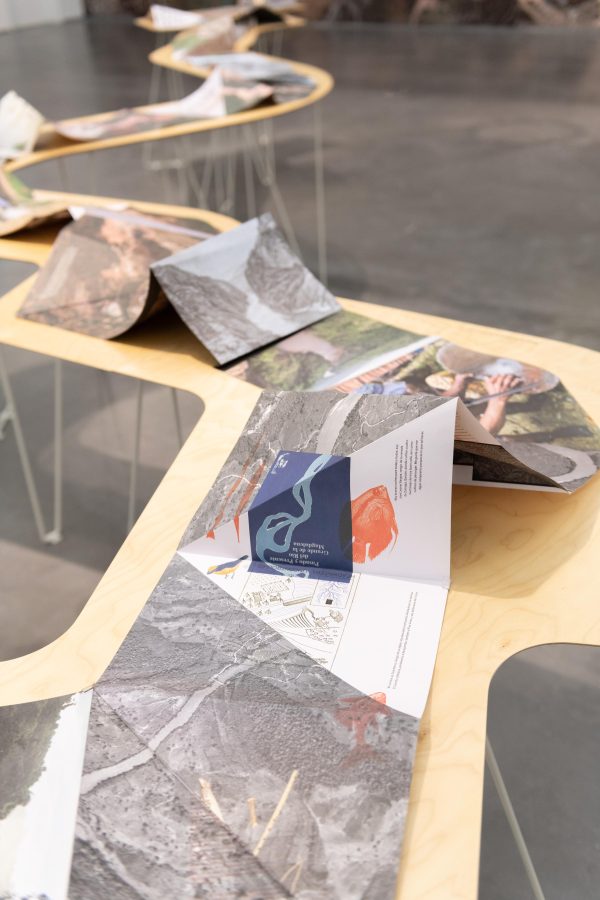
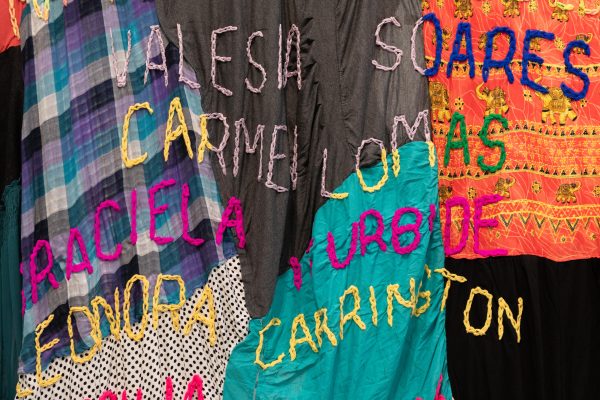
Carolina Caycedo: From the Bottom of the River surveys the last 10 years of Caycedo’s artistic practice and prominently features Be Dammed (2012– ), an ongoing multimedia project that examines the impact of hydroelectric dams and other major infrastructure projects on communities and the environment. It also features Caycedo’s powerful Cosmotarrayas, a series of net sculptures produced through fieldwork in rural areas of Colombia, Brazil, and other countries where the privatization of waterways has irrevocably altered the ability of local communities to live and work. The exhibition encompasses video, drawing, sculpture, and photography and reflects the importance of process and participation in Caycedo’s work.
Informed by Indigenous philosophies, Caycedo’s work challenges us to understand nature not as a resource to be exploited, but as a living and spiritual entity that unites people beyond borders. Her innovative approach integrates her art-making practice in the studio with actions in communities affected by mining, damming, and other resource extraction projects by corporations and governments. Caycedo’s work invites viewers to consider the unsustainable pace of growth under capitalism—and how we might bolster resistance, solidarity, and cultural and environmental biodiversity.
The exhibition is organized by Carla Acevedo-Yates, Marilyn and Larry Fields Curator, with Iris Colburn, Curatorial Assistant.
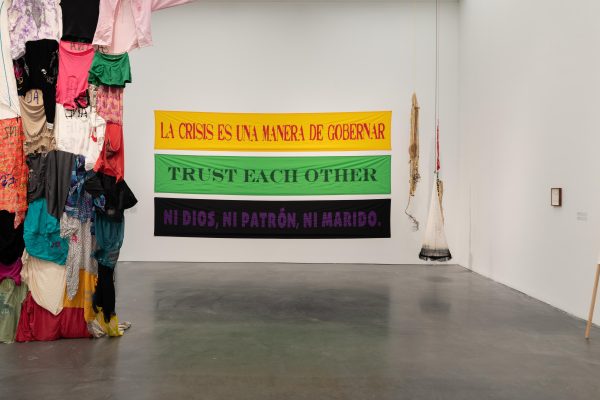
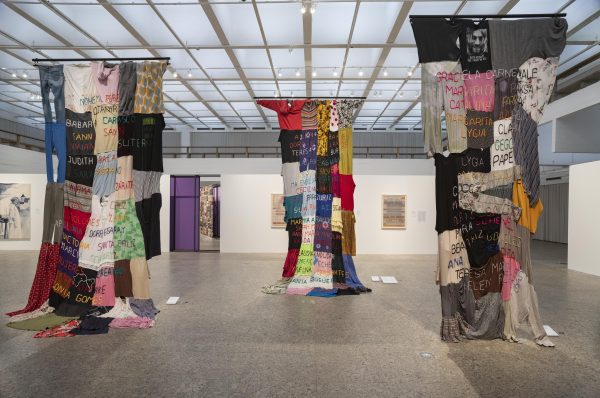
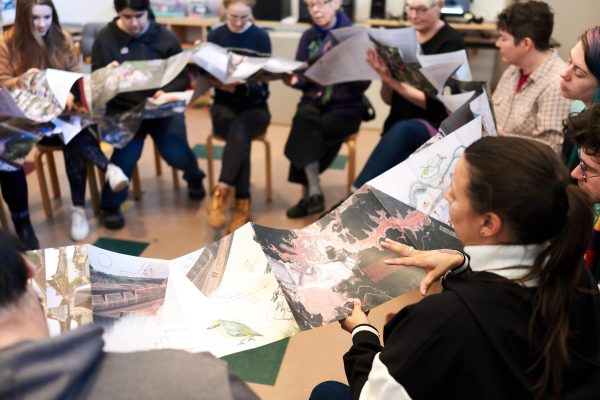
Carousel: Installation Views - Full Size Images
Related Events
Transcripts
-
Mis colonizadores españoles lo nombraron El Gran Río de la Magdalena. Pero mis ancestros nativos siempre la han llamado Yuma, que significa La Tierra de los Amigos, porque es en sus riberas y en sus aguas donde los intercambios y el comercio tienen lugar.
My Spanish colonizers named it The Great River of The Magdalena. But my native ancestors have always called her Yuma, which means The Land of Friends, because it is in her riverbanks and her waters where trade and exchanges happen.
Mi recuerdo más querido con Yuma es cuando la crucé por primera vez. Tenía 12 años y quería cruzarla nadando en línea recta. Pero tenía miedo que la corriente me arrastrara. Estaba indecisa parada en la orilla cuando el padre de mi padre se lanzó al río y empezó a nadar deslizándose suavemente hacia la otra orilla. Cruzó el río dejando que la corriente lo arrastrara amablemente.
My fondest memory of Yuma is when I first swam across her. I was 12 years old and I wanted to cross the river in a straight line. But I was afraid that the current would drag me away. I was standing hesitant on the shore when my father’s father dived into the river and started swimming, gently floating to the other shore. He crossed the river by letting the current pleasantly drag him.
Lo seguí y llegué al otro lado siendo una con el río. Ese día Yuma y mi abuelo Miguel me hicieron ver que las líneas rectas son construcciones mentales y que puedes nadar y dejar que la corriente te arrastre al mismo tiempo.
I followed him and arrived to the other shore being one with the river. That day Yuma and my grandfather Miguel showed me that straight lines are mental constructions and that you can swim and let yourself be dragged by the current at the same time.
Volviendo a esa historia he podido entender que el territorio no es ajeno a mí, sino es mi propio cuerpo, mi historia, mi política, mi sexualidad y mi espiritualidad.
Looking back at this memory I understand that the territory is not just something outside me, but it is my own body, my history, my politics, my sexuality and my spirituality.
Mucho de lo que hago como humana es enderezar, construyo un cierto orden, concibo la eficacia, saco provecho y siento placer. Algunas veces este enderezar implica belleza, a veces implica violencia, pero por lo general implica ambas.
A lot of what I do as a human is straightening; I construct a certain order; I devise efficiency; I profit and I feel pleasure. Sometimes the straightening implies beauty, sometimes violence, and generally it implies both.
Mi enderezamiento de la naturaleza implica penetrar, tajar, construir, cavar, inyectar, represar, fracturar, contaminar, minar, erosionar y modificar.
My straightening of nature implies penetrating, slicing, building, tunneling, extracting, injecting, damming, fracking, polluting, mining, eroding and modifying.
He coronado a mi madre con cultura y con progreso de forma sublime, artificial y dominante.
I’ve crowned my mother with culture and with progress in a sublime, artificial and dominant fashion.
El Mamo Pedro Juan, mayor de la Sierra Nevada de Santa Marta en Colombia me contó que nuestro planeta es el cuerpo de nuestra madre, de donde venimos. Es el territorio sagrado donde los ríos son sus venas y las aguas son su sangre.
Mamo Pedro Juan, an elder from the Santa Marta Mountains in Colombia told me that my planet is my mother’s body. It is the sacred territory where I come from, where the rivers are our veins and the water is our blood.
El río es la conexión fluida entre ecosistemas, entre tiempos pasados y tiempos venideros, entre gentes y geografías.
The river is the fluid connection between ecosystems, between times past and times to come, between peoples and geographies.
Cuando le pregunté al Mamo Pedro Juan sobre contener el flujo del río tras la pared de una represa me respondió que una represa es como anudarse las venas. Tras una pausa enfatizó, peor, una represa es como un nudo en el ano.
When I asked Mamo Pedro Juan about containing the river’s flow behind a dam, he answered that a dam is like a knot in the veins. After a pause he emphasized, worst, a dam is like a knot in your anus.
El río tiene una acción depurativa tanto espiritual como física sobre mi planeta, sobre mi territorio, sobre mi cuerpo. Pero todo su poder, toda su corriente, todo su rugido y toda su euforia los he regulado para la generación de energía.
The river has a spiritual and physical depurative action over my planet, over my territory, over my body. But I have regulated all her power, her flowing, her roaring and her raging to generate power.
Con tal que la batería de mi teléfono celular nunca muera y que puede vaciar mi orina y mi mierda para no tener que olerla soy la moradora aséptica del primer mundo.
As long as my cell phone’s battery never dies and I can flush away my pee and my shit so I don’t have to smell it and see it, I am the aseptic dweller of the first world.
Las represas son una capa importante de la construcción del paisaje físico y psicológico. Son inherentes a la estructura de las naciones modernas y de las naciones que trafican con la ilusión de modernidad.
Dams are an important layer of the construction of physical and psychological landscape. They are inherent to the structure of modern nations and of nations that traffic with the illusion of modernity.
Las represas de más edad están incrustadas en el paisaje como una cicatriz que con el paso del tiempo se camufla en mi piel.
Older dams are embedded in the landscape like a scar that blends into my skin after the years.
Le arranco la naturaleza a la naturaleza para construir un paisaje natural. Pero el paisaje nunca es natural. Siempre es cultural.
I tear nature out of nature to build a natural landscape. But a landscape is never natural. It is always cultural.
Es bajo el agua de una represa donde se esconde la verdadera violencia de la misma. Es una violencia contenida siempre a punto de estallar.
It is under water where the evidence of the dam’s violence is hidden. It is a contained violence always on the verge of exploding.
Para mis ancestros el río era un espacio común, la espina dorsal de la comunidad. Sus corrientes y aguas contenían y mantenían infinidad de ecosistemas. Para mí el río es un recurso, un bien corporativo. Sus corrientes turbinadas producen energía. Y sus aguas son una mercancía por la que pago un alto precio.
For my ancestors, the river was a common ground, the backbone of the community. The currents and waters contained and supported myriad ecosystems. For me, the river is a resource, a corporate good. The turbined currents generate electricity. And the waters are a commodity for which I pay a high price.
Una represa es un asedio a la naturaleza, como la seguridad es un asedio a la sociedad. Ambas pertenecen a sistemas de administración; el de aguas y el de orden público. Y ambas funcionan como infraestructuras que contienen, homogenizan y regulan variables de inundación, percepción y conciencia, sentimientos colectivos, flujos de agua y volúmenes, especies animales y vegetales, diferencias culturales, fertilidad y nutrientes.
A dam is a siege of nature, as security is a siege of society. Both belong to administrative systems; the water administration and the public order administration. Both function as infrastructures that contain, homogenize and reduce variables of flooding, perception and consciousness, collective feelings, water flows and volumes, animal and vegetable species, cultural differences, fertility and nutrients.
Contener un cuerpo de agua es contener mi cuerpo social, es auto contenerme y auto restringirme sin dejar espacio para el libre circular de mis ideas, limitando y enderezando la producción de significados.
To contain a body of water is to contain my social body, is to self contain and self restrict, leaving no space for the flow of ideas, limiting and straightening the production of meanings.
Time is never a straight line, and I find myself again on Yuma’s shore afraid of crossing her. I am 35 years old and I am clinging to a supermarket plastic bag full of imposed meanings. Fucking bag that will take 500 years in decomposing. I jump into the river and swim; I let the current drag me hoping that when I arrive to the other side, the river, if nothing else, will have washed out the bag.
El tiempo nunca es una línea recta, y de nuevo me encuentro a la orilla de Yuma con miedo de cruzarla. Tengo 35 años y estoy enganchada a una bolsa plástica de supermercado llena de significados impuestos. Bolsa cabrona que tomará 500 años en descomponerse. Me lanzo al río y nado, dejo que la corriente me arrastre con la esperanza de que al llegar a la otra orilla la bolsa haya sido lavada y desocupada por el río.
[Final del Audio / End of Audio]
Related Content
-
Audio Experience
Hear stories from the artist about the process behind a selection of the exhibition's artworks. -
Video
Carolina Caycedo: From the Bottom of the River Exhibition Tour
See artworks that demonstrate Carolina Caycedo’s work across mediums and hear the stories behind these pieces. -
Video
Carolina Caycedo
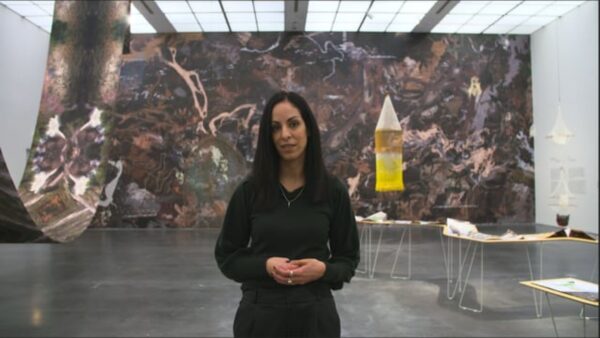
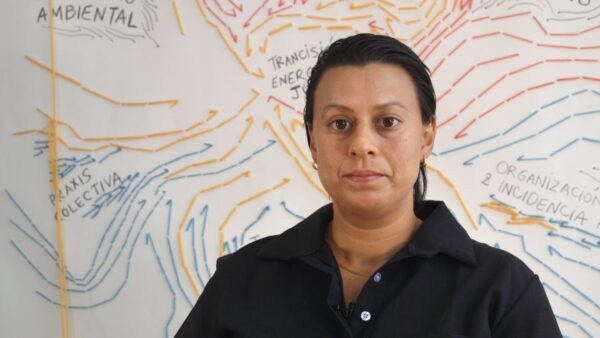
Learn more about Carolina Caycedo and her artistic process in this video. / Obtenga más información sobre Carolina Caycedo y su proceso artístico en este video. -
Books
Carolina Caycedo: From the Bottom of the River
Softcover, 144 pages with 78 illustrations. Copublished by the Museum of Contemporary Art Chicago and DelMonico Books•D.A.P.
Funding
Lead support is provided by the Harris Family Foundation in memory of Bette and Neison Harris: Caryn and King Harris, Katherine Harris, Toni and Ron Paul, Pam Szokol, Linda and Bill Friend, and Stephanie and John Harris; the Zell Family Foundation; Julie and Larry Bernstein; R.H. Defares; the Margot and W. George Greig Ascendant Artist Fund; Cari and Michael Sacks; and Anonymous.
Major support is provided by Estrellita and Daniel Brodsky, Jacques and Natasha Gelman Foundation, and Charlotte Cramer Wagner and Herbert S. Wagner III of the Wagner Foundation.
Generous support is provided by Commonwealth and Council, Marisa Murillo, David Walega, and Anonymous.
This exhibition is supported by the Women Artists Initiative, a philanthropic commitment to further equity across gender lines and promote the work and ideas of women artists.