Talks
Talk | Lee Quiñones, Dao-Yi Chow, and Romi Crawford
Artwork Images - Full Size Images
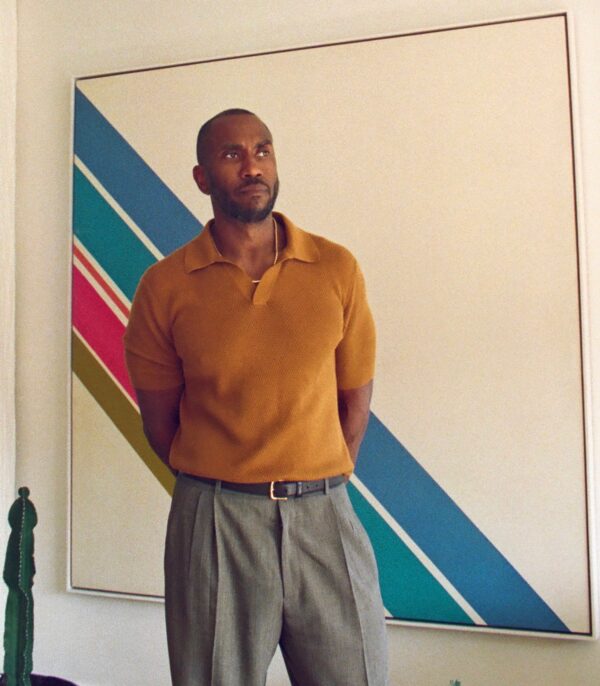
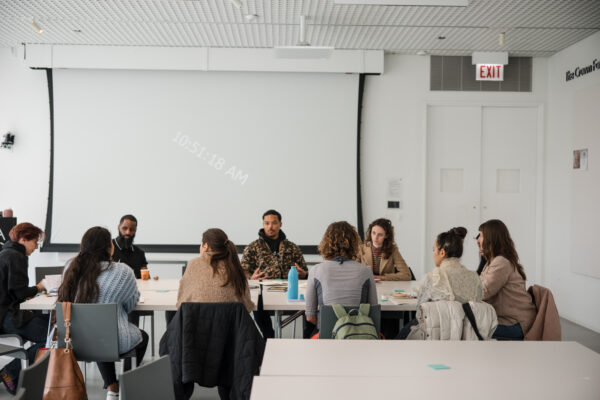
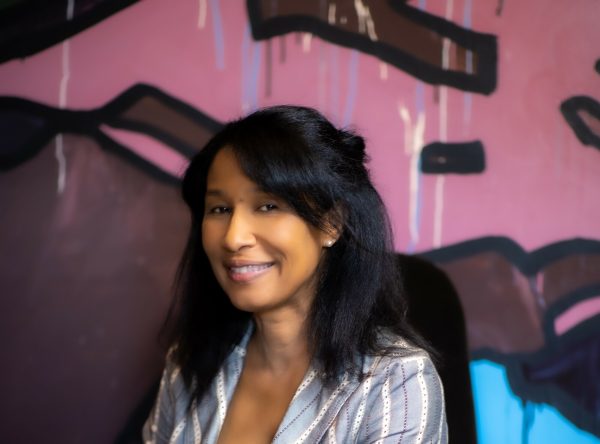
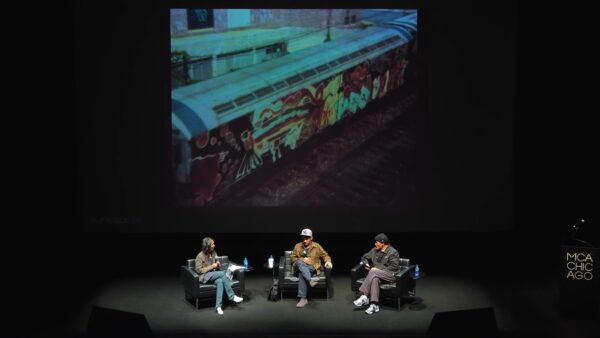
For the Chicago launch of his first monograph, Lee Quiñones: Fifty Years of New York Graffiti Art and Beyond, street art originator Lee Quiñones is joined onstage with recent collaborator Dao-Yi Chow, a streetwear designer and Creative Director of New Era. The talk is moderated by Romi Crawford, Chicago-based art historian and co-author of The Wall of Respect: Public Art and Black Liberation in 1960s Chicago.
Book Signing and Product Launch
Join us after the event for a special meet and greet with Quiñones where he will be signing his monograph as well as products from an MCA-exclusive collaboration! If you are unable to attend the talk but would like to purchase a signed monograph, a limited number will be available online.
About the Speakers
-
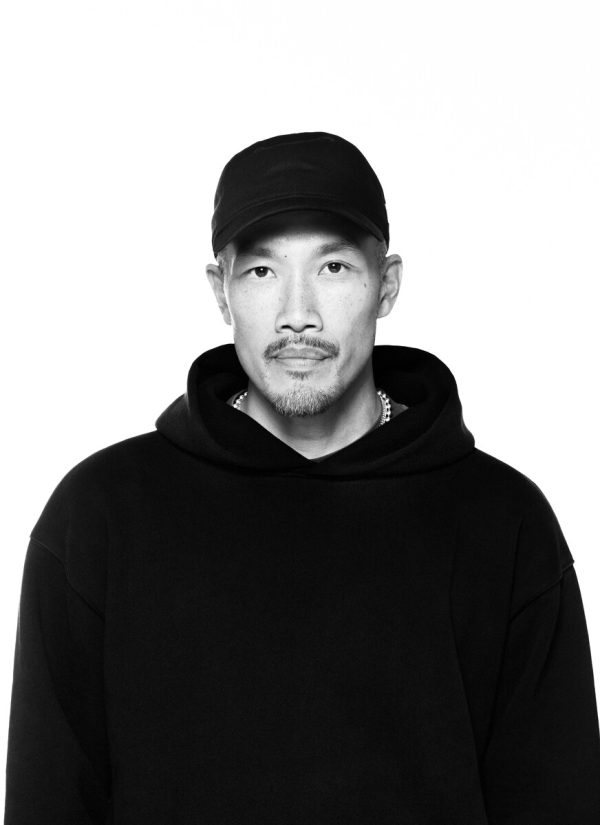
Dao-Yi Chow is an American fashion designer and a lifelong New York City resident. After attending the prestigious Stuyvesant High School in downtown Manhattan, Chow studied communications and graduated from New York University. Chow’s professional career started in the late nineties, helping his friend and mentor Robert “Bobbito” Garcia open the seminal East Village boutique Footwork. He quickly went on to work at venerable streetwear brands Mecca and Ecko, as well as contribute to such notable publications as Ego Trip, The Source, Vibe, and Blaze magazines as a music journalist correspondent.
Most recently Chow was hired as VP, Creative Director of Brand, for the New Era Cap Company to oversee the design and marketing of a new collection of forward-facing American sportswear and headwear. Set to launch at the end of 2024, the collection marks the first time that the brand will market and sell its own branded product in North America since it was established in 1920. Chow lives in Williamsburg, Brooklyn, with his wife and two sons. Aside from his continuing work with Public School, he has served as a board member for the Council of Fashion Designers of America since 2019.
-
Romi Crawford, PhD, has a research practice that explores race and ethnicity as they relate to American visual culture including art, film, and photography, as well as the logics of artistic inheritance through forms of sociality, archives, pedagogies, and intergenerational collaboration. Recent curatorial projects include Citing Black Geographies (Richard Gray Gallery, 2022) and So Be It! Ase!: Photographic Echoes of Festac’77 (Richard Gray, 2023). Select publications include Fleeting Monuments for the Wall of Respect (Green Lantern, 2021); “Reading Between the Photographs: Serious Sociality in the Kamoinge Photographic Workshop,” in Working Together: Louis Draper and the Kamoinge Workshop (Duke University, 2020); and “Surface and Soul in the Work of Nick Cave” in Nick Cave: Forothermore (DelMonico/MCA, 2022). She is Professor in the Visual and Critical Studies department at the School of the Art Institute of Chicago and founder of the Black Arts Movement School Modality and the New Art School Modality.
-
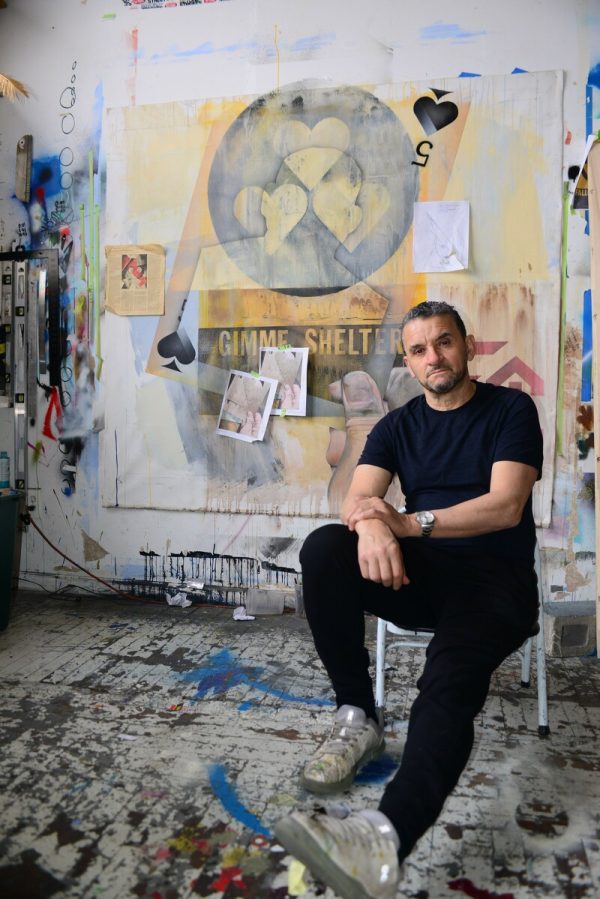
Lee Quiñones is considered the single most influential artist to emerge from the New York City subway art movement. He is a celebrated figure in both the contemporary art world and in popular culture circles, faithfully producing work that is ripe with provocative socio-political content and intricate composition. Quiñones was born in Ponce, Puerto Rico, in 1960, and raised in New York City’s Lower East Side. One of the originators of street art, Lee started painting on New York City’s streets and subway cars in 1974 and was instrumental in moving street art above the ground when he created the first handball court mural in 1978. Over the next decade he would paint more than 125 whole subway cars throughout the MTA system before shifting to a studio-based practice.
Quiñones has had numerous solo shows and exhibited internationally, first at Galleria Medusa in Rome, Italy, in 1979. In 1980, Quiñones had his first New York show at White Columns, ushering in an important era as spray paint made the transition from moving objects to stationary canvas works. His work was included in the critical Times Square Show (1980); Graffiti Art Success for America at Fashion Moda (1980); the New York/New Wave show (1981) at PS1; Events at the New Museum of Contemporary Art (1981); and Documenta7 in Kassel, Germany (1983). In recent decades his drawings and paintings have been shown in East Village USA at the New Museum of Contemporary Art (2005), The (S) Files at El Museo del Barrio (2010), Looking at Music 3.0 at the Museum of Modern Art (2011), and Writing the Future: Basquiat and the Hip-Hop Generation at the Museum of Fine Arts Boston (2020).
In 1983 Quiñones starred in Charlie Ahearn’s semi-autobiographical film, Wild Style, which served as a blueprint for the emerging hip-hop and street art movements. He also appears in Blondie’s “Rapture” music video, and in the film Downtown 81. His work appears in the Tony Silver and Henry Chalfant 1983 documentary film Style Wars and in Manfred Kirchheimer’s Stations of the Elevated. Quiñones’s paintings are in the permanent collections of the Whitney Museum of Art, the Museum of Modern Art, the Brooklyn Museum, the Perez Art Museum Miami, the Museum of the City of New York, the Blanton Museum of Art Museum, the Groninger Museum, and Museum Boijmans Van Beuningen. Quiñones lives and works in Brooklyn, New York.
Related Content
-
Video
Talk: Lee Quiñones, Dao-Yi Chow, and Romi Crawford
Video documentation of the conversation between street art originator Lee Quiñones, streetwear designer Dao-Yi Chow, and Chicago art historian Romi Crawford.
Funding
Lead support for the 2024–25 season of MCA Talks is made possible by The Richard and Mary L. Gray Lecture Series through a generous gift to the Chicago Contemporary Campaign.
Generous support is provided by The Antje B. and John J. Jelinek Endowed Lecture and Symposium on Contemporary Art; the Kristina Barr Lectures, which were established through a generous gift by The Barr Fund to the Chicago Contemporary Campaign; The Gloria Brackstone Solow and Eugene A. Solow, MD, Memorial Lecture Series; and the Allen M. Turner Tribute Fund, honoring his past leadership as Chair of the Board of Trustees.