Editorial
Questions for Wonder
by Jeanette Andrews
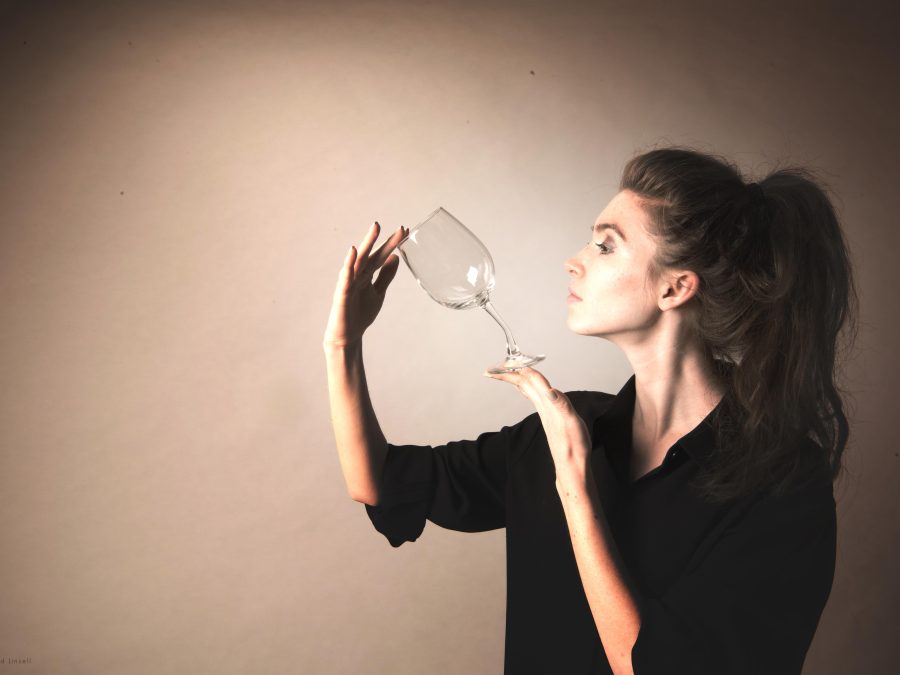
Jeanette Andrews
Photo: David Linsell
In anticipation of her In Progress event this Tuesday, February 26, artist Jeanette Andrews explores her relationship to illusion and magic.
In Progress is an MCA series of public programs that give visitors a glimpse into the working practices of artists.
I am proud to be part of a tradition that allows me to both seek and provide questions, and not necessarily answers . . .
I first saw a magic performance at the age of four—a Siegfried and Roy television special. I knew from that moment on I was going to be a magician. I first performed when I was four years old for my preschool class and was paid to do magic performance for the first time at age six. From when I was five through to thirteen, I was fortunate enough to study with Ralph Beck, who was the great-nephew of the most successful American vaudeville magician, Howard Thurston.
As I continued to practice the technical aspects of magic, I realized that many of the goals of the world of show business didn’t quite align with my own. At twelve, I met my friend Arthur Trace, who casually mentioned that magic could be used to express other ideas. Suddenly my eyes were opened! Throughout my teenage years I became interested in aesthetics and phenomenological philosophy, quickly noticing that many of the questions that philosophers were exploring related to art were ideas that magic investigates as well. The nature of reality, certainty of knowledge, perception. . . . This was the beginning of blending my technical background as a magician with a formal artistic practice, and ever since I have considered magic my medium.
Magic provides a beautiful structure to examine perception with both visual and psychological elegance.
Prolific magician and historian and Max Maven notes that “the magicians of the 20th century have accomplished a great feat . . . they have taken something truly profound, and rendered it trivial.“ One hundred and fifty years ago, if a friend had asked what your plans were for Tuesday night and you mentioned seeing a magic performance, that would have carried the same cultural weight of prestige as saying you were going to the ballet or an elaborate play.
I found this history fascinating—and one of my main projects as an artist has been to bring magic back to the arts sector by democratizing the process and creating contemplative words that have amazement and generosity at their core.
Having spent my life as a magician and artist, I have always loved the notion that questions open the door to many more questions. Heidegger referred to this “always more” aspect of reality as “the mystery.”¹ With mystery being at the core of my medium, here are a few opening questions I have been mulling over while hunting the mysterious:
- Do illusions construct our realities?
- “Are you certain?”
- Can wonder inspire gratitude?
- Do we trust our senses?
- Is my sensory perception of this apple the same as your sensory perception of this apple?
- What does it mean for something to be ‘impossible’?
- Can wonder be designed to be cyclical?
I hope you will join me to explore further inquiries during my performed In Progress artist talk.
Related Stories
-
Articles
Invisible Roses
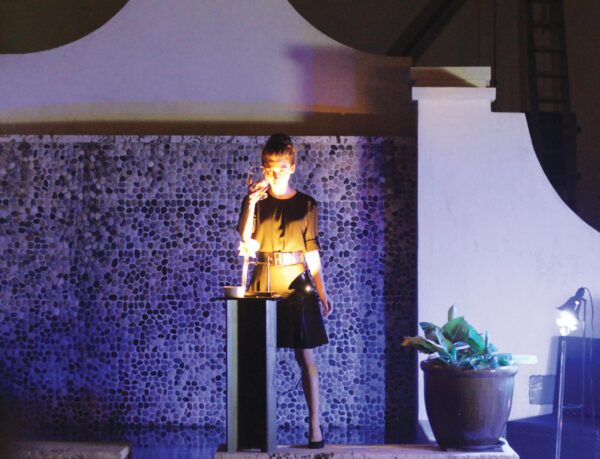
Jeanette Andrews provides some insight into her newest work, developed specifically for the MCA's 50th anniversary.
Notes
¹ Hass, Dr. Lawrence. Transformations: Creating Magic Out of Tricks, published 2007.
About the Author
Jeanette Andrews is a sensory illusionist who specializes in creating performative, art-based, and interactive sensory magic possessing a contemplative take on the art of the impossible. Andrews uses scientific oddities and sensory anomalies to bridge everyday life to a special, heightened world. Hailed as one of the most innovative illusionists in the world today, Andrews has staged hundreds of sold-out and standing room-only performances at museums, theaters, and universities across the United States. These include commissioned and site-specific works at the International Museum of Surgical Science, Birmingham Museum of Art, and Chicago Ideas Week. Her work explores how illusions construct reality and highlights astonishing aspects of everyday life via moments of the seemingly impossible. Combining influences not typically seen in magic performances such as immersive theater, quantum physics, and philosophy, Andrews has invented a unique take on this ancient art form. She is the only magician worldwide known to be awarded an artist’s residency, including being a High Concept Labs Sponsored Artist and artist in residence for The Institute for Art and Olfaction. Illusion is Andrews’s life’s work and her performances have been praised by The Daily Mail, the Chicago Tribune, and PBS.