Editorial
No Translation Necessary: Interpreting the Sonic and Visual
Featured image
Carousel: - Full Size Images
Instagram post
link
on Freedom Principle artists
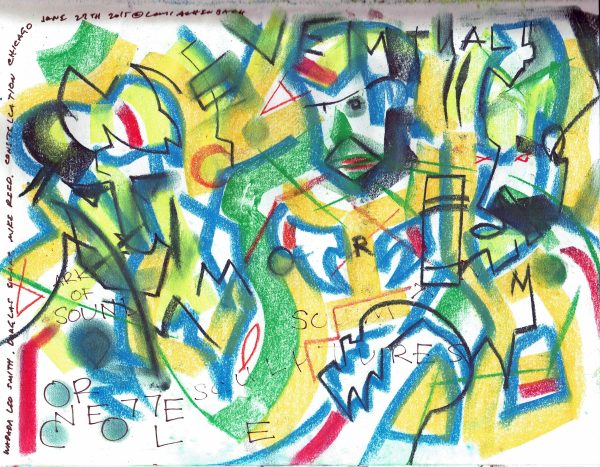
I met Douglas Ewart at a Kidd Jordan AfterFest Constellation show a few years ago. We showed each other artworks in sketchbooks, and I invited him to exhibit in a Jazz Occurrence Art Exhibition where I curate the walls, and produce a sonic arts/visual arts event (he accepted). Since then, we’ve talked and did an art-trade. He received four drawings of an Ewart/Mike Reed/Wadada Leo Smith concert in exchange for a custom rainstick (I know, awesome, right?). The rainstick room in the Freedom Principle was like a tall, four-walled friend singing old songs and inviting me to sleep there overnight. I gained a lot of information from the entire exhibition as it surrounded me with a carnival of familiar sounds and iconic faces.
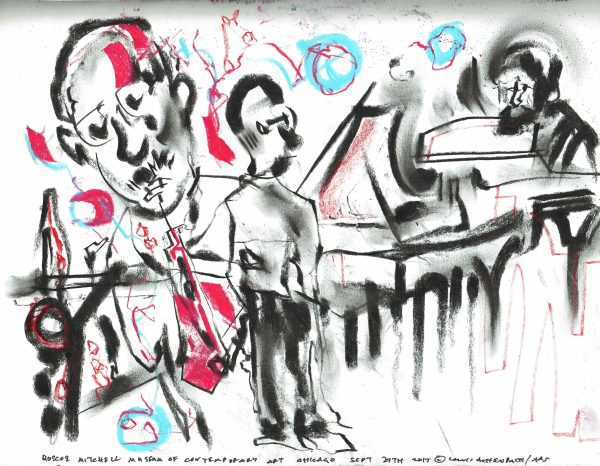
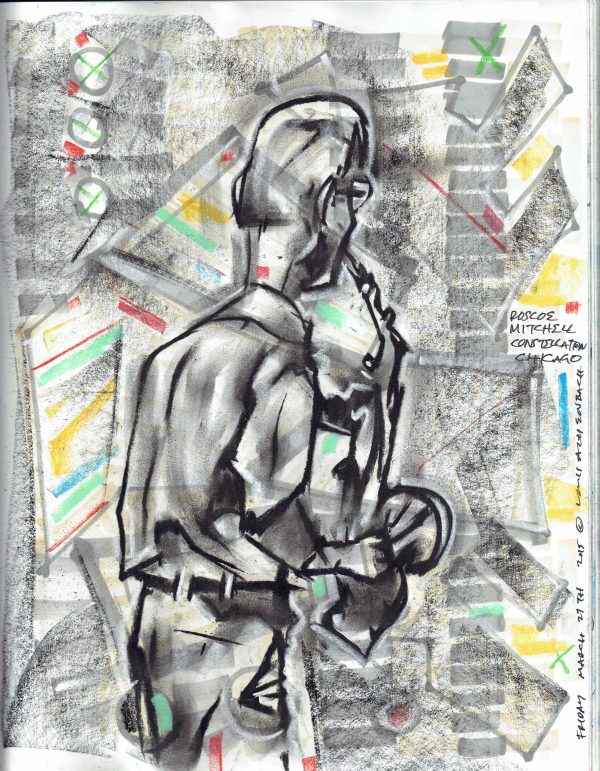
Roscoe Mitchell was also featured in the exhibition (along with artists Lauren Deutsch and Muhal Richard Abrams) and performed during the Freedom Principle‘s stay. I heard him say, standing before the percussion cage, that “sound is perfect.” When I repeated this philosophic phrase to him in an email, he corrected me by stating, “If I said sound is perfect, I meant to say that silence is perfect and when you interrupt silence with a sound you have to make sure the sound you make is on the same level as the silence.”
Inherently perfect; silence. What you say, do, and play had better be as good.
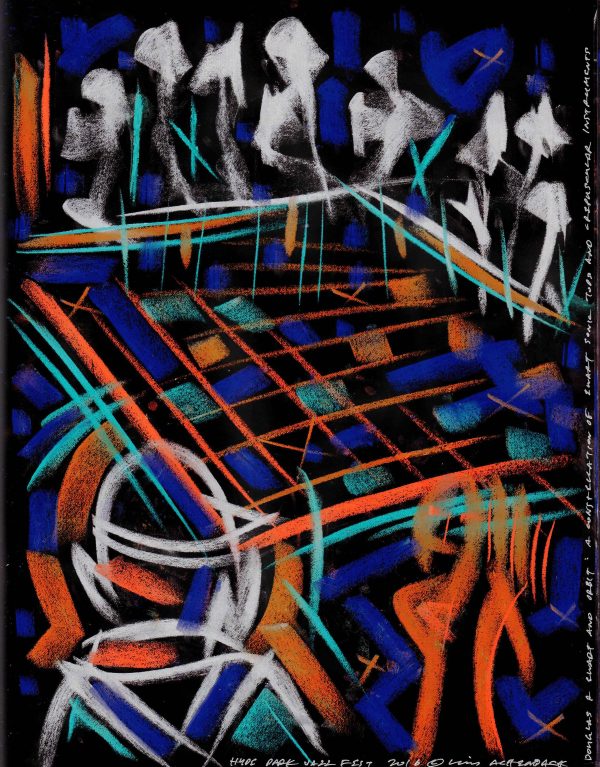
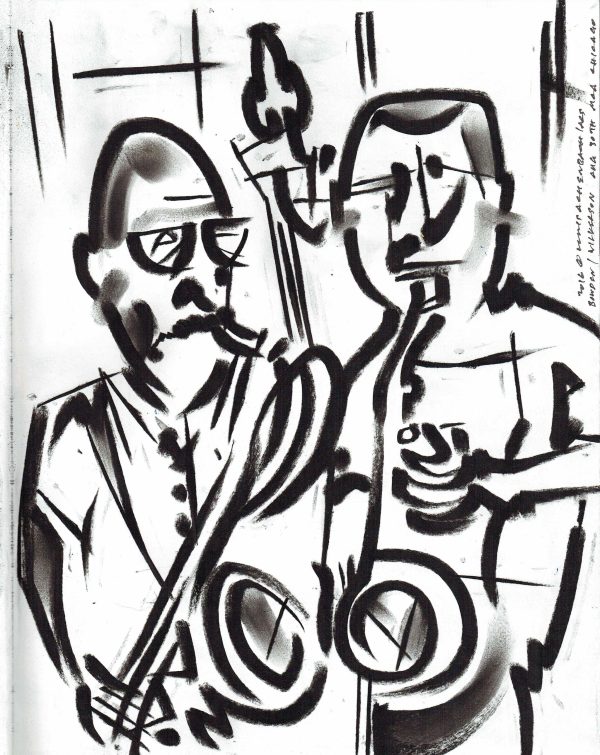
I’ve translated this truth to how I paint. The blank canvas is right on. It doesn’t need my intervention to be art. So when I start making marks, they had better be true, or show the struggle in the music, or be on point with the mission. I do let the music tell me what to paint. I let the musicians take the lead, and I respond with firebrand reverence that I trust is apparent. I’m documenting something intangible but real. For me, the music is physically there, as a patterned entity existing between myself and the sculptures of the music makers. The music emanates, then blankets back on the performers, then gets bounced around the venue, filling the room and ears and receptive minds.
on Tuesdays on the Terrace and improv painting
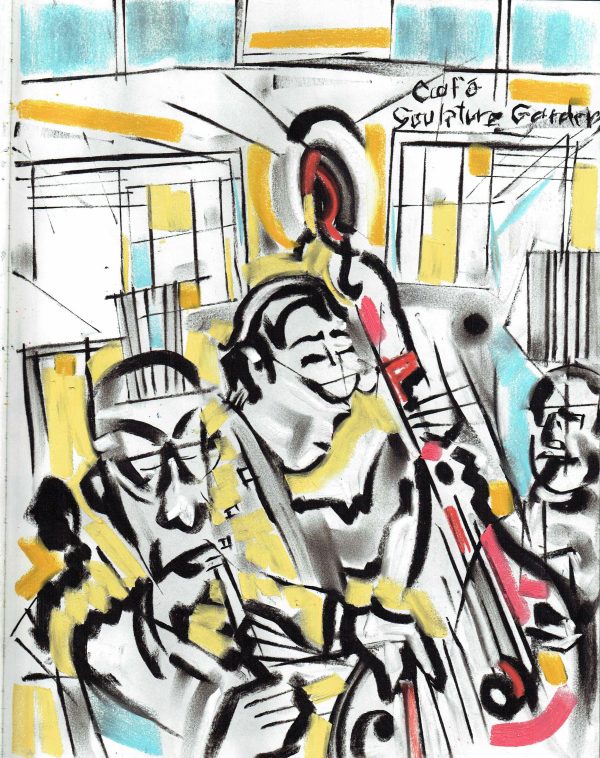
This lands the time machine back to August 30, absorbing the sound of the Anderson Legacy band after viewing Mastry. Those musicians that sharpened their skills at the original Velvet Lounge gifted us a profound performance. Mosley rolled the thunder as Aoki tumbled the bass. Wilkerson, Bowden, and Odell politely interwove the reeds in slow build style. As words do often fail, I trust the drawings will speak. The MCA is certainly doing Chicago and the world a divine service—from Tuesdays on the Terrace during the KJM exhibition to hosting Roscoe Mitchell during the historic and archival rich Freedom Principle.
The artistic response from all this glorious stimuli is, for myself, to take a certain level of responsibility with me when I “improv paint.” Keeping lit the match from the torch of the ancestors, who figured this all out long ago; and holding in mind the importance of silence and sound in life, as in process. I used to think that the languages of the sonic and the language of the visual were two different tribes communicating and I was in the rush of mid-river, capturing the frequency. But I’ve learned that the two are in the same spectrum—layered forms of expression. Sound and form/color are in the same tongue. No translation necessary. And the ancestors (hopefully) smile from the corners of the room.