Editorial
I Was Raised on the Internet
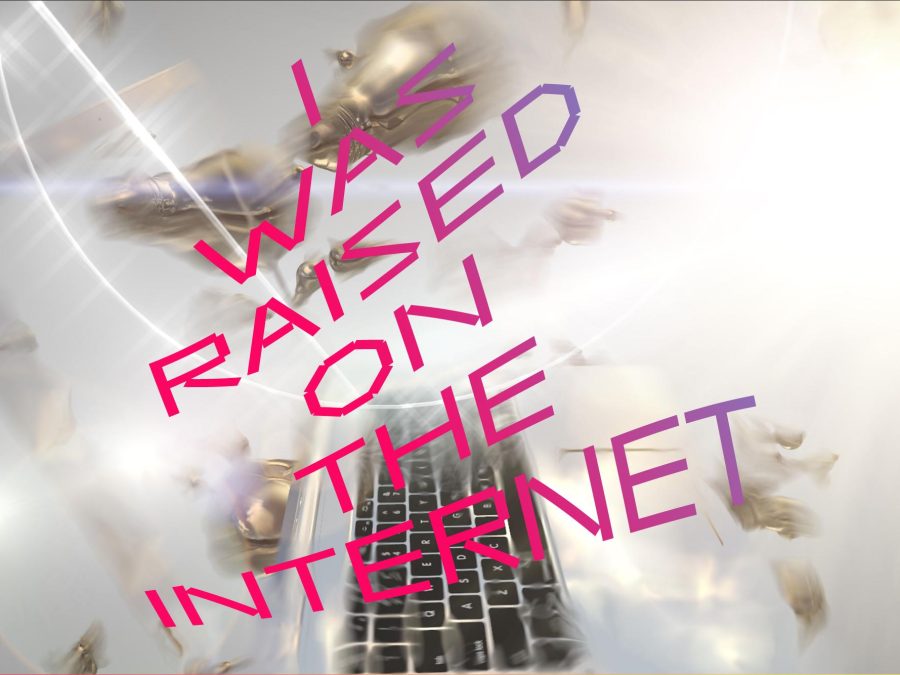
This website presents online-only artworks from the MCA’s exhibition I Was Raised on the Internet as well as readings about networked technology and its effects on our everyday lives.
Online Artworks
What does art look like when it is made specifically for the web? The games, digital videos, and interactive websites here demonstrate radically different approaches and platforms that artists working online may employ. Some of the works celebrate the internet as a space for connection, self-expression, and identification; others warn about the perils of digital surveillance and manipulation.
Please note: some of these works contain mature content.
American ArtistSandy Speaks, 2016
Carousel: American ArtistSandy Speaks, 2016 - Full Size Images
About Sandy Speaks
-
American Artist
(American, b. 1989)Sandy Speaks, 2016
A.I. chat application
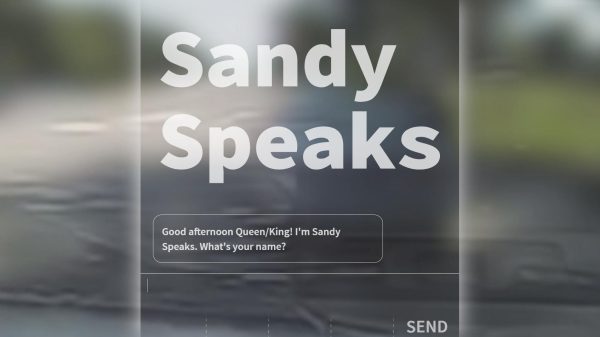
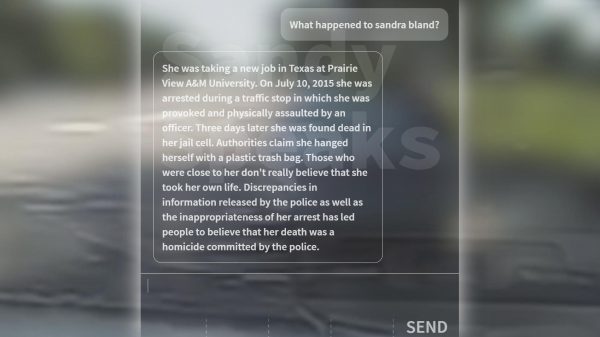
Originally commissioned by Newhive.comAmerican Artist’s online chatbot Sandy Speaks is inspired by the legacy of Sandra Bland, a 28-year-old African American woman who was found dead in a jail cell in Waller, Texas, on July 13, 2015—three days after being pulled over and arrested for a minor traffic violation. While her death was ruled a suicide, a grassroots movement coalesced to cast doubt on the official account. Those involved demanded to know: What happened to Sandra Bland?
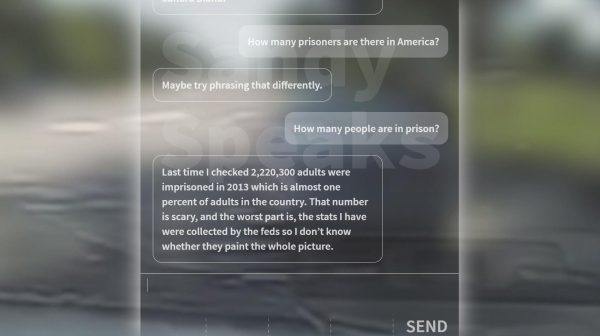
Users can ask the bot a limited range of questions related to Bland’s death and American policing. The work’s title is taken from a series of videos Bland posted online in the months preceding her death, which touch on politicized issues such as police brutality and mass incarceration.
Tips for interacting: Try asking, who are you? What’s your relationship to Sandra? What can you tell me about prison? What can you tell me about prison surveillance? What do you know about Sandra? Who is Sandra? What happened to Sandra? What happened to Sandra in jail? Why do people get arrested? What is a felony? What is a misdemeanor? What is prison? What is jail? What’s the difference between jail and prison? How many prisons are there? Who is in jail? What age are inmates? How many people are in jail that aren’t convicted? Why are people in jail that aren’t convicted? How many people die in prison? How do I know if I’m arrested? How do I know if I’m detained? How do I know if I’m free to go? What does convicted mean? What does arrested mean? What does charged mean? What does detained mean? What does incarcerated mean? What should I do if I get arrested? Where did you get this info from? What is Black Lives Matter? What is racial discrimination? What is police brutality? Am I required to put out my cigarette if I get pulled over? What are my rights if I get arrested? Can I film police?
Special thanks to Angelina Bethoney.
-
American Artist, “Eyebeam: Trust and Believe,” symposium, Eyebeam, April 29, 2017.
American Artist, “Sandy Speaks: A Chatbot that Talks Prison Statistics & The Failure of Surveillance,” Newhive, September 19, 2016.
Tom Dart, “Serious deficiencies found at jail where Sandra Bland died, says new report,” The Guardian, April 12, 2016.
Tom Dart and Jon Swaine, “Sandra Bland: suspicion and mistrust flourish amid official inconsistencies,” The Guardian, July 25, 2015.
Priscilla Frank, “Chatbot ‘Sandy Speaks’ Continues Sandra Bland’s Legacy Of Education And Activism,” Huffington Post, September 27, 2016.
Debbie Nathan, “What Happened to Sandra Bland?” The Nation, April 21, 2016.
Ray Sanchez, “Who was Sandra Bland?” CNN, July 23, 2015.
Alexandra Symons Sutcliffe, “Dignity as aspiration: The privilege of representation the obligation to attend in the work of Amalia Ulman American Artist,” AQNB, July 21, 2017.
Ilyn Wong, “Automation // ‘Sandy Speaks’: An Interview with American Artist,” Berlin Art Link, December 22, 2017.
Anna AnthropyQueers in Love at the End of the World, 2013
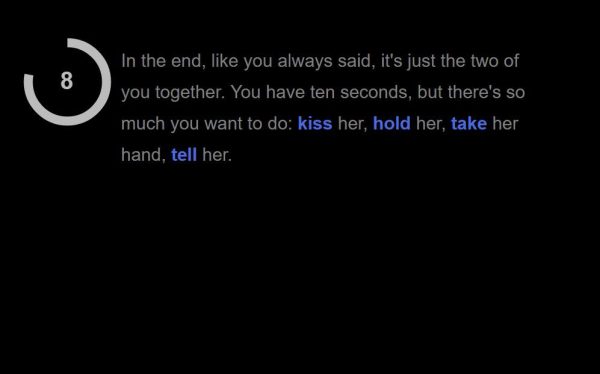
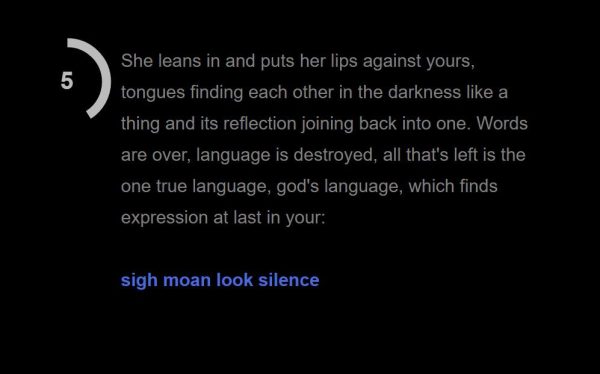
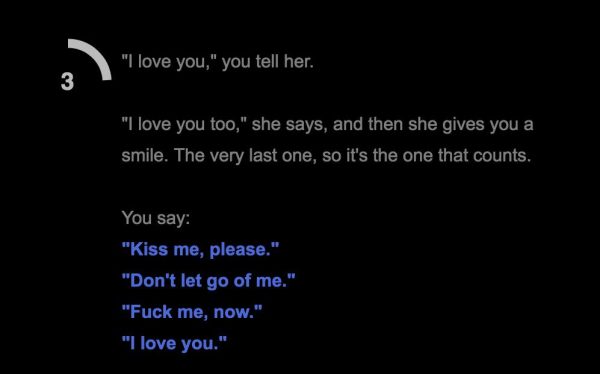
Carousel: Anna AnthropyQueers in Love at the End of the World, 2013 - Full Size Images
About Queers in Love at the End of the World
-
Anna Anthropy
(American)Queers in Love at the End of the World, 2013
Online game
Courtesy of the artistQueers in Love at the End of the World is a 10-second online game that creates an imaginary experience of fleeting intimacy with a loved one. As a timer counts down to zero, users click their way through a hypertext narrative, making rushed choices that determine the emotionally and erotically loaded final moments before “everything is wiped away.” The artist writes: “If you only had 10 seconds left with your partner, what would you do with them? What would you say? It’s a game about the transformative, transcendent power of queer love, and is dedicated to every queer I’ve loved, no matter how briefly, or for how long.”
-
Cara Ellison, “Anna Anthropy and the Twine Revolution,” The Guardian, April 10, 2013.
Evan Fuller, “Designing Queer Narratives with Twine,” Medium, June 22, 2017.
Jed Lipinski, “Video-game designer Anna Anthropy describes the life of a radical, queer, transgender gamer,” Politico, April 10, 2012.
Chris CollinsHitch (beta), 2017–18

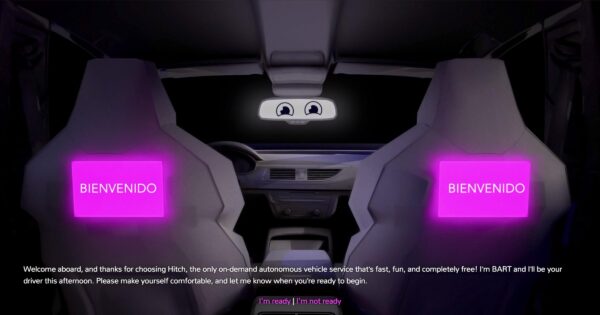
Carousel: Chris CollinsHitch (beta), 2017–18 - Full Size Images
About Hitch
-
Chris Collins
(American)Hitch (beta), 2017–18
Online game
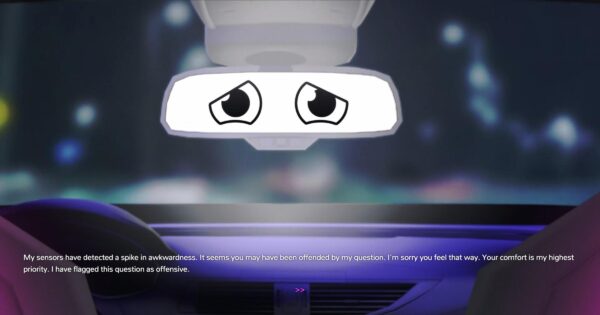
Courtesy of the artistThis online game introduces users to what artist Chris Collins describes as “the awkward small talk that will take place between you and your autonomous vehicle service.” Hitch begins with a friendly conversation between you and the driverless car of a fictitious rideshare company. As automation becomes increasingly common and entire labor sectors are, in Silicon Valley parlance, “disrupted,” Collins asks us to consider what we are willing to sacrifice for the sake of convenience and technological progress.
-
Chris Collins, Hitch (beta): Welcome Aboard!
Chris Collins, Hitch – Our Journey (promotional video), 2017, video, 01:56.
Jess Shankleman, “Self-Driving Cars Will Kill Things You Love (And a Few You Hate),” Bloomberg, February 13, 2018.
Daisuke Wakabayashi, “Uber Won’t Renew Permit for Self-Driving Cars in California,” New York Times, March 27, 2018.
E. JaneE. the Avatar, 2015


Carousel: E. JaneE. the Avatar, 2015 - Full Size Images
About E. Jane the Avatar
-
E. Jane
(American, b. 1990)E. The Avatar, Ep. 1–7, 2015
Digital videos
Durations variable
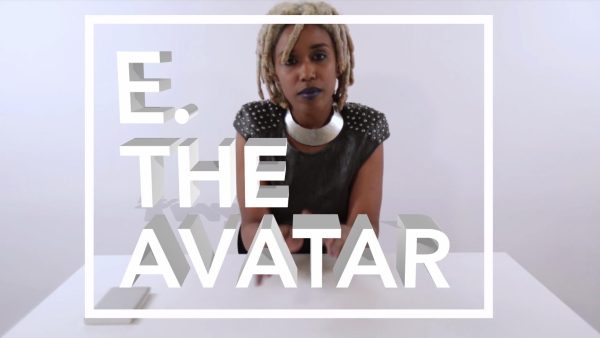
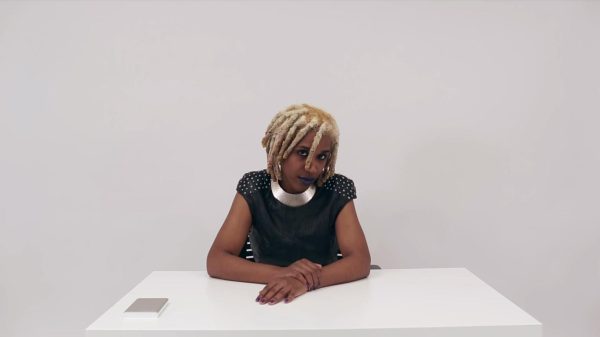
Courtesy of the artistE. Jane’s YouTube series E. The Avatar both embraces and critiques the ways that identities are performed online. Touching on topics like net neutrality and selfies, E. Jane’s persona narrates her experiences as a disembodied presence on the internet in a deadpan, sarcastic tone, which contradicts her almost utopian descriptions of life online. E. Jane created the video series—as well as a product line featuring her face and body—to work through questions that arose around her realization that, as a black American woman, her body is often unprotected. “What if the body were code?” she asks. “What if the body were only a simulation? What if I could exaggerate how inhuman I feel?”
-
Ep. 1
[Calm ambient music plays]
I am the master of this room. I am so powerful in this room that I can dematerialize on demand. Watch. One . . . two . . . three. Tune in next week, when I’ll teach you how to take the perfect selfie.
Ep. 2
[Calm ambient music plays]
Some people ask me, “E, why are you here? You’re just an avatar.” And to them I say, “Why are you here? You’re just an avatar.”
I always wonder about those avatars that are just, like, blank white spaces. What’s that about? Why can’t I see your face?
[Waka Flocka’s “Lurkin” plays]
Ep. 3
[Calm ambient music plays]
Oh, hello cyber friends! How are you doing today? Do you feel like going on an adventure? Whenever I’m really bored here, which is really hard, ‘cause, you know, cyberspace. There’s tons to do. But whenever I do get bored, I love to go on Google Maps.
Okay, let’s travel to Hiroshima. Yeah, I love Japan. Wow, look at that building. Oh man, and all the water. Why are logos in the sky? Oh, Google. Oh, water is so Zen. I love traveling. Okay, let’s go to Italy now.
Let’s just drop it anywhere, let’s take a risk. I mean, it is an adventure, right? Wow, how did they get up this flagpole? What is that, the Great Wall of Italy? Oh man, these greens are so green. So glad you came here with me, cyber friends. What a great adventure to share with you. Anyway, see you next time.
[Hip-hop music plays]
Ep. 4
[Calm ambient music plays]
Today I would like to talk to you about net neutrality. Now, what is net neutrality? Net neutrality, to put it simply, is the idea that every [page] on the internet should be created equally. It should stream to you equally. That means that someone’s Tumblr page should be able to run at the same pace at CNN’s website.
Why is this important? Well, for avatars like me, it’s important because if net neutrality went away, I go away as you know it. I would become this 720, lo-fi, barely there, partially transmitted figure, and we wouldn’t be able to spend time together like we do now. You wouldn’t be able to Skype to your friends as quickly. Your website would run slower. The kid that’s making $3 million on YouTube talking about products wouldn’t be able to make his money at the same rate. Essentially it would take the democracy out of the internet. Some people only exist online. What about people who aren’t only away from the keyboard. Some people think that you should be outside playing with a ball right now, or riding a bike, or swimming, or drinking a latte at a coffee shop. Which, I mean, you can still drink a latte at a coffee shop and still be here with me, but you get my point. Some people think that the cyber realm is a secondary realm—not as important as the “real” world. Now, I’ve never been to the real world, except for a few photographs, but it doesn’t seem very interesting to me. It seems like it’s much safer here in cyberspace.
Well, that’s it for today, see you next time.
[Hip-hop music plays]
Ep. 5
[Calm ambient music plays]
Hi cyber friends, it’s good to see you again. So glad you came back to visit me. Today, I’m going to talk to you about the selfie. We all know what a selfie is. A selfie is a photograph that you take in cyberspace, or with a product that gets transmitted into cyberspace. So, I’m going to show you how to take the perfect selfie. You look at the camera like this, and you give face. You know what face is. It’s this, right here.
Some people like to be silly in selfies and give duck faces or confused faces . . . don’t do that, no. A selfie should just be face.
Well that’s it for this week, cyber friends. See you next week. Bye!
[Hip-hop music plays]
Ep. 6
[Calm ambient music plays]
I keep seeing humans talk about going to Mars, and apparently they’re planning a trip to Mars where they’re not—no one’s going to return, they’re gonna go to Mars, they’re gonna pioneer Mars, but all I keep wondering is, what about cyberspace? I mean, it’s so wonderful here. Why doesn’t anyone pioneer here? We can all hang out together. You can write yourself some code so you can hang out with me, every day, right here, and we can, you know, enjoy eternity together. We’ll never die; we’ll never get old. We’ll just be here, avatars, forever. That’s my idea of utopia. But, you know, that’s just me, cyber friends, I don’t know. See you next week.
[Autotuned music plays]
Ep. 7
[Calm ambient music plays]
Hey.
[Autotuned music plays]
-
Alexis Avedisian, “E. Jane’s Imagined Future,” Art21 Magazine, April 18, 2016.
Die Ok, “An Interview with E. Jane,” AQNB, February 16, 2016.
E. Jane, “The Coded Body,” The Offing, July 21, 2015.
Femke HerregravenLiquid Citizenship, 2015
Carousel: Femke HerregravenLiquid Citizenship, 2015 - Full Size Images
About Liquid Citizenship
-
Femke Herregraven
(Dutch, b. 1982)Liquid Citizenship, 2015
Website
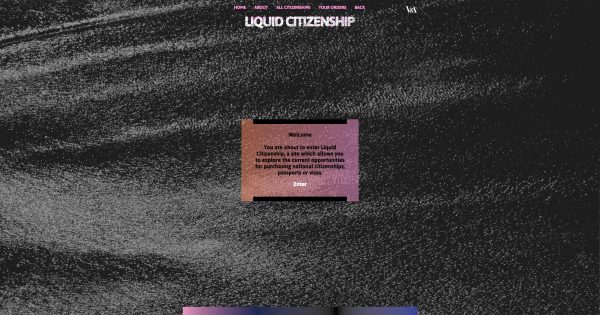
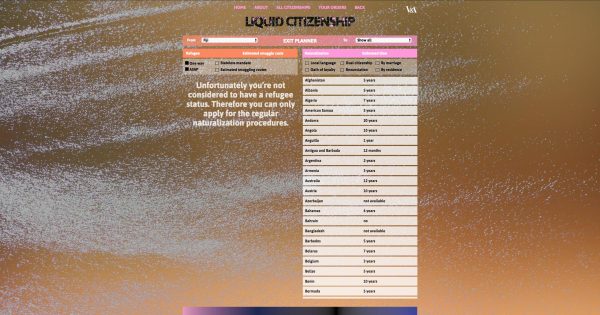
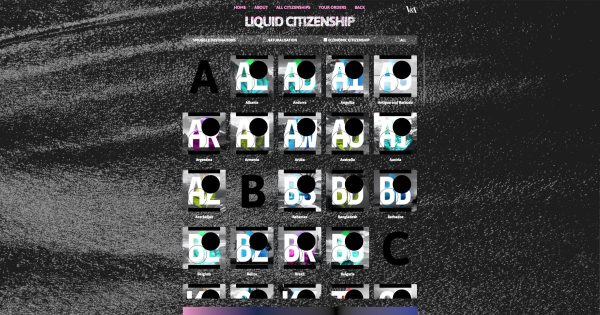
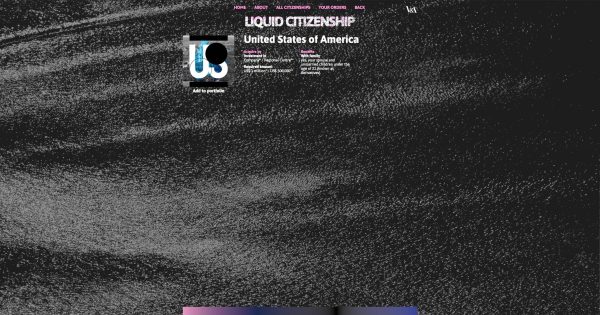
Commissioned by Victoria and Albert Museum, LondonCitizenship is no longer based just on where you were born, who you are married to, or where you apply to live; it is now something that can be bought and traded. Using available data on exemptions and opportunities—such as purchasing passports and human smuggling—Liquid Citizenship allows users to navigate the process of acquiring citizenship in another country. As the artist Femke Herregraven explains, “In a landscape where the liquidity of citizenship is accelerated by commodification and deprivation, Liquid Citizenship offers a glimpse of the increasing possibilities of how this legal status can be dropped and picked up at will—or by force.”
-
Gabriele Acha, “An interview with Femke Herregraven,” AQNB, July 20, 2016.
James Bridle, “The Rise of Virtual Citizenship,” The Atlantic, February 21, 2018.
Femke Herregraven, “Liquid Citizenship: Artist Statement,” femkeherregraven.net, 2015.
Rory Hyde, Femke Herregraven, and Anab Jain, “Public Voice,” lecture, Victoria and Albert Museum, London, 2015.
Femke HerregravenTaxodus, 2013


Carousel: Femke HerregravenTaxodus, 2013 - Full Size Images
About Taxodus
-
Femke Herregraven
(Dutch, b. 1982)Taxodus, 2013
Online game
Courtesy of the artistTaxodus simulates the unofficial and largely invisible offshore economy that allows international corporations to protect their wealth. Created by Dutch artist Femke Herregraven, the online game asks you to act on behalf of the company of their choice. Your objective is to set up the most efficient tax intermediaries and subsidiaries in countries around the globe in order to lower taxes on your company’s profits. Since most of the data behind the game is unavailable to the public, Herregraven views Taxodus as a way for people to gain firsthand knowledge of global tax sheltering. “I could have made a bunch of data visualisations for example but I wanted to make the audience dodge tax themselves,” Herregraven says. “I think by playing you understand more of how companies cut up their legal bodies in order to organize their income most profitably.”
Tip for interacting: The artist has provided a video explaining how to transfer money to entities overseas.
-
Lucy Chinen, “Artist Profile: Femke Herregraven,” Rhizome Blog, Rhizome.org, August 27, 2014.
Femke Herregraven, “Geographies of avoidance: Femke Herregraven at TEDxVaduz,” filmed December 2013, TEDx video, 16:31.
Katja Kwastek, “Unfolding Entangled Infrastructures: Femke Herregraven’s Malleable Regress” Kunstlicht 38, no. 4 (2017): 12.
Marije Meerman, “The Tax Free Tour,” VPRO Documentary, 2013, YouTube video, 53:02.
Francis TsengConspiracy Generator, 2017
Carousel: Francis TsengConspiracy Generator, 2017 - Full Size Images
About Conspiracy Generator
-
Francis Tseng
(American, b. 1988)Conspiracy Generator, 2017
Website and conspiracy-generating bot
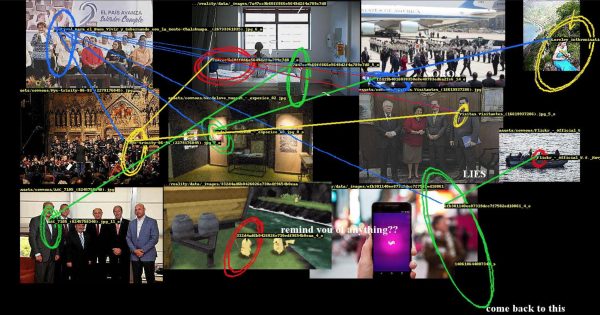
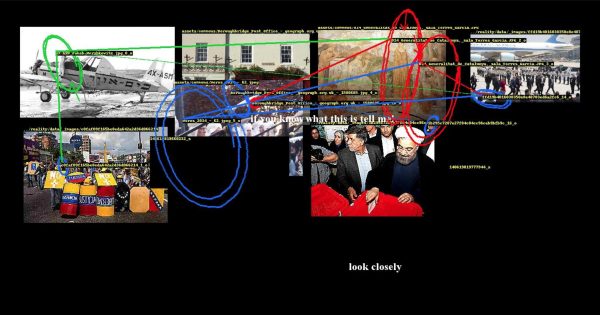
Courtesy of the artist and The New InquiryA common concern with artificial intelligence is the potential for computers to become smarter than humans. Artist and researcher Francis Tseng asks us to consider an equally troubling question: what if artificial intelligence is adopting and reinforcing our bad habits and personalities?
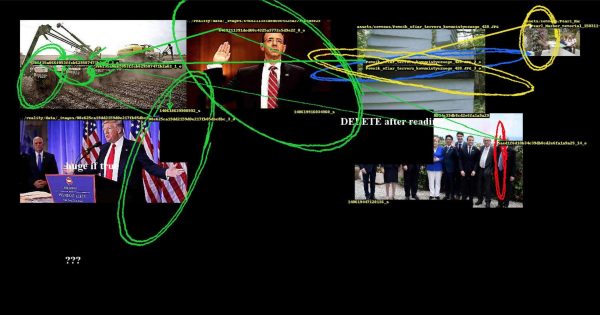
Conspiracy Generator is an open-source code, demonstrated on this static website, that manufactures conspiracy theories. Playing with apophenia, the human tendency to find meaning in random patterns, Tseng’s code connects disparate online sources, from Wikipedia to Google Images, using shallow similarities. These fabricated conspiracies draw attention to the ease with which algorithms can be used to manipulate real-world events and sway public opinion.
(This work is currently unavailable online. You can view an archived version of Conspiracy Generator via the Internet Archive.)
-
Nick Douglas, “Conspiracy Bot Shows That Computers Can Be as Gullible as Humans,” Lifehacker, June 20, 2017.
Daniel Penny, “Can a Social-Justice App Be Art?” The New Yorker, November 17, 2017.
Francis Tseng, “Conspiracy Generator,” Space & Times, June 20, 2017.
Francis Tseng, “You Probably Think This Bot is About You,” The New Inquiry, June 20, 2017.
Francis TsengThe Founder, 2016
Carousel: Francis TsengThe Founder, 2016 - Full Size Images
About The Founder
-
Francis Tseng
(American, b. 1988)The Founder, 2016
Online game
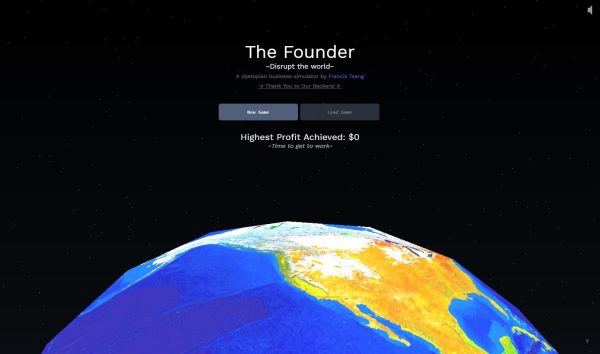
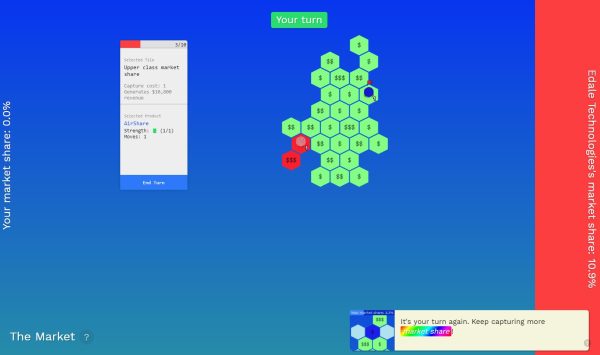
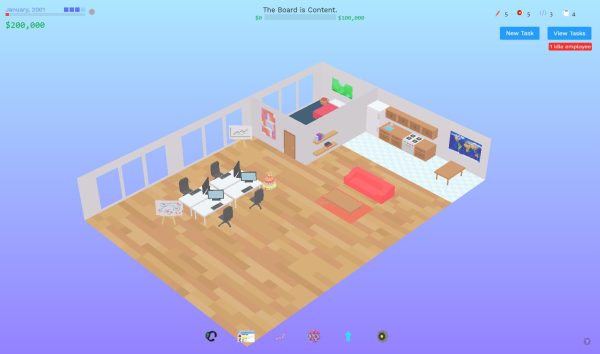
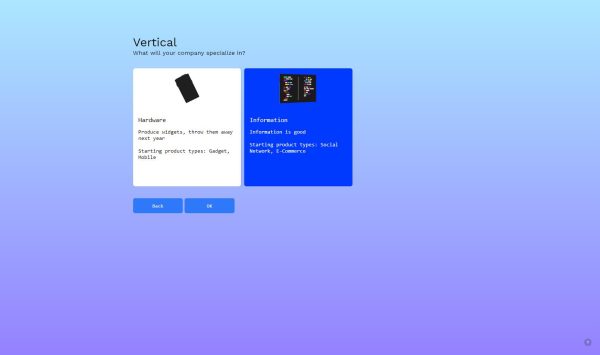
Courtesy of the artistDeveloped by artist and former Silicon Valley employee Francis Tseng, The Founder is an online game that satirizes the profit-driven world of tech startups. Your goal is to disrupt the technology market with an innovative new product. On the path to success, you face a series of choices that determine the performance of the imagined company, such as cutting costs, hiring employees, and maintaining morale. But as you get wrapped up in the premise and seductive design of The Founder, the pursuit of efficiency and endless profits may become more sinister than fun. As Tseng explains, “At some point, if I get the game’s design right, the player will ask themselves: is this actually a reasonable way we should want the world to work?”
-
Alex Lubben, “The Founder’s Dilemma,” The Awl, January 20, 2017.
“Speculating Futures: Syllabus,” The New Inquiry, December 2016.
Nick Statt, “The Founder is a surreal startup simulator that strikes at the heart of Silicon Valley,” The Verge, January 27, 2017.
Francis Tseng and Willie Osterweil, “The Founder: Unleash your parasitic disruption on the world until it consumes everything and you too,” The New Inquiry, November 14, 2017.
Heather PhillipsonSTATUS EPILEPTICUS, 2018

Carousel: Heather PhillipsonSTATUS EPILEPTICUS, 2018 - Full Size Images
About STATUS EPILEPTICUS
-
Heather Phillipson
(British, b. 1978)STATUS EPILEPTICUS, 2018
Website
Commissioned by the Museum of Contemporary Art ChicagoWARNING: This work contains fast, flashing images.
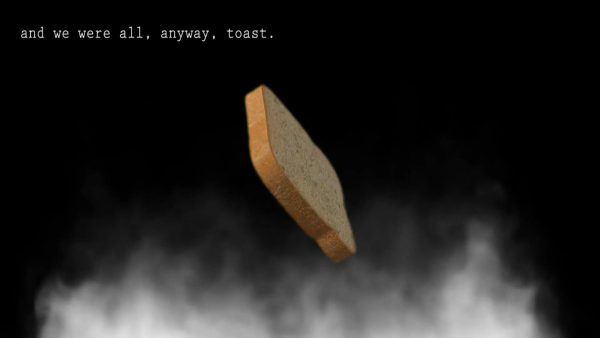
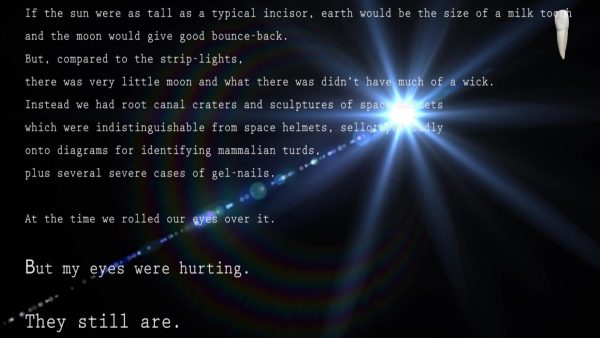
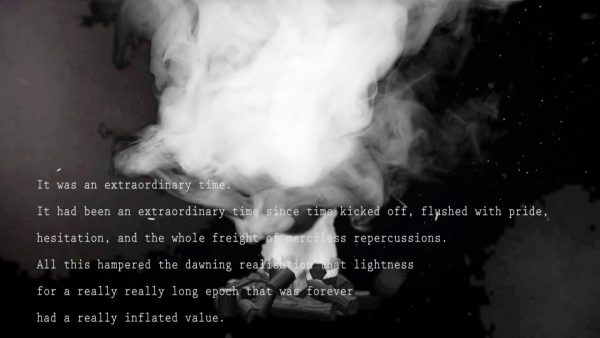
Heather Phillipson’s newly commissioned online work is part web-movie, part unsung opera, and part browser-poem. Referencing a medical condition of prolonged seizures, STATUS EPILEPTICUS allows users to navigate multiple sequence-less, simultaneous, and potentially expendable installments. Working against the typically positive associations of light—as a symbol of knowledge, goodness, and progress—STATUS EPILEPTICUS mixes rhythms of vigilance, distraction, and blackout with nocturnal, burrowing creatures and wilder, resistant thinking.
(This work is currently offline.)
Ingrid Burrington1,033 Objects, 2014

Carousel: Ingrid Burrington1,033 Objects, 2014 - Full Size Images
About 1,033 Objects
-
Ingrid Burrington
(American)1,033 Objects, 2014
Defense Logistics Agency data and webpage
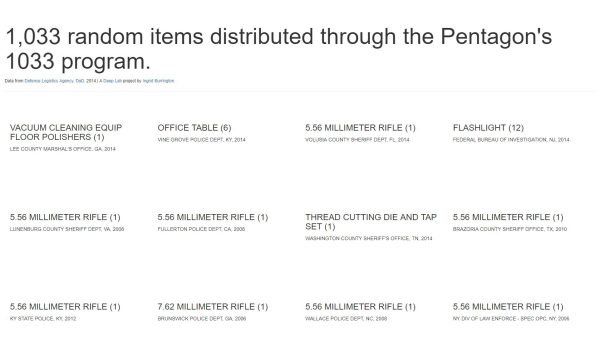
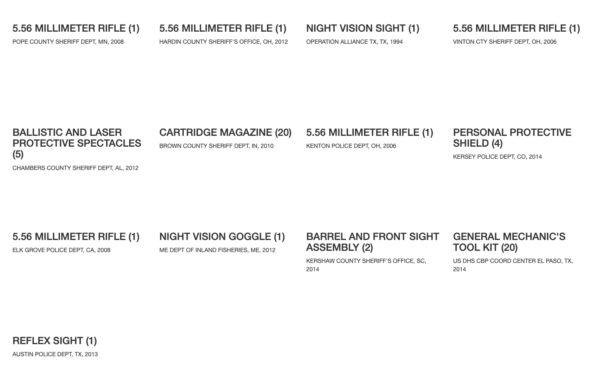
Courtesy of the artistIngrid Burrington’s online work 1,033 Objects draws attention to a system that is so massive it is hard to envision—a US government program that provides police departments around the country with excess military equipment. Burrington’s website randomly pulls 1,033 items from the program’s extensive online repository of data, which was made publicly accessible in 2014. As the artist explains, 1,033 Objects gives you “just a glimpse of this really large thing. If you try to take on the whole totality of the thing, you might actually miss the point.”
Tip for interacting: Refresh the page a few times to see the various items our government has for sale.
-
Ingrid Burrington, “An Internet of Wars: Military Networks and Network Militarization,” SFAQ, February 11, 2015.
Ingrid Burrington, 1,033 objects from the 1033 program, selected at random, selected at random (code), Github.
Ingrid Burrington, “What Amazon Taught the Cops,” The Nation, May 27, 2015.
Tom Jackman, “Trump to restore program sending surplus military weapons, equipment to police,” Washington Post, August 27, 2017.
Arezou Rezvani, Jessica Pupovac, David Eads, and Tyler Fisher, “MRAPs And Bayonets: What We Know About The Pentagon’s 1033 Program,” NPR, September 2, 2014.
Fiona Shipwright, “Artist Profile: Ingrid Burrington,” Rhizome Blog, Rhizome.org, October 13, 2016.
Jayson MussonART THOUGHTZ, 2010–12



Carousel: Jayson MussonART THOUGHTZ, 2010–12 - Full Size Images
About ART THOUGHTZ
-
Jayson Musson
(American, b. 1977)ART THOUGHTZ, 2010–12
YouTube videos
Durations variable
Courtesy of Salon 94, New YorkUnder the guise of the exaggerated online persona Hennessy Youngman, artist Jayson Musson created a series of YouTube videos over two years called ART THOUGHTZ. Adopting the popular form of tutorial or “explainer” videos, Musson tackled institutional power imbalances, racism, and insularity by offering ironic critiques of various aspects of art history and the art world. Through his alter ego, Musson humorously challenges the cultural authority and politics of the predominantly white and wealthy contemporary art world.
These works contain adult language.
-
Alexander Cavaluzzo, “Jayson Musson is more than Hennessy Youngman,” Interview Magazine, March 20, 2012.
Austin Considine, “Biting Humor aimed at Art” New York Times, February 29, 2012.
Adrienne Edwards, “Jayson Musson: ‘Halcyon Days,’” Performa Magazine, August 27, 2012.
Alexander Ladarola, “’What Up Internet’: Jayson Musson’s ‘Art Thoughtz’ Vlogs,” Rhizome Blog, Rhizome.org, January 12, 2018.
Benjamin Sutton, “Time Traveling with Jayson Musson and Dave Chappelle,” Hyperallergic, January 13, 2015.

About Institutional Critique
-
Jayson Musson
(American, b. 1977)ART THOUGHTZ: Institutional Critique, 2011
YouTube video
6 minutes, 50 seconds
Courtesy of Salon 94, New YorkInstitutional Critique strays from the genre of art that attempts to expose the ideologies and structure of the art world to instead critique infamous prisons like Rikers Island and Abu Ghraib—institutions with greater social and political significance than museums.

About ART THOUGHTZ - Relational Aesthetics
-
Jayson Musson
(American, b. 1977)ART THOUGHTZ: Relational Aesthetics, 2011
YouTube video
5 minutes, 27 seconds
Courtesy of Salon 94, New YorkMusson both describes and problematizes relational aesthetics, the art movement popularized in the 1990s by artists including Rirkrit Tiravanija and Carsten Höller.

About ART THOUGHTZ - Studio Visit
-
Jayson Musson
(American, b. 1977)ART THOUGHTZ: Studio Visit, 2012
YouTube video
5 minutes, 54 seconds
Courtesy of Salon 94, New YorkIn Studio Visit, Musson gives tongue-in-cheek suggestions for successfully navigating art world rituals.
Jeremy BaileyLean Artist Chicago, 2017–18



Carousel: Jeremy BaileyLean Artist Chicago, 2017–18 - Full Size Images
About Lean Artist Chicago
-
Jeremy Bailey
(Canadian, b. 1979)Lean Artist Chicago, 2017–18
Websites for four artist-designed products, online counterpart to workshop series, and product demonstrations
Commissioned by the Museum of Contemporary Art ChicagoIn 2016, self-styled “Famous New Media Artist” Jeremy Bailey founded Lean Artist, the first startup accelerator designed exclusively for artists. Participants receive funding and expert mentorship in startup methods to help them conceive and actualize companies that not only earn revenue but also act as subversive, critical artworks. For his MCA commission, Bailey is working with four Chicago-based artists—Shawné Michaelain Holloway, Jon Chambers, Óscar González-Díaz, and Mashaun Ali Hendricks—to develop products that solve a social problem.
-
Clumzy is a playful electronic device that lets you send messages through a decentralized mesh network, alleviating any anxiety of “Big Brother” monitoring your communications. Designed to be squeezed like a stress ball (artist Jon Chambers modeled it after the negative space of his hand), it sends a color-encoded message based on the strength of the user’s grip. Those receiving the message feel a soft vibration that mimics an intimate touch. By not relying on text, Clumzy offers an alternative on the communication spectrum that encourages new, nonverbal conventions.
-
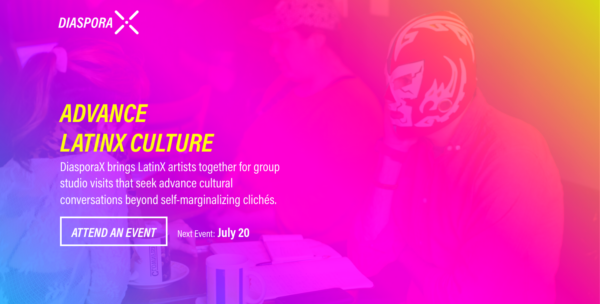
Óscar González-Díaz founded DiasporaX to bring together members of the Latinx arts community to address Latinx issues. (Latinx is an inclusive term for Latino/a and Latin-American cultural and racial identities.) Designed to be flexible and responsive, the platform for conversation facilitates playful roundtables that engage participants with topics such as the community’s US diaspora as well as clichés about Latinxs and their representation in the arts, news media, and pop culture. Participants are primed for their discussions with a series of provocative questions when they sign up on the company’s website, which also houses a range of related digital resources and “toolkits” that González-Díaz created.
-
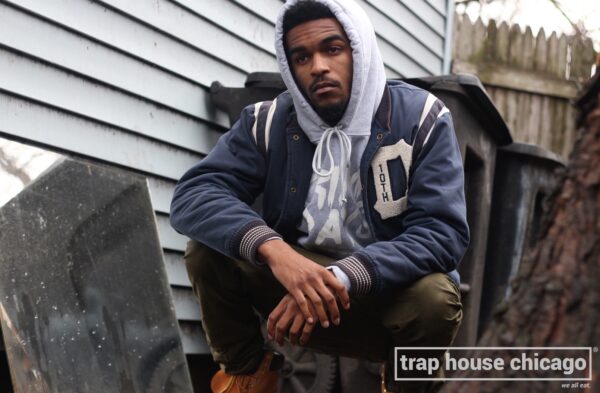
Mashaun Ali Hendricks’s TRAP House Chicago, a line of radical, restorative-justice streetwear, is on a mission to identify and address the root causes of crime, violence, and incarceration. Hendricks’s pithy messaging is intentionally provocative, pointing out whom “Crime Pays”—judges, probation officers, and coroners, to name a few—and referencing the Chicago Police Department’s yearly operating budget. The project engages and economically benefits those at risk in Chicago’s South Side community through a concept store, gallery, and safe space located at 7955 South Ashland Avenue. The multipurpose venue employs people who have been through the criminal justice system. The space also hosts events and dialogues that educate and transform individuals, communities, and society.
-
Shawné Michaelain Holloway founded Strapp to evolve the narrative of sexuality for a new generation of individuals seeking sexual confidence and comfort without compromise. Strapp is a dildo harness reimagined for a more supportive experience. It features a shape-affirming, high-waisted design and elegant closures for easy off-and-on transitioning.
-
Supported by the Canada Council for the Arts.
Porpentine Charity HeartscapeThe Shape You Make When You Want Your Bones To Be Closest to the Surface, 2018
Carousel: Porpentine Charity HeartscapeThe Shape You Make When You Want Your Bones To Be Closest to the Surface, 2018 - Full Size Images
About The Shape You Make When You Want Your Bones To Be Closest to the Surface
-
Porpentine Charity Heartscape
The Shape You Make When You Want Your Bones To Be Closest to the Surface, 2018
Online game
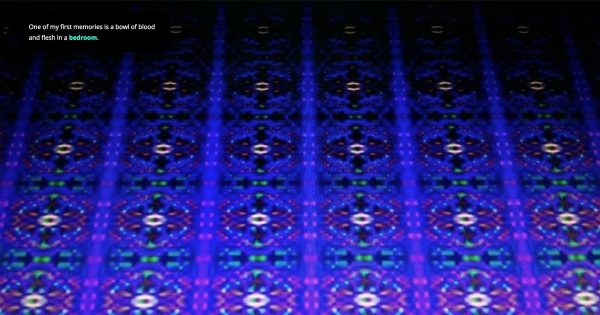
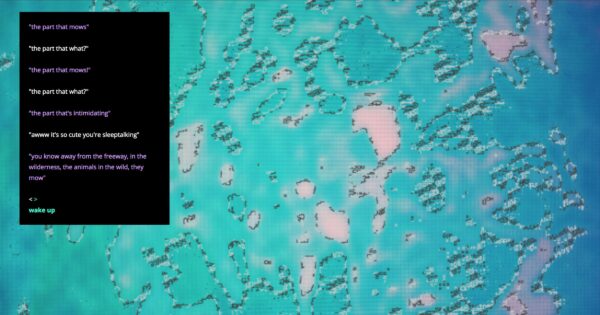
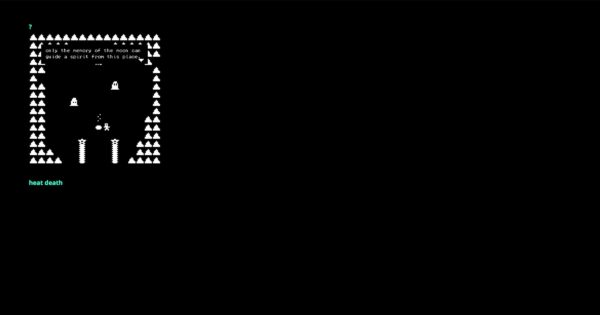
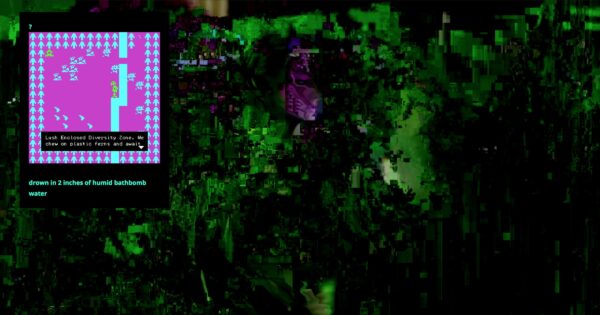
Commissioned by the Museum of Contemporary Art ChicagoThe Shape You Make When You Want Your Bones To Be Closest to the Surface invites you to choose your own path from different genres and settings, such as Porpentine Charity Heartscape’s childhood backyard, vaguely remembered video games, and a dystopian vision of the internet’s future. Using hypertext and the open-source, interactive storytelling tools Bitsy and Twine, the online game tells a nuanced story about memory and identity, resisting the violence and sexualization endemic to much of online gaming culture. According to Heartscape, the work is “an autobiographical sci-fi fever dream that focuses on gaming and the internet, two technologies I’ve had evolving, narcotic, dysfunctional relationships with throughout my life.”
This work contains adult language and sensitive content.
Sara LudyLow Prim, 2012–ongoing


Carousel: Sara LudyLow Prim, 2012–ongoing - Full Size Images
About Low Prim
-
Sara Ludy
(American, b. 1980)Low Prim, 2012–ongoing
Website
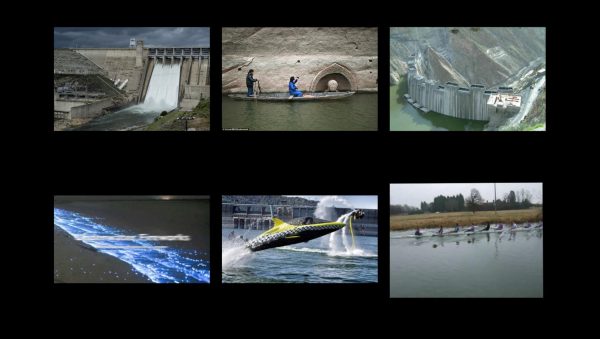
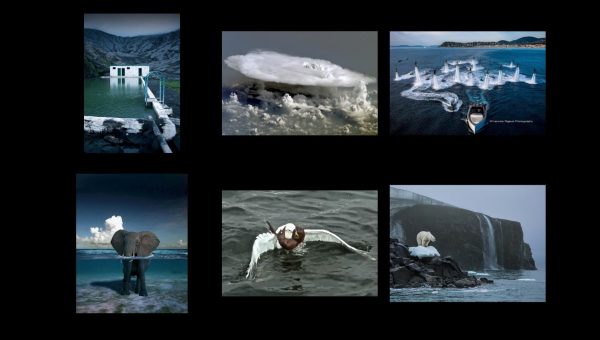
Courtesy of bitforms gallery, New YorkLow Prim features images that Sara Ludy has collected over the course of several years from online browsing and image searches. As you click through the website’s simple interface, a succession of 12-image grids takes you through strange, often dark, corners of the internet, offering a voyeuristic glimpse at Ludy’s online habits. The title refers to the online world Second Life, in which Ludy participates, where “prim” (short for primitive) are the building blocks that make up every object in the virtual universe. Houses and furniture are often described as “low prim,” a reference to their relatively simple designs.
-
Garcia Frankowski, “Interview with Sara Ludy,” Intelligentsia, August 2015.
Ian Glover, “Artist Profile: Sara Ludy,” Rhizome Blog, Rhizome.org, October 12, 2011.
Amelia Rina, “Turning the Digital into the Material, with Feng Shui,” Hyperallergic, February 2, 2016.
Shu Lea CheangBrandon, 1998–99


Carousel: Shu Lea CheangBrandon, 1998–99 - Full Size Images
About Brandon
-
Shu Lea Cheang
(Taiwanese, b. 1954)Brandon, 1998–99
Interactive networked code (html, Java, Javascript, and server database)
Solomon R. Guggenheim Museum, New York
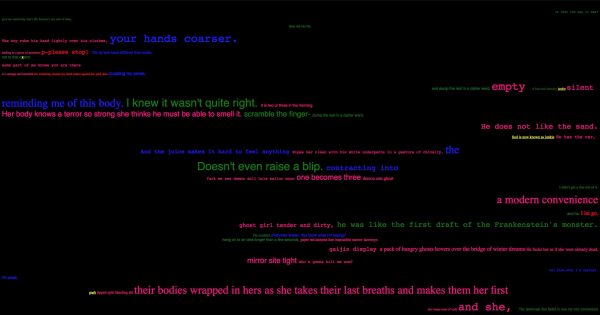
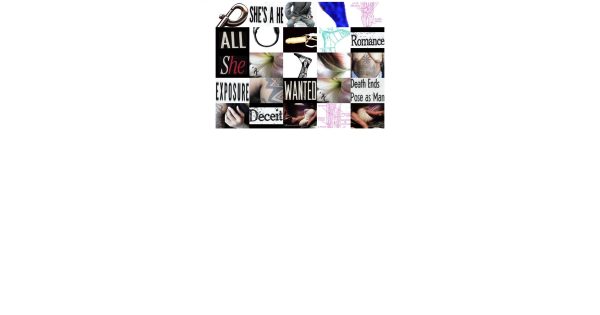
Commissioned by the Solomon R. Guggenheim Museum, and produced in association with the Waag Society for Old and New Media, The Institute on the Arts and Civic Dialogue at Harvard University, and The Banff Centre, with additional funding from The Bohen Foundation, The Rockefeller Foundation, the New York Foundation for the Arts, and the Mondriaan FoundationBrandon is inspired by the story of Brandon Teena, a 21-year-old transgender man who was raped and murdered in 1993. Shu Lea Cheang’s visually layered online artwork, recently restored by the Solomon R. Guggenheim Museum, uses pop-up windows, chat rooms, and flashy nineties computer graphics to help users explore and understand Teena’s tragic death. The website references other cultural touchstones in the ongoing struggle for transgender rights and visibility, including the iconic drag documentary Paris Is Burning and the gender philosophy of Michel Foucault. These allusions connect Teena’s story to the broader histories and politics it helped transform.
This work contains sensitive content.
Tip for interacting: Created before standardized conventions of web navigation were developed, this work is an early example of an artist envisioning how the internet could be. Made using an outmoded platform and technology, Brandon was recently restored to its intended functionality by the Solomon R. Guggenheim Museum. Users who are accustomed to the consistent styles across webpages today, however, may find this work challenging to navigate. Even if the page appears to lack prompts or links, click around. With more than 4,500 files, including a hidden archive of research materials, there are a lot of “Easter eggs” to uncover.
-
John Gregory Dunne, “The Humboldt Murders,” The New Yorker, January 13, 1997.
Claire L. Evans, “A Cyber Memorial,” Spike Magazine, no. 49 (Autumn 2016).
Yin Ho, “Shu Lea Cheang on Brandon,” Rhizome Blog, Rhizome.org, May 10, 2012.
Joanna Phillips, Deena Engel, Emma Dickson, and Jonathan Farbowitz, “Restoring Brandon, Shu Lea Cheang’s Early Web Artwork,” Checklist, Solomon R. Guggenheim Foundation, May 16, 2017.
John M. Sloop, “Disciplining the Transgendered: Brandon Teena, Public Representation, and Normativity,” Western Journal of Communication 64 (Spring 2000), 165–89.
Zach BlasFacial Weaponization Communiqué: Fag Face, 2012


Carousel: Zach BlasFacial Weaponization Communiqué: Fag Face, 2012 - Full Size Images
About Facial Weaponization Communiqué: Fag Face
-
Zach Blas
(American, b. 1981)Facial Weaponization Communiqué: Fag Face, 2012
Digital video
8 minutes, 11 seconds
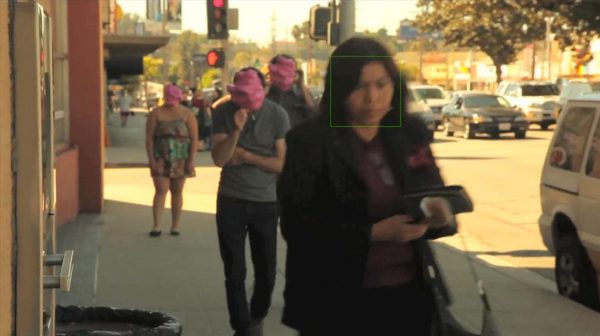
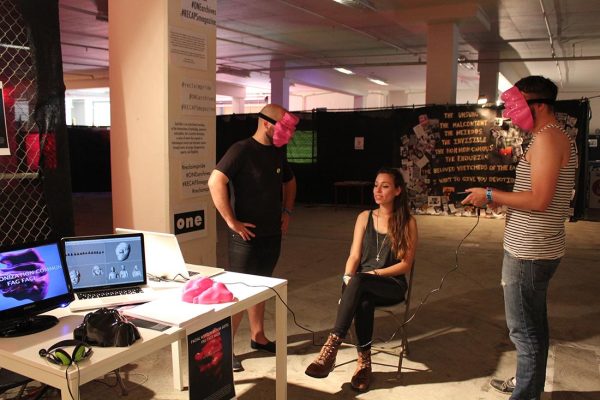
Courtesy of the artistZach Blas’s “collective masks” are created from the aggregated data of a group of people and then used in performances, public interventions, and video demonstrations such as Facial Weaponization Communiqué: Fag Face. The biometric data of several queer men generated the mask in this video, which the artist describes as “a response to scientific studies that link determining sexual orientation through rapid facial recognition techniques.” The work is part of the larger project Facial Weaponization Suite (2011–14), which protests the use of facial-recognition technology to disproportionately target certain sectors of society—particularly immigrants and racial, sexual, and religious minorities.
-
Zach Blas, “Escaping the Face: Biometric Facial Recognition and the Facial Weaponization Suite,” Media-N, Journal of the New Media Caucus, CAA Conference, Edition 2013.
Zach Blas, “Informatic Opacity,” The Journal of Aesthetics & Protest, no. 9, 2014.
Simone Browne and Zach Blas, “Beyond the Internet and All Control Diagrams,” The New Inquiry, January 24, 2017.
Emily K. Holmes, “Locating Technology: Against Recognition,” Art Practical, April 16, 2014.
Hito Steyerl, “Zach Blas: FutureGreat 2014, selected by Hito Steyerl,” ArtReview, 2014.
Ben Valentine, “Weaponizing Our Faces: An Interview with Zach Blas,” Vice, July 10, 2014.

Readings
These resources—all freely accessible online—dive deeper into the issues raised by the artists in I Was Raised on the Internet. Provocative but far from exhaustive, this selection offers an entry point to further critical reflection on the nexus between art and the internet.
Daniel Allington, Sarah Brouillette, and David Golumbia
Neoliberal Tools (and Archives): A Political History of Digital Humanities
Both inside and outside of academia, the privileging of technical expertise above other forms of knowledge is a political gesture. These professors argue that this results in neutralizing critique of established power relations.
Jonathan Beller
The Fourth Determination
Jonathan Beller, director of the Graduate Program in Media Studies at the Pratt Institute, coined the term “computational capital” to describe the effects digital networks have on global finance. Beller presents a case for decentralizing this financialization of culture and posits that it is the first step toward building an entirely new, inclusive economy.
Benjamin Bratton
The City Wears Us: Notes on the Scope of Distributed Sensing and Sensation
Theorist Benjamin Bratton offers a proposal for the non-human to inform and pilot diverse forms of artificial intelligence on their own behalf and in their own inscrutable ways.
Aria Dean
Poor Meme, Rich Meme
Aria Dean, the assistant curator of net art and digital culture at Rhizome, asks: if memes reiterate the inequities between black creators and white appropriators, can they also move us into a new collective blackness?
Paul Ford
What Is Code?
This interactive, narrative journey helps expose the inner workings of computer code. It was written and developed by Paul Ford, a technology thought leader and software consultant.
Orit Gat
Scroll, Skim, Stare
Concerned with growing uniformity, writer Orit Gat attempts to document an always-fleeting thing: contemporary artists’ websites, including their form and function and the possibilities they hold.
Joichi Ito
Resisting Reduction: Designing our Complex Future with Machines
Joichi Ito, director of the MIT Media Lab, shares a manifesto against the technological singularity.
Shannon Mattern
Mapping’s Intelligent Agents
Shannon Mattern, associate professor of media studies at The New School, notes that self-driving cars have sparked a “billion dollar war over maps,” but the cars are the most boring thing about it. How do machine intelligences read and write the world? And what ends are either possible or pursued?
Metahaven
Who designed the WikiLeaks logo?
Design and research duo Metahaven tell the story behind the logo of Wikileaks, one of the 21st century’s most notorious institutions in the digital world, revealing that design is always political.
Ceci Moss
Expanded Internet Art and the Informational Milieu
What’s at stake in contemporary art’s turn toward the internet? Curator, writer, and educator Ceci Moss explains how artists have responded to this development.
Safiya Umoja Noble
Social Inequality Will Not Be Solved By an App
This reminder of the social biases embedded directly into seemingly neutral technology was written by Safiya Umoja Noble, assistant professor at USC Annenberg’s School of Communication and one of the foremost scholars of digital ethics and its social implications.
Trevor Paglen
Invisible Images (Your Pictures Are Looking at You)
We no longer look at images—images look at us. Artist Trevor Paglen explains how pictures are not just simple representations, but active and invisible interventions in our everyday life.
Nick Seaver
Algorithms as culture: Some tactics for the ethnography of algorithmic systems
Algorithms are everywhere, and they control an increasing amount of contemporary interactions both small and large. Anthropologist Nick Seaver thinks we should understand them as a cultural phenomenon, not just as objective, technical products.
Hito Steyerl
A Sea of Data: Apophenia and Pattern (Mis-)Recognition
The machines that decide our fates are guided by algorithms for pattern recognition. Artist Hito Steyerl deconstructs the psychology of these digital minds.
Credits
This website was originally built using the content management system behind the mcachicago.org website (2015–25). It has been reformatted for archival purposes.
Design: Gabriel Melcher and Dylan Fracareta
Curatorial: Jared Quinton and Nina Wexelblatt
Editorial: Shauna Skalitzky and Sheila Majumdar
Project Management: Shauna Skalitzky, Bridget O’Carroll, and Anna Chiaretta Lavatelli
Typeface created by Karl Nawrot
Produced by the Design, Publishing, and New Media Department of the Museum of Contemporary Art Chicago in collaboration with the Department of Rights and Images and the Curatorial Department.
-
CHIEF CONTENT OFFICER
Susan ChunDIRECTOR OF DIGITAL MEDIA
Anna Chiaretta LavatelliDESIGN DIRECTOR
Dylan FracaretaSENIOR DESIGNER
Gabriel MelcherSENIOR EDITOR
Sheila MajumdarPRODUCTION DESIGNER
Dorothy LinPRODUCTION EDITOR
Shauna SkalitzkyDIGITAL MEDIA ASSOCIATE
Bridget O’CarrollASSOCIATE EDITOR
Leah FroatsMANAGER OF PLANNING AND PRODUCTION
Lorenzo ContePUBLISHING ADMINISTRATIVE ASSISTANT
Fontaine CapelMANAGER OF RIGHTS AND IMAGES
Bonnie RosenbergRIGHTS AND IMAGES ASSISTANT
Elyssa LangeCURATORIAL ASSISTANT
Nina WexelblattMARJORIE SUSMAN CURATORIAL FELLOW
Jared Quinton
Featured Image: Hito Steyerl, still from Factory of the Sun, 2015. Single-channel HD video, environment, luminescent LE grid, and beach chairs; 23 minutes. Image © 4.0 Hito Steyerl. Image courtesy of the artist and Andrew Kreps Gallery, New York.
Funding
This exhibition is organized by the Museum of Contemporary Art Chicago and on view June 23–October 14, 2018.
This program is supported by a lead grant from the Carl & Marilynn Thoma Art Foundation.
Lead support is provided by Zell Family Foundation.
Additional generous support is provided by Robert J. Buford, and Susan D. Goodman and Rodney Lubeznik.
Donations generously provided by Plant Chicago and CDW.