Editorial
Green Space, Common Space
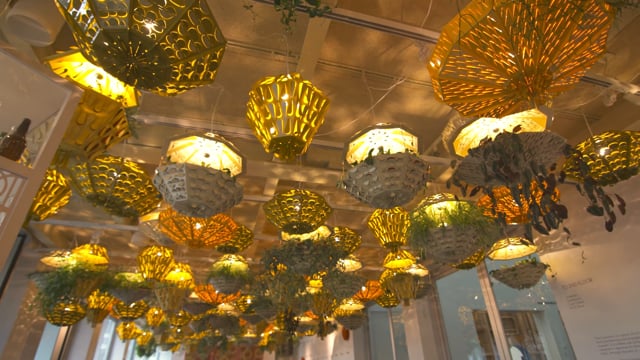
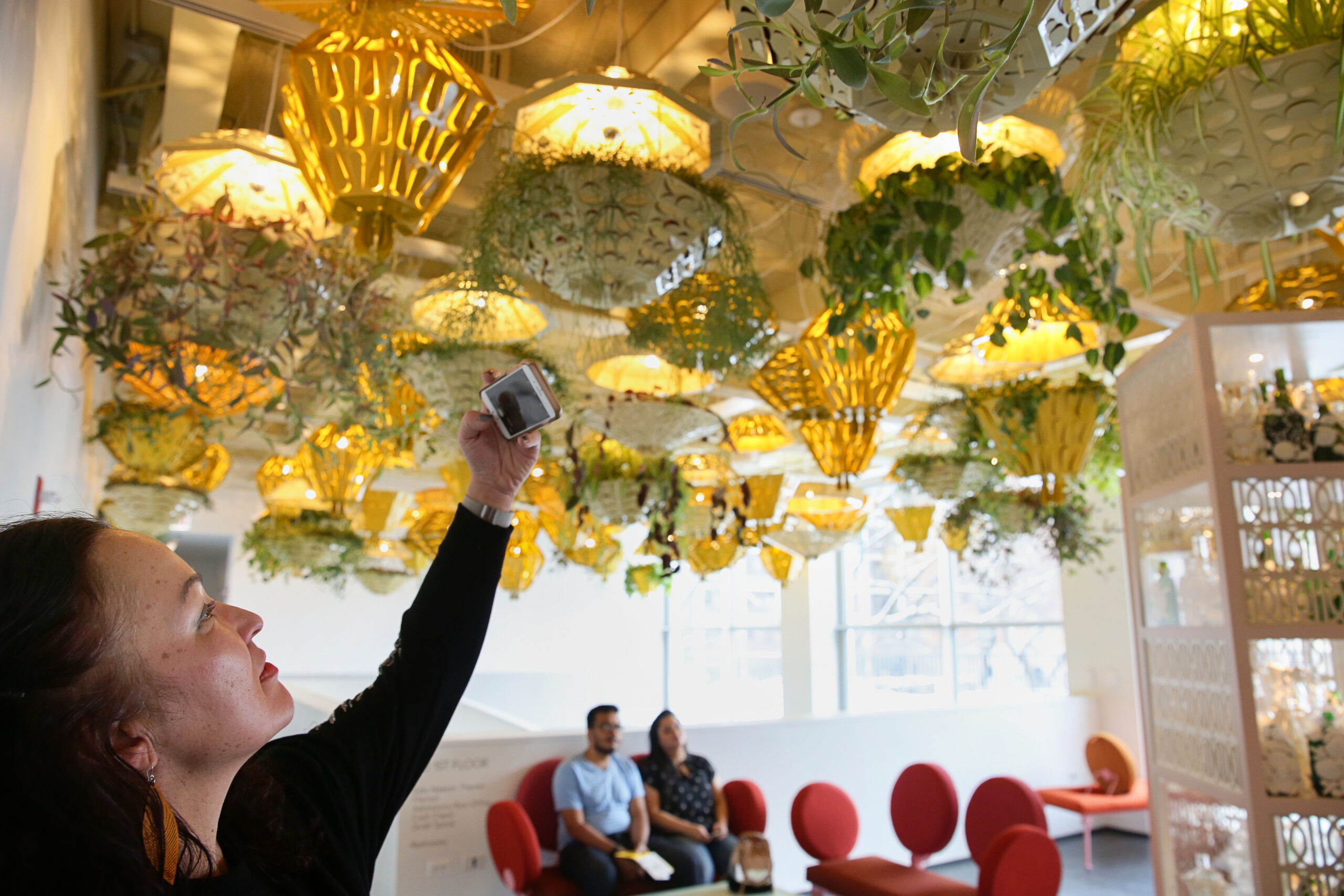
In response to the brutal winters that Chicago is known for, Pedro y Juana, the Mexico City–based design team, decided to create a year-round, indoor, hanging garden in the Commons. Reflecting on the qualities that make up the cultural richness of Chicago (and its diverse citizens), they selected a variety of plants based on their hardiness, structural diversity, and adaptability. Take a look at the international roster of plants and their horticultural histories that embellish our new space, where people, ideas, and nature converge.
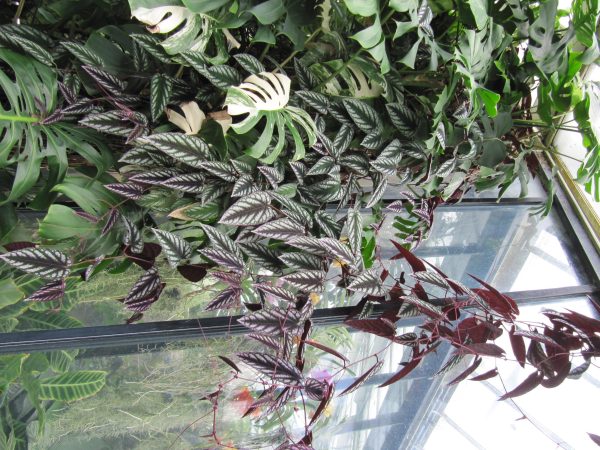
Plant variety: Rex Begonia Vine
Scientific Name: Cissus discolor
Common Names: Painted Cissus, Rex Begonia Vine
Countryies of Origin: Native to Southeast Asia and Australia
Habit/Growth Requirements: This vine can grow up to 10 feet tall if it has the support of a trellis or other structure. It prefers bright shade to part shade and is not at all frost hardy.
Interesting Tidbit: This plant is not in fact a begonia at all, but a member of the grape family grown for its beautiful, striking foliage.
Why selected for this installation: It has medium water requirements and can tolerate indirect/low light. The long trailing foliage will create a dynamic display of stunning foliage.
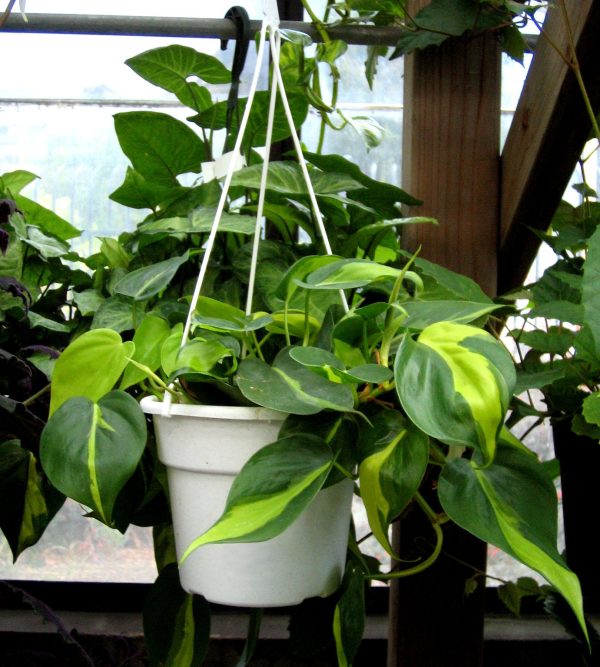
Plant variety: Philodendron Brasil
Scientific Name: Philodendron hederaceum ‘Brasil’
Common Names: Heart Leaf Philodendron, Brasil Philodendron
Countries of Origin: Central America, South America (i.e., Mexico, West Indies, Brazil)
Habit/Growth Requirements: This vining plant can reach 10 to 20 feet tall with the proper support and can spread 3 to 6 feet wide. It prefers part shade.
Interesting Tidbit: The name comes from the Greek phileo (meaning love) and dendron (meaning tree) for its natural habit of climbing trees.
Why selected for this installation: This hardy indoor plant can tolerate lower light levels and medium water while still providing striking interest with its lush foliage creating a complex display in shades of green.
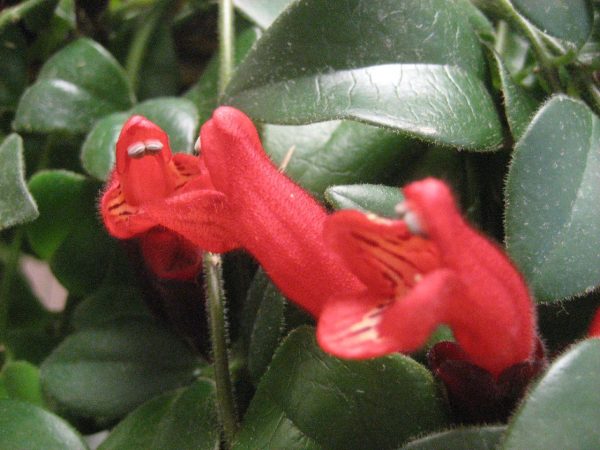
Plant variety: Lipstick Plant
Scientific Name: Aeschyanthius radicans var. lobbanius
Common Names: Lipstick Plant, Lipstick Vine
Country of Origin: Southeast Asia (Indonesia)
Habit/Growth Requirements: A trailing vine that can have stems reach lengths of up to 2 feet. This plant prefers bright, indirect light and medium soil moisture.
Interesting Tidbit: These plants are naturally an epiphyte in their native rainforest environment. It is pollinated by birds.
Why selected for this installation: Given enough light (direct light, if possible, in the winter), this plant will flower with bright scarlet tubular flowers in the early spring.
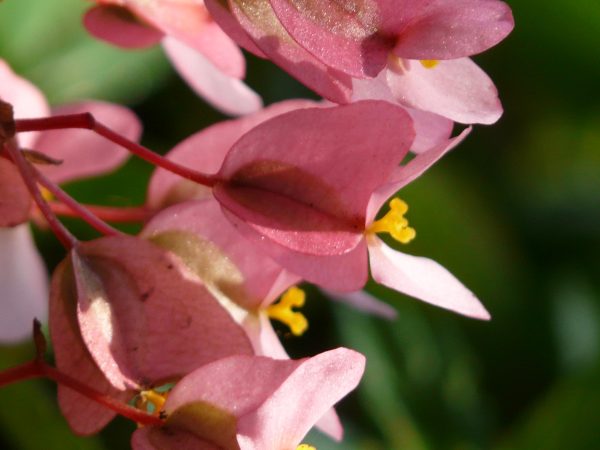
Plant variety: Dragon Wing Begonia
Scientific Name: Begonia x hybrida ‘Dragon Wing’
Common Names: Dragon Wing Begonia, Tuberous Begonia, Angel Wing Begonia, Begonia Hybrid
Countries of Origin: The parents of this hybrid (Begonia semperflorens and Begonia coccinea) are from the Caribbean and Central/South America respectively.
Habit/Growth Requirements: The annual grows to a bush form that can be 1 to 2 feet tall and wide. It is fairly low maintenance in the right environment, preferring part sun/shade and medium soil moisture. It can be quite tolerant of both shade and drought.
Interesting Tidbit: Dragon Wing Begonias do not enter a dormancy so they can be overwintered indoors, though some leaves will drop as the plant adjusts to lower light levels.
Why selected for this installation: The Dragon Wing Begonia is a vigorous grower and the easiest of the Begonia family to grow indoors. Its big, glossy, green leaves create a lovely display even when it isn’t in flower. Though, the bright red and pink blooms occurring in late spring and summer are the real showstoppers.
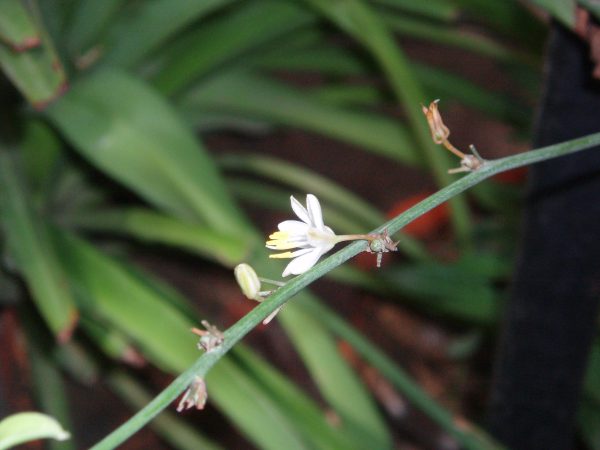
Plant variety: Spider Plant
Scientific Name: Chlorophytum comosum
Common Names: Spider Plant, Airplane Plant, St. Bernard’s Lily, Spider Ivy, Ribbon Plant
Country of Origin: Tropical and Southern Africa
Habit/Growth Requirements: Spider Plants prefer bright indirect light, a well-drained soil with medium levels of moisture, and grows by sending out runners with little spiderettes at the ends forming arching clumps of grass-like foliage.
Interesting Tidbit: A study conducted by Niri at the State University of New York at Oswego found that Spider Plants demonstrated the best reduction in VOCs found in rubber, ink, adhesives, paints, and varnishes.
Why selected for this installation: The spider plant is a beautiful trailing plant that stands in high contrast to its variegated foliage and tolerates both low light and medium water levels, making it ideal for indoor environments.
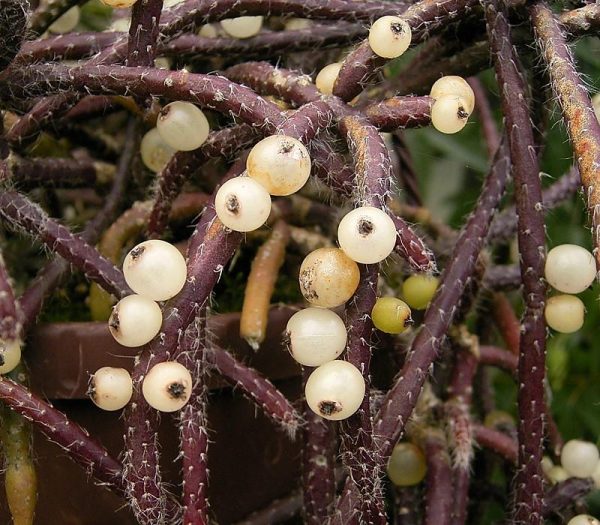
Plant variety: White Mistletoe
Scientific Name: Rhipsalis baccifera
Common Names: Hairy Stemmed Rhipsalis, Mistletoe Cactus, Spaghetti Cactus
Countries of Origin: Central America, South America, Caribbean, Florida, Tropical Africa, Madagascar, Sri Lanka
Habit/Growth Requirements: The white mistletoe cactus can grow up to 30 feet long in the wild with medium soil moisture. It is one of the few cacti that prefers bright shade over full sun.
Interesting Tidbit: This is the only naturally occurring cactus species outside the New World thought to have spread to Africa through migratory birds or European ships crossing the Atlantic Ocean.
Why selected for this installation: This epiphyte (plant that grows on another plant) blooms sporadically throughout the year with small cream-colored flowers that develop into small white fruits along the stems. It will grow best in moderate light and water.
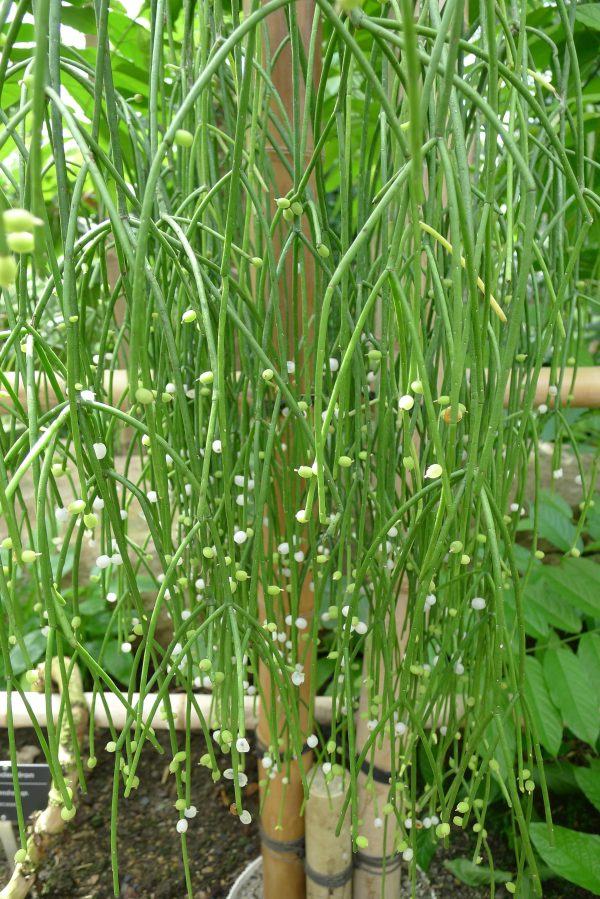
Plant variety: Green Mistletoe
Scientific Name: Rhipsalis baccifera
Common Names: Mistletoe Cactus, Spaghetti Cactus
Countries of Origin: Central America, South America, Caribbean, Florida, tropical Africa, Madagascar, Sri Lanka
Habit/Growth Requirements: The green mistletoe cactus usually reaches lengths between 6 and 10 feet with long thin stems. It prefers well-drained soil, ambient humidity, and moderate light levels.
Interesting Tidbit: This cactus is unique in its need for moderate light and moisture. Most plants in the cactus family require very little water and full sun.
Why selected for this installation: The green mistletoe cactus was chosen for its growth requirement, which lends it to performing well indoors, and also for its pale green flowers that yield pale pink fruits sporadically throughout the year.
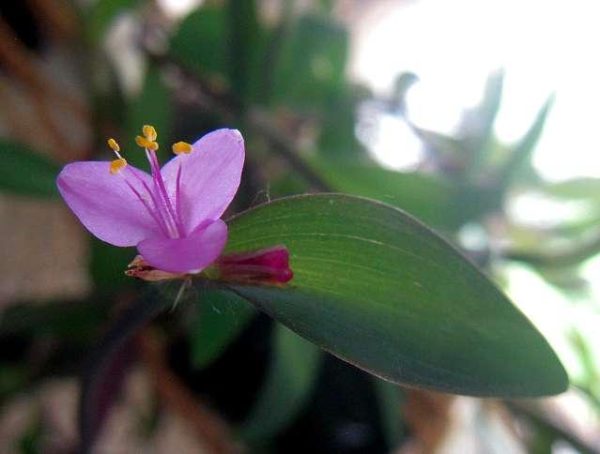
Plant variety: The Purple Heart
Scientific Name: Tradescantia pallida; Setcreasea purpurea
Common Names: Purple Heart, Wandering Jew, Moses in the Bulrushes, Boat Lily, Purple Spiderwort
Country of Origin: Mexico
Habit/Growth Requirements: This herbaceous perennial (in the right climate) grows in dense spreading clumps making it an interesting ground cover or trailer in a container garden. It typically reaches a height of 9 inches and spreads to about 18 inches.
Interesting Tidbit: The genus name honors John Tradescant the elder who was a 17th-century English naturalist. He was a plant collector and the gardener for the Earl of Salisbury.
Why selected for this installation: This was chosen due to its disease resistance and its rich purple foliage and bright pink flowers. It tolerates low light, though it will lose some of its purple color, and medium water.
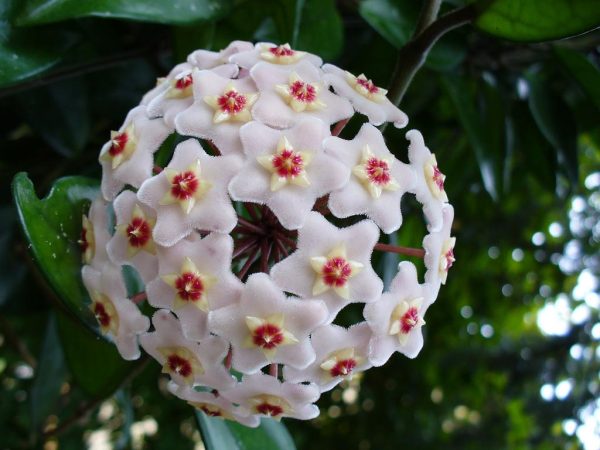
Plant variety: Wax Plant
Scientific Name: Hoya carnosa
Common Names: Porcelain Flower, Wax Plant, Hoya, Honey Plant
Countries of Origin: Eastern Asia (India, Burma, China), Australia
Habit/Growth Requirements: This Dogbane family plant typically grows 2–4 feet high and 1–2 feet wide preferring a soil type that allows for air circulation around the roots.
Interesting Tidbit: This vine will climb a trellis, fence, or other structure by winding itself in a counterclockwise direction. It also flowers on the same spurs every year, so do not remove them after the flower has faded.
Why selected for this installation: The white to pink flowers produce a light, sweet fragrance each year. It was also chosen because its foliage has a pleasing variegation on a thick, waxy leaf. It also has been shown to remove indoor pollutants from the air.
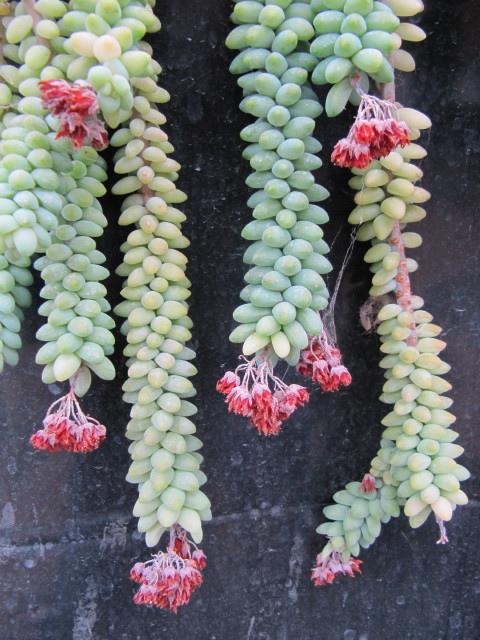
Plant variety: Burro’s Tail
Scientific Name: Sedum morganianum
Common Names: Burro’s Tail, Donkey Tail, Lamb’s Tail, Horse’s Tail
Countries of Origin: Southern Mexico, Honduras
Habit/Growth Requirements: Burro’s tail can reach up to 6 feet long in the right environment, but typically grow to about 2 feet long. It likes bright shade and medium to low water with a slightly acidic soil at a pH of 6.0.
Interesting Tidbit: Though in cultivation and commonly available since 1935, the naturally occurring habitat for this species was not discovered until 2010.
Why selected for this installation: The blue-green lush foliage provides such a unique texture in any plant-scape. It is a great performer indoors requiring little care.
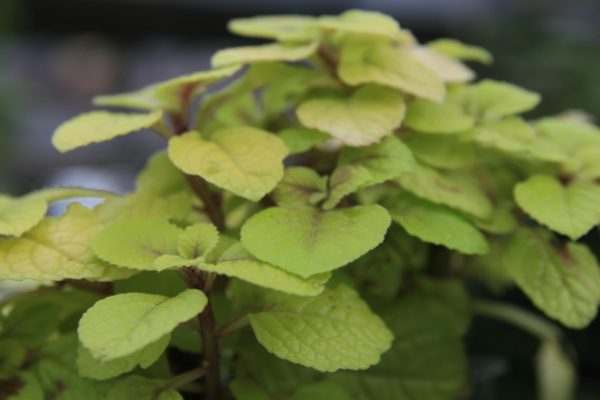
Plant variety: Swedish Ivy
Scientific Name: Plectranthus australis
Common Names: Swedish Ivy, Creeping Charlie, Swedish Begonia
Country of Origin: Southern Africa
Habit/Growth Requirements: Swedish Ivy grows 2–3 feet tall and wide in part shade and medium moisture levels making it an ideal candidate for indoor environments.
Interesting Tidbit: Though it would seem due to its names, both common and botanic, to have a mixed background, Swedish Ivy does not in fact hale from either Sweden or Australia, but the southern region of Africa including Madagascar and Mozambique.
Why selected for this installation: This wide, fleshy foliage provides a nice display year-round and it will even produce lovely white to lavender blooms under the right conditions.
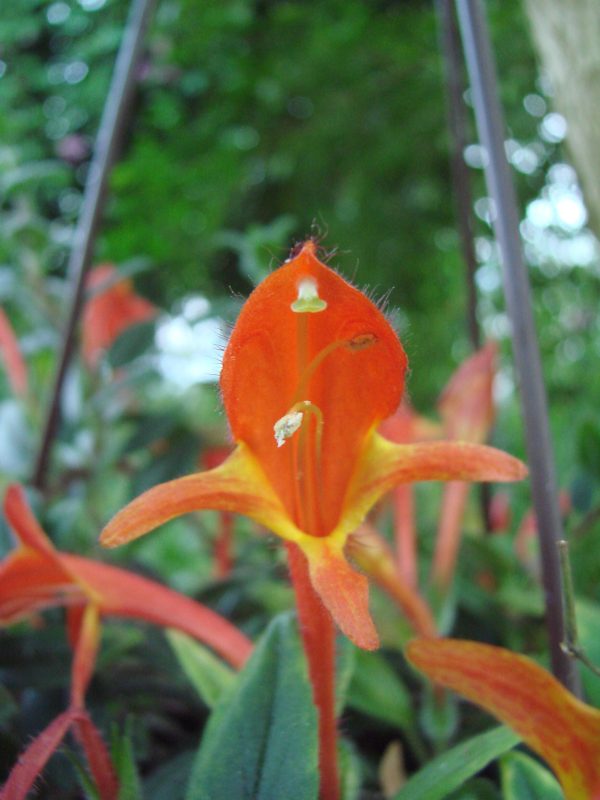
Plant variety: Goldfish Plant
Scientific Name: Columnea hirta
Common Names: Goldfish plant, Hairy Columnea
Countries of Origin: Costa Rica, Panama
Habit/Growth Requirements: This plant requires medium water levels and bright shade or part sun. It can get up to 3–4 feet wide and reaches 18 inches tall. It also prefers strongly acidic soils with a pH of 4.5–5.5.
Interesting Tidbit: After flowering, this plant prefers to rest for a few months with drier soil and cooler temperatures, especially in the evenings.
Why selected for this installation: The goldfish plants provide bright orange flowers year long and creates interest with its finely textured and glossy green foliage.
Related Exhibition
Related Stories
-
Articles
Plant Parenting in Winter
-
Articles
A Plurality of Voices
Read select responses to the four questions Edra Soto poses in her Open 24 Hours installation in the Commons.