Huma Bhabha, Twins, 2011
Gift of Marilyn and Larry Fields, 2023.32.a-b
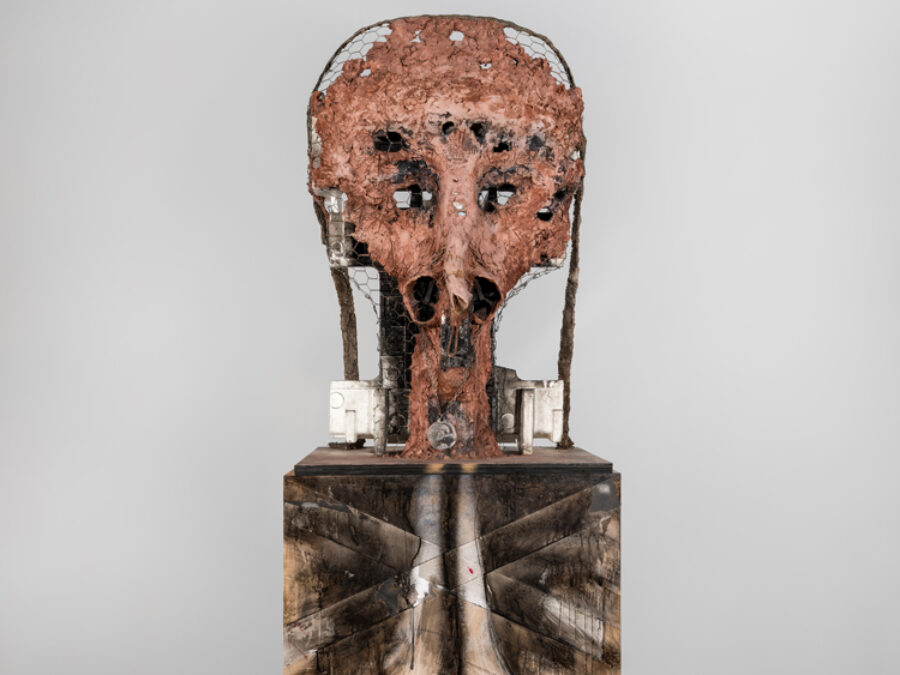
Huma Bhabha is best known for her visceral figurative sculptures constructed from found materials such as Styrofoam, cork, rubber, paper, wire, and clay. The artist describes her process as working “from the inside-out,”[1] beginning with the armature or skeleton of the figure and then building up to the surface. Often appearing distorted or dismembered, Bhabha’s androgynous sculptures reference Greek and Egyptian antiquities as well as Modernist sculpture, and are layered with references to science fiction, horror films, and popular imagery. Her subject matter touches on war, migration, colonization, and ecological fragility.
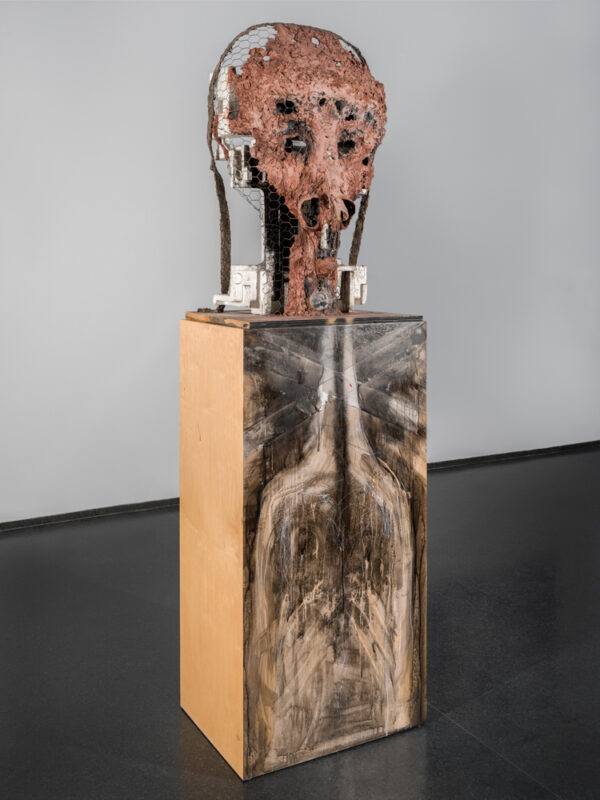
Twins consists of a large sculptural head atop a painted wooden pedestal. The head is constructed with found Styrofoam, which has been painted and covered with chicken wire and then fleshed out with red clay. Bhabha’s sculptures are made to be viewed in the round, and she carefully considers the various viewpoints of each of her works. The back of Twins, for instance, reveals a carved geometric form made almost entirely of Styrofoam, sharply contrasting with the organic sensibility of the frontal view.
Related Collection

Notes
[1] Huma Bhabha, “Huma Bhabha by Tess Bilhartz,” interview by Tess Bilhartz, BOMB Magazine, April 3, 2024, https://bombmagazine.org/articles/huma-bhabha-by-tess-bilhartz/.