Chicago Performs | 2022 Program Notes
Curator’s Note
I am thrilled to welcome you to MCA Chicago’s very first annual Chicago Performs series!
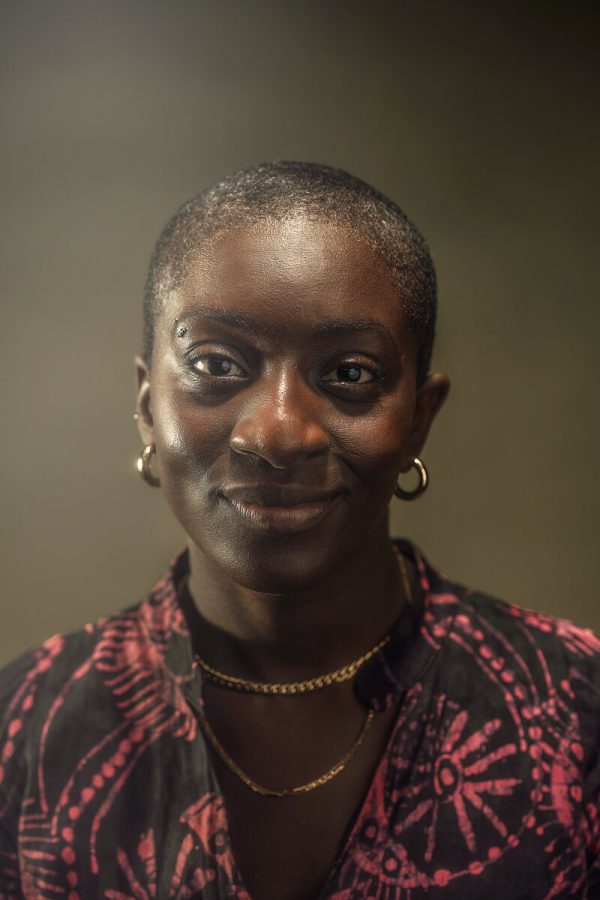
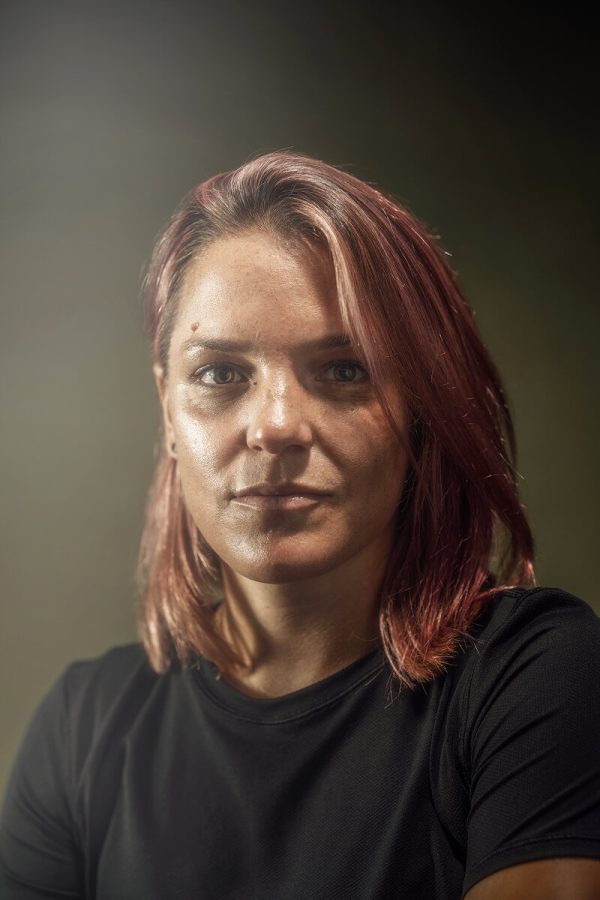
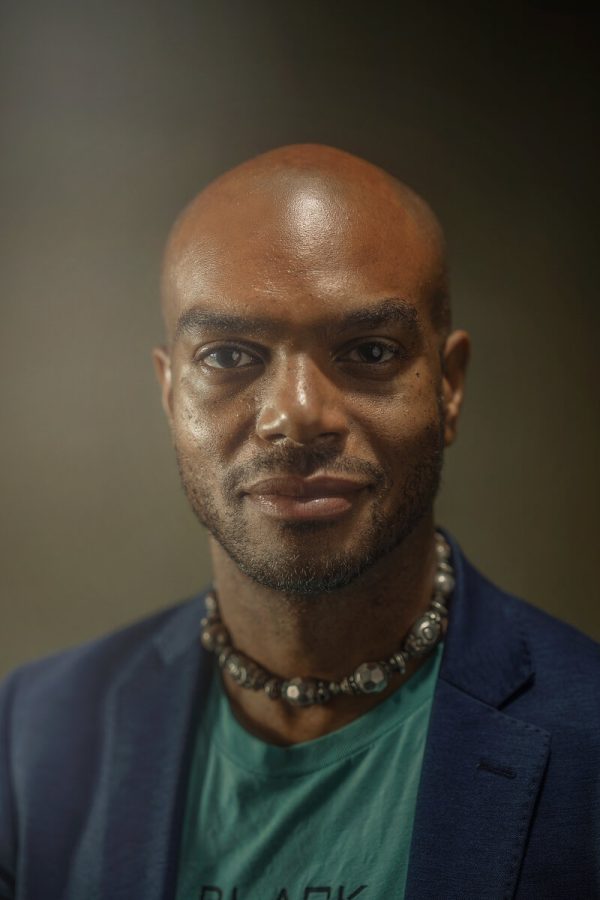
These two days of carefully crafted premieres and “first looks” at new performances showcase the vitality of Chicago’s performing artists in the city where they dwell—while also platforming them on the national stage. Performance artist Bimbola Akinbola, choreographer Erin Kilmurray, and theatermaker Derek Lee McPhatter have all worked with the museum previously, in part through the New Works Initiative, a set of programs for developing new performances to foster connection between artists, audiences, and communities. Today and over the coming years, Chicago Performs aims to spotlight the depth and range of the city’s creative landscape and support artists as they expand the scale of their practices with new works made with and for Chicago and beyond.
Chicago-based scholar Joshua Takano Chambers-Letson has written that “What allows the party, or a performance, to serve the will toward freedom and More Life is that another night beckons and that it can happen again. And again. And again.”¹ That “will toward freedom and More Life” is a necessity for people whose very lives are regularly called into question, such as the Black and/or queer artists in this year’s series. Performance is powerful in part because of its resilience, its contradictory potential to make a newly transcendent experience happen over and over—to create a feeling, something totally different, that we hope might return again. And again. The possibility of a moment not yet experienced, and yet filled with recognition (of ourselves, of society, of imagined worlds), is what brings many of us to performances—and parties, and vibrant conversations—with curiosity and eagerness.
I like to think there is something of that “will toward freedom and More Life” at play in all of Kilmurray, McPhatter, and Akinbola’s creations. Each artist crafts a self-contained ecosystem using body, sound, movement, object, and text to create a new and temporary universe; whether deconstructing and reconstructing the small cosmos of a dance before our eyes in search of utopia (Kilmurray), sonically articulating a future activist movement and its malcontents in the face of environmental catastrophe (McPhatter), or pushing their bodies to the limits of exhaustion while inviting anyone and everyone to linger in the celebration together (Akinbola).
Writer and activist adrienne maree brown says, “Resilience is perhaps our most beautiful, miraculous trait,”² especially if we understand human resilience as adaptive, collective intention. Performance calls its participants, both performers and audiences, into a shared resilience of sorts. A commitment to sit—or dance—through the experience together, to build a world together for an hour or so. Each of these artists uses distinct performance tools to amplify a larger question being asked across our city and our world now: how do we create shared resilience and collective intention—in the moment amongst each other, and as we imagine potential futures? Reflecting the complexity of this question, their works grapple with difficulty but also with joy, a connection between their practices that is the focal point of the accompanying panel discussion moderated by Tempestt Hazel, one of Chicago’s key voices curating and writing art into the record of humanity.
Over the next two days, these artists and their works draw us together to celebrate the potential of performance to propel us toward “More Life,” more joy, more resilience, and more collective intention. I hope you’ll join us, again and again.
—Tara Aisha Willis | Curator, Performance
Notes
1. Joshua Takano Chambers-Letson, preface to After the Party: A Manifesto for Queer of Color Life (New York: NYU Press, 2018), xxii.
2. adrienne maree brown, Emergent Strategy: Shaping Change, Changing Worlds (Chico, CA: AK Press, 2017), 126.
Carousel: Artist Portraits - Full Size Images
About the Works
-
If you know the steps to the Electric Slide, do you remember where you learned them? Was it at a wedding or a prom? Perhaps a family reunion or a birthday party? Do you remember how old you were at the time? Was there a specific person who taught you the dance? Maybe it was an older sibling, or an aunt. Or perhaps you just moved with the crowd until you picked it up through osmosis. In some cultural spheres, the popular 18-step line dance is as ubiquitous as birthday cake, and a moment of collective joy.
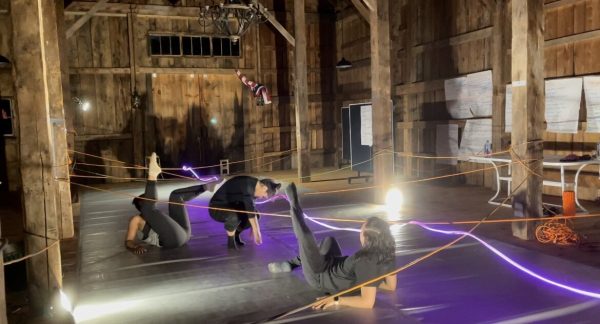
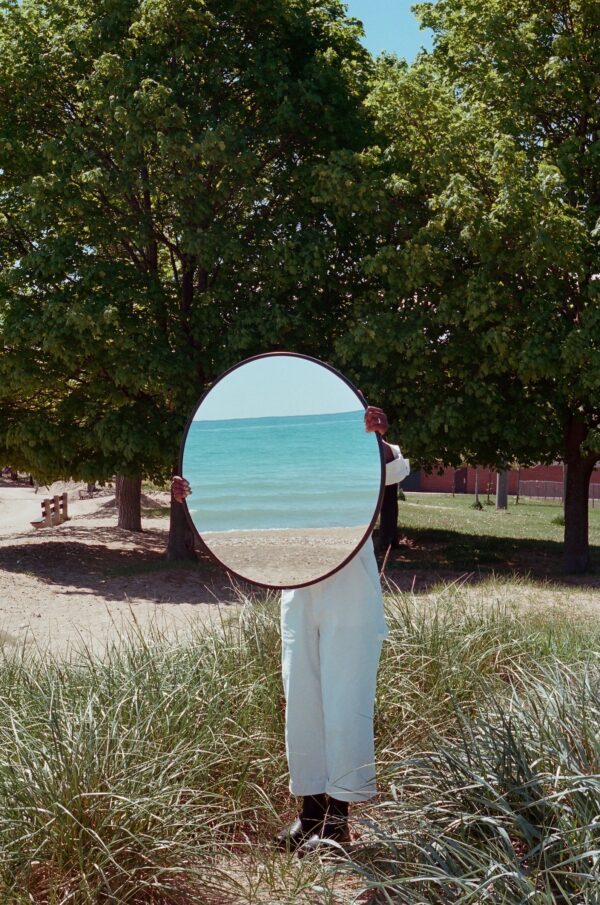
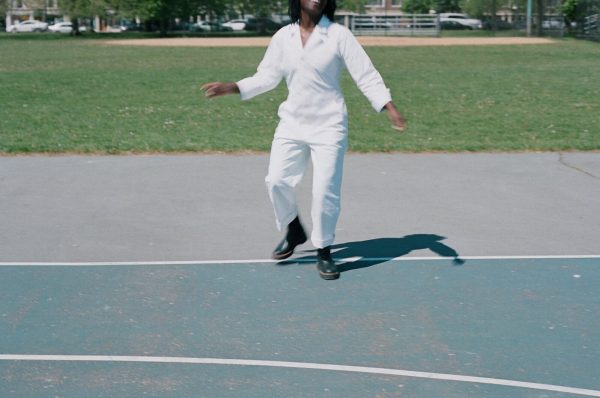
For her seven-hour performance You Gotta Know It, Bimbola Akinbola invites viewers to join her—for as long as possible—as she and three other Black female performers repeat the dance for the duration of the museum’s open hours. As the work’s subtitle indicates, Akinbola reflects on the ideas of collectivity, labor, and joy to ask what it means to be “in community” through her performance. How are communities created? Who are they comprised of? And is community always joyous?
Collectivity
Many Americans learned the Electric Slide in gym class at school, but the dance is particularly meaningful in Black communities. Whether and how you take up the invitation to join Akinbola’s performance can reveal how you relate to the social dynamics of the situation: Do you immediately want to jump in, or do you hold back? Citing the influence of scholars like Miranda Joseph, who describes the “conservative, disciplining, and exclusionary effectivity of the invocation of community,”¹ Akinbola delves into the complicated nature of what it means to be in connection to others. No community is a monolith, but how much commonality is required, or difference is permitted, for the community to remain intact? Who is centered, who is placed at the margins, and what possibilities do those positions afford?
Labor
How long are you compelled to linger in connection, or proximity, to Akinbola’s performance? By connecting the work to the standard museum workday (10 am–5 pm), Akinbola reminds us of the labor required to remain connected to others. Often sources of great joy and recognition, relationships also require consistent care and attention. Akinbola joins a long history of durational performance-makers who investigate the relationship between art and life. For example, in 1980 Taiwanese performance artist Tehching Hsieh similarly connected art and industry with his famous Time Clock Piece, in which he punched a time clock every hour on the hour for an entire year, each time taking a single picture of himself.²
The Electric Slide has also been used to protest national labor policies. In his 1996 text “The Electric Slide Protest,” civil rights attorney Derrick Bell described the authority, beauty, and power shown in a Black woman-led protest against the Freedom of Employment Act, which threatened to end affirmative action. In cities across America, women gathered to collectively dance the Electric Slide for 12 hours in front of major government buildings. Take note of when your energy begins to flag: What new perspectives might you come to during those lulls? Can you find strategies to push through them?
Joy
Akinbola cites Arthur Jafa’s 2016 film, Love Is the Message, The Message is Death (MCA Chicago, Prisoner of Love, 2019),³ as a major influence. Jafa’s work presents a nuanced portrait of Black life in the United States set to Kanye West’s gospel-inspired song Ultralight Beam. A collage of video footage, the work points to the ongoing violence against Black people that is endemic to US history alongside Black cultural innovations toward joy, healing, and survival. Through her work, Akinbola also points to the ways in which Black joy is constantly usurped by other emotions like grief and confusion. Though it is usually understood as a celebratory tradition, Akinbola asks if even the Electric Slide could be seen as a disruption leading to violence and despair.
The Electric Slide was created in 1976 by choreographer Ric Silver to accompany “Electric Boogie,” a disco song by reggae legend Bunny Wailer. A subsequent recording by Marcia Griffiths renewed its popularity in 1983, and her 1989 remix cemented its enduring legacy. Akinbola’s work is not the first time the Electric Slide has been recognized for its ability to unify people. Porsha Olayiwola’s 2019 prose-poem, The Electric Slide is Not a Dance, Man!, compares its transcendent nature to that of comfort food—that when you enact it, you are immediately brought into kinship with something that feels like home. Most recently, Black Lives Matter founder Patrisse Cullors led a crowd of art-goers in a communal performance of the Electric Slide amidst the 2020 Frieze art fair. Titled Fuck White Supremacy, Let’s Get Free, Cullors’s performance was an opportunity to move, heal, and recharge the mind and body in defiance of demoralizing political and economic conditions. Akinbola’s piece is accompanied by a sound score by Elise Hernandez that ebbs and flows over the course of the day and is interspersed with found sounds taken from a variety of sources including police interactions and children on a playground. How does this use of sound impact your experience of the dance?
Joining the constellation of works centered on the Electric Slide, Akinbola invites viewers into another Black woman-centered celebration of community and resilience, while also reflecting on the essential questions about labor, violence, confusion, and sadness still inherent in our society.
—Laura Paige Kyber | Curatorial Assistant, Performance
Notes
1. Miranda Joseph, introduction to Against the Romance of Community (Minneapolis: University of Minnesota Press, 2002), xviii.
2. Adrian Heathfield and Tehching Hsieh, Out of Now, The Lifeworks of Tehching Hsieh (Cambridge, MA: The MIT Press, 2008).
3. Prisoner of Love, MCA Chicago, Jan 26–Oct 20, 2019, curated by Naomi Beckwith, former Manilow Senior Curator.
-
Erin Kilmurray is a dancer and choreographer—but more than that, she is a creator of space. She builds structures and invites her collaborators to use them for their own self-expression. The results are sexy, raw, and deeply heartfelt performances.
Regarded as a “Chicago institution,”¹ 2019 marked the 10-year anniversary of Kilmurray’s The Fly Honey Show, an annual cabaret celebrating body positivity, self-love, and acceptance. The show has grown from a one-night event with 30 performers in a loft space to a month-long, sold-out series featuring more than 400 artists in one of Chicago’s most profitable venues, Thalia Hall. Through it, Kilmurray has cultivated a family of women and queer people that runs deep in Chicago, lovingly referred to as “the hive.”
Seeking to bring the sweetness of The Fly Honey Show into her independent practice, she began work on the Function to further elicit agency, vulnerability, and empowerment on stage. The work is necessarily collaborative: Through each performance, Kilmurray and her team use an existing structure to iterate and collaborate—ultimately envisioning a feminist utopia. In fact, to create the Function Kilmurray and her dancers thought of their creative process as “cross-training,” learning from lighting and set designers, DJs, videographers, and other collaborators while also exploring authorship in performance. Sharing creative skills with a range of other artists and peers became a core tenet of the Function, just as COVID-19 would threaten the very act of performance.
As funding was secured for the project, the global pandemic shut down Chicago and the question of “how to function” took on deeper meaning for Kilmurray and her team. Torn between deep nostalgia for pre-pandemic life and the desire to build new ways of creating and living for the future while also battling inertia, Kilmurray began to describe her coping strategy as one built on “future nostalgia” (not to be confused with pop singer Dua Lipa’s 2020 album of the same name, though it’s easy to imagine Kilmurray, whose dance origins began in commercial music videos, using one of her disco-infused bops in a piece of choreography).
Kilmurray’s “future nostalgia” describes the uncomfortable, liminal space between longing for something that hasn’t yet been created and the labor of creating. Performance scholar Ramón Rivera-Servera, who until recently was based in Chicago, reflects Kilmurray’s sentiments: “the practice of performance constitutes an effort that requires both an investment in the possible, what might become of the exchange promised by the event, and a realization that pursuing that possibility entails as many pleasures as it invokes risks.”²
Embracing that risk and the resilience of her collaborators, Kilmurray has doubled down on her insistence that creative skill-sharing—of the sort that led to the Function—is a communal act leading to greater imaginative possibilities. The result? Not a finished product, but rather an ongoing practice of dreaming, experimenting, editing, iterating, and building toward a new future.
—Laura Paige Kyber | Curatorial Assistant, Performance
Notes
1. Ashley Ray-Harris, “The Fly Honey Show grows into a Chicago institution,” The Chicago Reader, August 23, 2017.
2. Ramón Rivera-Servera, Performing Queer Latinidad: Dance, Sexuality, Politics (Ann Arbor: University of Michigan Press, 2012), 5–6.
-
Derek Lee McPhatter’s script for Water Riot in Beta opens by locating the action in place and time: “We’re somewhere on the former shores of Lake Michigan in Chicagoland, in a future time following the fall of the Grid and the official end of American Empire.”¹
McPhatter’s Chicago is defined by its loss of access to water and the end of national infrastructure as we know it. The script will ultimately be fleshed out and staged further than the version presented this fall through Chicago Performs; for now, an omniscient host (played my McPhatter himself) oversees and explains the goings-on of what he describes to the audience as “an imaginative story,” with “a manifesto involved. You know . . . protest, fist-up kind of stuff. Because there’s something wrong, something broken all of us can feel in our spirit, in the air, in the ways we are with each other.”²
Imagine that the stage before you sits at the top of a large dam, which holds at bay Lake Michigan—nearly depleted and utterly inaccessible to most Chicago citizens. The concert that happens on this stage is a protest, an occupation of the threshold where the dam (or rather, the computer that controls it) holds sway. This threshold is also where the dam could, one day, open wide or crumble, finally releasing the lake’s life-giving water to the city. The protesters who take the stage take over this threshold space in an act of refusal, an act of desire and care for their communities, and an act of creativity and transformation towards thriving—a distinctly Black creative practice that, by the end of the show, paves the way for the characters to “enact new ways of inhabiting freedom,” as Black feminist theorist Tina M. Campt writes.³
The term Afrofuturism is often used to describe cultural creativity that imagines possible futures for Black people, often through science fiction. But McPhatter takes more inspiration from Afrosurrealist art and literature. Where Afrofuturism is future-oriented, writes literary scholar Rochelle Spencer, Afrosurrealism looks at the present with new perspective: it “explores cultural memories and futuristic dreams as tools of resistance against modern-day racial oppression,” offering those tools for use today.4 The characters in Water Riot “turn back” to our present-day for inspiration in their protest. Exploring the future through the familiar protest movements of our contemporary world—Black Lives Matter, Occupy Wall Street, the Standing Rock protests against the Dakota Access Pipeline—Water Riot invites us to consider the present in relation to this possible future. Water Riot imagines a moment of resistance set not just in “a future time,” but rather our future. The show is also a moment of resistance in our own time, staging the urgency of climate crisis and inequality—and the necessity of change now—in a Midwest often assumed to be a future safe haven from coastal decay but riddled with its own ecological devastation.
The sound of Water Riot—which plays out on the stage within the stage, as the characters make what is familiar in jazz, soul, blues, rock, and punk into something entirely new—is an act of musical imagination. McPhatter and composer Mike Przygoda ponder what a concert might sound if Black music was not only foundational to all music in the United States, but understood and acknowledged as such. As Kevin Young has written, “Rather than depend on the official record, Black folks have used memory as a new means of transmission; a shadow book of ear music, coded complaint, and burrowed belief.”5 Indeed, McPhatter’s characters weave together familiar musical genres and the language of protest, depicting a future that calls our present to the fore. Together, they demonstrate the integral role of Black creativity and imagination in remembering what has come and what comes next; “uncovering the weave that already exists,” as Young describes it.6 Water Riot positions us to look at ourselves and our protest movements with the critical distance of future generations—and consider not only how we remember protests past, but how our own will be recalled.
—Tara Aisha Willis | Curator, Performance
Notes
¹ Derek Lee McPhatter, Water Riot in Beta: A Cyber Punk Opera.
² McPhatter, Water Riot in Beta.
³ Tina Campt, “Constellations of Freedom” in In search of African American space: redressing racism (Zürich, Switzerland: Lars Müller Publishers, 2020), 12.
4 Rochelle Spencer, AfroSurrealism: The African Diaspora’s Surrealist Fiction (Milton Park, UK: Taylor & Francis, 2019), 6.
5 Kevin Young, The Grey Album: On the Blackness of Blackness (Minneapolis, MN: Graywolf Press, 2023), 266.
6 Young, The Grey Album, 289.
Season Schedule
-
-
-
Dance
Bimbola Akinbola, You Gotta Know It: a durational moving meditation on (Black) collectivity, labor, and joy
Sep 16, 2022
10 am–5 pm
-
About Performance and Public Practice
The MCA is committed to fostering social connections and presenting the most thought-provoking creative arts of our time. The MCA commissions and presents performing arts and opportunities for dialogue with leading artists and scholars from Chicago and around the world. These events serve as spaces for gathering throughout the museum and online. The MCA’s groundbreaking live experiences are an integral part of the museum’s cutting-edge, multidisciplinary programming. Along with exhibitions, publications, and programs, MCA Performance and Public Practice welcomes visitors to experience the work and ideas of living artists and exercise their own civic voices.
MCA STAFF
CHAIR OF THE BOARD OF TRUSTEES
Cari B. Sacks
PRITZKER DIRECTOR
Madeleine Grynszteijn
JAMES W. ALSDORF CHIEF CURATOR
René Morales
Performance
CURATOR
Tara Aisha Willis
CURATORIAL ASSISTANTS
Otez Gary
Laura Paige Kyber
THEATER PRODUCTION MANAGER
Richard Norwood
THEATER PRODUCTION COORDINATOR
Matt Sharp
DIRECTOR OF PRODUCTION
Paul Deuth
VIDEO PRODUCTION MANAGER
Sam Clapp
AUDIO VISUAL MANAGER
Matt Test
AUDIO ENGINEERS
Bonita Kaze
Haruhi Kobayashi
Visitor Experience
ASSOCIATE DIRECTOR OF SALES AND TICKETING
Casey Van Wormer
BOX OFFICE MANAGER
Phongtorn Phongluantum
ASSOCIATE DIRECTOR OF VISITOR ENGAGEMENT
Kristen Kaniewski
BOX OFFICE SYSTEMS MANAGER
Rukmini Girish
VISITOR EXPERIENCE MANAGERS
Julia Kriegel
María Morales
VISITOR EXPERIENCE ASSISTANTS
Lloyd-Princeton Cangé
David Downs
Julian Esquiliano
Rebecca Grant
Tyshay Harris
Chloe McMullen
Corvin Mecklenburger
Emilio Nieto
Marcelo Quesada
Mitchell Scollon
Javiera Siebert
Rabia Tayyabi
HOUSE MANAGERS
Andrew Wesley
Hannah Smith
Funding
Chicago Performs is supported by The New Works Initiative which puts the creative process at the heart of the MCA’s relationship with Chicago by supporting the development of new performances and creative projects.
Lead support for the New Works Initiative is provided by Elizabeth A. Liebman.
The MCA is proud to work in partnership with Chicago Dancemakers Forum as a consortium organization.
Lead support for the 2021–22 season of MCA Performance and Public Programs is also provided by Elizabeth A. Liebman.
Major support is provided by the Alphawood Foundation and by Julie and Larry Bernstein.
Generous support is provided by Lois and Steve Eisen and The Eisen Family Foundation; Ginger Farley and Bob Shapiro, Martha Struthers Farley and Donald C. Farley, Jr. Family Foundation, N.A., Trustee; Susan Manning and Doug Doetsch; Carol Prins and John Hart/The Jessica Fund; and anonymous.
Additional generous support is provided by Ms. Shawn M. Donnelley and Dr. Christopher M. Kelly, Cynthia Hunt and Philip Rudolph, Ashlee Jacob, Anne L. Kaplan, Sharon and Lee Oberlander, D. Elizabeth Price and Lou Yecies, and Enact, the MCA’s Performance & Public Programs affinity group.
The MCA is a proud member of the Museums in the Park and receives major support from the Chicago Park District.