Accessibility
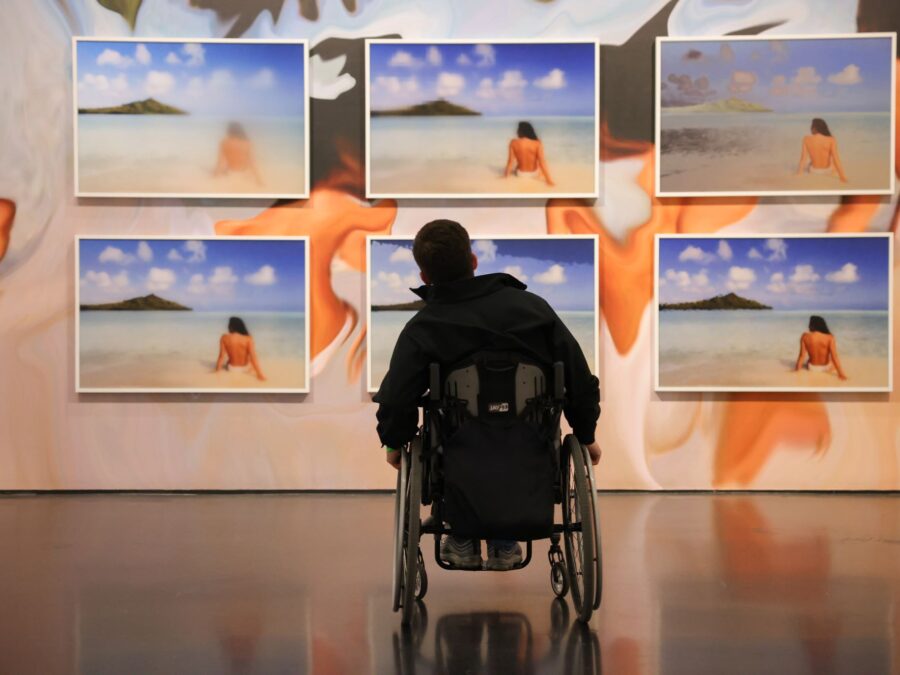
Read more about MCA accessibility initiatives and museum routes before your visit. Our Visitor Experience staff members are always available to help you navigate the museum in person.
Accessibility Offerings
-
Wheelchairs are available free of charge for your visit at the coat checks on the first and second floors. Supplies are limited and available on a first-come, first-served basis.
-
When possible, the MCA provides sign language interpretation, open captioning, and assistive listening devices for performances and activities in our theater as well as for talks, tours, or educational programs. These preplanned services are often denoted on the event’s page.
If you are in need of a particular service during your visit to the museum, our Visitor Experience staff will do their best to accommodate. If you would like more information, or would like to request additional accessibility services, please contact us via email at Accessibility@mcachicago.org or call 312-397-4076. We recommend that you make arrangements two weeks in advance.
-
EnChroma color blindness–correcting glasses are available for individual visits and tours.
When possible, the MCA provides accessibility services for performances and activities in our theater as well as for talks, tours, or educational programs. These preplanned services are often denoted on the event’s page. To request additional accessibility services like audio description, please contact us via email at Accessibility@mcachicago.org or call 312-397-4076. We recommend that you make arrangements two weeks in advance.
-
Visitors with disabilities and their caregivers receive free admission to the museum in-person only. If you have questions about admission tickets or accessibility offerings, please email or call the Box Office.
To request accessibility services like ASL interpretation or audio description for a performance or program, please contact us via email at Accessibility@mcachicago.org or call 312-397-4076. We recommend that you make arrangements two weeks in advance.
-
The MCA’s parking garage has accessible parking spaces and we offer $20 flat-rate parking for those who use those spaces. Stop by the ticket desk or coat check for an accessible parking validation.
-
Service animals are welcome inside the MCA, however pets and emotional support animals are not.
Service animals are trained to assist people with disabilities in the activities of everyday living. The Americans with Disabilities Act (ADA) defines service animals as “any animal individually trained to do work or perform tasks for the benefit of an individual with a disability, including, but not limited to, guiding individuals with impaired vision, alerting individuals who are deaf or hard of hearing to intruders or sounds, providing minimal protection or rescue work, pulling a wheelchair, or fetching dropped items.” Service animals must be on a leash and under their master’s control at all times. Emotional support animals do not qualify as service animals under the ADA and are not allowed inside the MCA.
-
The MCA has sensory kits available for visitors. Please seek out a friendly Visitor Experience staff member who would be glad to help you check one out.
Navigating the MCA
Check out our recommended routes to different areas of the museum so you can explore the galleries, find the nearest restroom, eat at Marisol, shop in the MCA Store, and enjoy a performance in the theater.
-
There are two ways to enter the museum. The accessible, plaza-level entrances are located at the corner of Chicago Avenue and Mies van der Rohe Way (through the MCA Store) and at the corner of East Pearson Street and Mies van der Rohe Way (the restaurant and theater entrance).
For drop off, cars can pull over on Mies van der Rohe street, which runs directly in front of the museum, between Chicago Avenue and Pearson Street. Curb cuts appropriate for wheelchair access, are available on each street corner.
-
Galleries are located on the second, third, and fourth floors of the museum and are accessible by the north elevator. Second- and fourth-floor galleries are also accessible by the south elevator.
Need a break? The third-floor balcony is an ideal spot to sit and observe the Lefkofsky Lobby below.
-
Multiuser men’s and women’s restrooms are available in the first-floor lobby and come equipped with baby-changing stations. Take the north elevator or staircase to the first floor. Restrooms are on either side of the theater entrance (men’s to the left; women’s to the right).
Single-use, all-gender restrooms are located in the Commons on the second floor, accessible by the north and south elevators. Restrooms are located on either side of the south wall, to your right when entering the Commons from the atrium.
If you have any questions or are in need of a private restroom or a place to breastfeed, please seek out a friendly Visitor Experience staff member who would be glad to help.
-
Marisol Restaurant and Bar is located on the first floor of the museum at the corner of Mies van der Rohe Way and Pearson Street. Use the Griffin Entrance on the corner of Mies van der Rohe Way and Pearson Street; from inside it is accessible by the north elevator and staircase.
-
The MCA Store is located at the corner of Chicago Avenue and Mies van der Rohe Way, with an accessible entrance on the MCA plaza. From inside the museum you can access the store through the Kovler Atrium and the south elevator. If you’re coming from the Edlis Neeson Theater, take the elevator or stairs to the second floor and cross the atrium.
-
For events on the Kern Terrace, automatic doors open to the the Anne and John Kern Terrace Garden. From the terrace, a ramp leads down to the sculpture garden.
-
The Edlis Neeson Theater entrance is located in the first-floor lobby of the museum. Use the Griffin Entrance on the corner of Mies van der Rohe Way and Pearson Street or from inside it is accessible by the north elevator and staircase.
In keeping with the MCA’s commitment to access, inclusion, and equity, the museum’s trustees, staff, and volunteers endeavor to extend a generous and equitable welcome to our building, exhibitions, programs, and information at all times and to all visitors. We extend this invitation in particular to visitors with disabilities.
The Americans with Disabilities Act (ADA), a civil rights law passed in 1990, guided the museum’s accessibility work for many years. In response to a city-wide celebration of the twenty-fifth anniversary of the ADA in 2015, a group of MCA staff began to think about how to do more for visitors with disabilities—beyond what was legally required.
We still have a lot to learn from our visitors with disabilities and from others who are also thinking about accessible practices. We are committed to keeping accessibility and inclusive design principles in mind as we plan, decide, create, teach, fund, hire, train, and communicate—now and into the future. Together, we collectively share the responsibility and privilege of making the MCA accessible to all.
We continue to study our existing accessible offerings and are constantly working to make them more consistent, useful, and innovative. These programs include stage and gallery programs that feature American Sign Language interpretation and open captioning; touch tours; staff trained to support visitors with disabilities; a website with best-in-class accessible features; and more. We believe that by crafting programs and spaces that serve the needs of the disabled community, we are improving our offerings and our invitation to all visitors.
We are receptive and responsive to your thoughts—if you have a suggestion as to how the MCA can be more welcoming and inclusive, you can reach us at info@mcachicago.org.
Plan Your Visit
Exhibition Resources
View current and past features to support the appreciation and accessibility of our exhibitions.
-
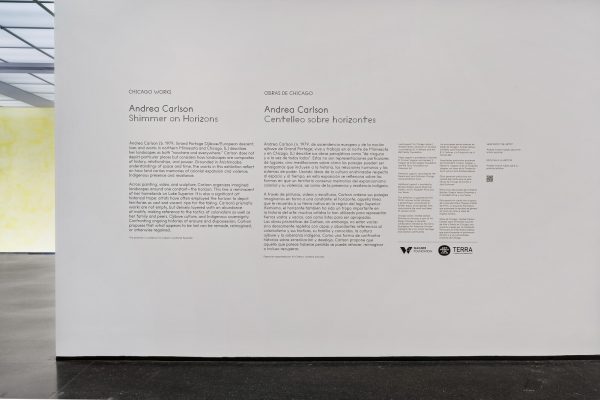
Gallery Text
Find a selection of interpretive texts written for our exhibitions, including wall labels, brochures, and gallery guides on this page. -
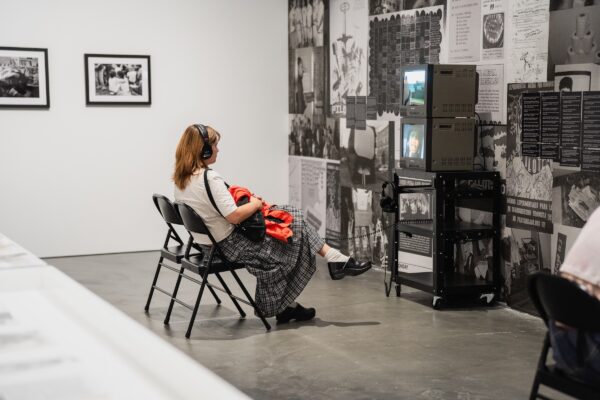
Audio-Visual Access
Find links to artwork transcripts, visual descriptions, and more for past and present exhibitions on this page. -
Transcripts | City in a Garden: Queer Art and Activism in Chicago
Find written transcripts for sound-based artworks featured in the exhibition.